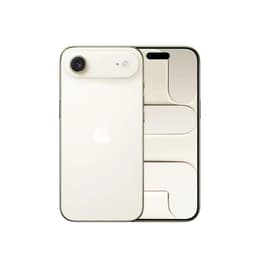


Compare models

iPhone Air vs Oppo Find X5 Pro

  • 1-year warranty
  • Free standard shipping
  • Free 30-day returns
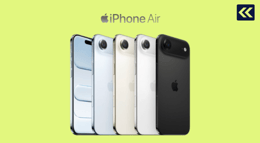
iPhone Air
Starting at

Refurbished price:A$1,099.00

Versus A$1,899.00 new

See options

Differences at a glance

The iPhone Air (2025) and Oppo Find X5 Pro (2022) represent distinct design philosophies in the smartphone market, contrasting an ultra-slim modern build with a robust curved ceramic flagship form factor. While the iPhone Air runs on iOS with a focus on a lightweight silhouette, the Oppo Find X5 Pro operates on Android via ColorOS, emphasizing ergonomic contours and a classic heavy-duty chassis. These two devices diverge significantly in release timing, software ecosystems, and physical proportions while catering to distinct user preferences.

Available Models

Colour

Storage

Scores

Durability

Device longevity and software support timelines differ substantially between these models due to their release years, with the newer Apple device benefiting from an extended update lifecycle.

  • Release timeline: The iPhone Air launched in late 2025, whereas the Oppo Find X5 Pro debuted in early 2022, placing them several generations apart in hardware evolution.
  • Software support: The iPhone Air receives Apple's long-term operating system updates, while the Oppo Find X5 Pro approaches the latter stages of its primary Android security update window.
  • Build durability: The iPhone Air features a rigid titanium frame combined with reinforced glass, while the Oppo Find X5 Pro utilizes a seamless ceramic back panel and curved display glass designed for structural resilience.

Release year

2025

2022

Compatible with latest Update

Yes

Yes

Operating system

iOS

Android

Foldable

No

No

Performance

Daily responsiveness and multitasking capabilities handle intensive tasks efficiently, though underlying hardware capacities reflect different design priorities.

  • Storage configurations: Both devices are widely available in configurations starting at 256 GB of internal storage, providing ample space for applications and media files.
  • System responsiveness: Apps load quickly and multitasking remains smooth across both models, handling demanding mobile games and productivity software without noticeable lag.
  • Battery behavior: The iPhone Air relies on a slim internal battery pack designed for standard daily routines, whereas the Oppo Find X5 Pro houses a larger battery capacity that accommodates heavier daily usage patterns before requiring a recharge.

Screen quality

Display technologies on both handsets deliver sharp visuals and vibrant colors, tailored for media consumption and daily navigation.

  • Display technology: The iPhone Air uses an advanced OLED panel with high outdoor brightness capabilities, while the Oppo Find X5 Pro features an LTPO AMOLED screen with high-resolution depth and curved edges.
  • Refresh rate smoothness: Both models support adaptive refresh rates up to 120 Hz, ensuring fluid scrolling through web pages and smooth animations during daily use.
  • Viewing experience: The iPhone Air offers a flat 6.5-inch viewing area, whereas the Oppo Find X5 Pro provides a slightly larger 6.7-inch curved panel that wraps gently around the sides of the chassis.

Resolution

2736x1260

1440 x 3216

Screen type

Super Retina XDR

LTPO2 AMOLED

Audiovisual

Imaging hardware approaches photography and video recording from different angles, balancing single-lens simplicity with multi-camera versatility.

  • Camera systems: The iPhone Air utilizes a single high-resolution main camera setup optimized for everyday clarity, while the Oppo Find X5 Pro employs a triple-lens array including dedicated ultra-wide and optical zoom options.
  • Low-light performance: Both devices capture clear images in dim environments, utilizing computational processing to balance highlights and shadows effectively.
  • Media output: Video recording runs smoothly with robust stabilization features on both phones, while audio playback relies on integrated speaker systems suited for casual listening and calls.

Main camera

48 megapixels

50 megapixels

Front camera

18 megapixels

32 megapixels

Miscellaneous

Physical handling characteristics and connectivity standards highlight practical usability differences in day-to-day carrying and operation.

  • Dimensions and weight: The iPhone Air prioritizes an exceptionally thin and lightweight profile at 165 grams, whereas the Oppo Find X5 Pro adopts a heavier ceramic build weighing 218 grams for a substantial hand-feel.
  • Port connectivity: The iPhone Air utilizes a USB-C port for charging and data transfer, matching the standard USB-C port configuration found on the Oppo Find X5 Pro.
  • Security sensors: Biometric authentication is handled via facial recognition on the iPhone Air and an optical under-display fingerprint sensor on the Oppo Find X5 Pro.

Weight

165 oz

218 oz

Screen size (in)

6.5

6.7

Network

5G

5G

SIM card

eSIM

Physical SIM + eSIM

Carrier compatibility

Unlocked

Unlocked

Connector

USB-C

USB-C

What the community thinks

When deciding between these two smartphones, user priorities regarding physical form factor and software ecosystems heavily influence the choice. Users who prioritize an exceptionally thin, lightweight pocket profile and long-term software support may lean toward the iPhone Air. Conversely, users who value a curved ceramic chassis, multi-lens camera versatility, and a traditional Android environment often find the Oppo Find X5 Pro well-suited to their needs. For buyers seeking a quality-assured refurbished option, choosing a professionally restored device provides a sustainable choice that extends electronics lifecycles while maintaining reliable performance.