
Compare models

iPhone 17e vs iPhone Air

  • 1-year warranty
  • Free standard shipping
  • Free 30-day returns
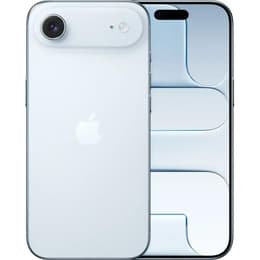
iPhone Air
Starting at

Refurbished price:A$1,061.00

Versus A$1,899.00 new

See options

Differences at a glance

The iPhone 17e (2026) and the iPhone Air (2025) represent two distinct approaches to Apple's modern smartphone lineup. While the iPhone 17e prioritizes practical day-to-day utility in a compact form factor, the iPhone Air focuses on a breakthrough ultra-thin profile and elevated performance capabilities. Both devices operate on current versions of iOS and support advanced artificial intelligence features, but they cater to very different user preferences.

Available Models

Colour

Storage (GB)

Scores

Durability

Both smartphones benefit from long-term software support and robust hardware engineering, though their physical construction creates different handling and durability dynamics.

  • Software longevity: Both models run current iOS software smoothly and receive regular security updates, ensuring extended functional lifespans for everyday users.
  • Build protection: The iPhone 17e features resilient front glass protection designed for daily wear, while the iPhone Air utilizes a titanium frame and reinforced rear matte glass.
  • Repair infrastructure: Both devices integrate into Apple's official service ecosystem, though users looking for a sustainable option can explore quality-assured refurbished models to extend device cycles.

Release year

2026

2025

Operating system

iOS

iOS

Foldable

No

No

Performance

Processing power and battery behavior differ notably between the two models, reflecting their respective hardware designs and intended use cases.

  • Multitasking capacity: The iPhone Air handles demanding graphics and heavy multitasking with its higher-tier processor configuration, whereas the iPhone 17e manages everyday apps, streaming, and standard gaming smoothly with its efficient processor architecture.
  • Battery endurance: The iPhone 17e incorporates a larger battery capacity that easily sustains long days of mixed usage, while the iPhone Air trades some battery footprint for its slim physical profile.
  • Storage configuration: Both devices start with generous internal storage capacities, accommodating large photo libraries, documents, and local media without frequent clearing.

Screen quality

Visual output is sharp and vivid across both options, though screen dimensions and viewing surfaces vary to match their physical designs.

  • Display technology: Both models use OLED panels with high pixel densities, delivering deep blacks, high contrast, and crisp text rendering for reading and media viewing.
  • Screen dimensions: The iPhone Air provides a larger viewing canvas suited for split-screen tasks and media consumption, while the iPhone 17e offers a more compact screen size that improves one-handed reach.
  • Outdoor visibility: High peak brightness levels on both displays ensure clear legibility under bright sunlight and outdoor environments.

Resolution

2532 x 1170

2736x1260

Audiovisual

Photography and audio capabilities span everyday recording needs, with subtle differences in hardware sensitivity and front-facing optics.

  • Main photography: Both smartphones utilize a primary 48-megapixel sensor capable of capturing detailed high-resolution images and clear digital zoom crops.
  • Front-facing capture: The iPhone Air includes a higher-resolution selfie camera for sharper video calls, while the iPhone 17e features standard front optics adequate for daily social sharing and communication.
  • Video and audio: Both models support high-definition video recording with spatial audio capture and reliable built-in microphone arrays for clear voice notes and call quality.

Front camera

12 megapixels

18 megapixels

Miscellaneous

Physical dimensions and connectivity standards shape how each phone integrates into travel, work, and daily routines.

  • Physical dimensions: The iPhone Air stands out for its remarkably thin profile and light weight, whereas the iPhone 17e offers a slightly thicker, traditional slate build.
  • Wireless connectivity: Both devices support rapid 5G cellular networks, modern Wi-Fi protocols, and secure wireless accessory pairing.
  • Physical ports and charging: Each model relies on universal USB-C ports for wired data transfer and supports magnetic wireless charging ecosystems.

Weight

169 oz

165 oz

Screen size (in)

6.1

6.5

Network

5G

5G

SIM card

eSIM

eSIM

Carrier compatibility

Unlocked

Unlocked

Connector

USB-C (USB 2)

USB-C

What the community thinks

User discussions and community feedback highlight distinct preferences for each device based on practical lifestyle needs. Owners of the iPhone 17e frequently praise its dependable battery longevity, comfortable handling, and reliable everyday efficiency. At the same time, users gravitate toward the iPhone Air for its striking ultra-thin aesthetic, lightweight construction, and larger viewing display. Choosing between the two ultimately depends on individual priorities rather than an absolute performance hierarchy.

Users prioritizing maximum battery endurance, comfortable one-handed handling, and practical utility will find the iPhone 17e well-suited to their daily routines. Conversely, users prioritizing an expansive display and a breakthrough slim design may prefer the iPhone Air. For buyers seeking a sustainable choice, opting for a quality-assured refurbished option provides an eco-friendly alternative that aligns with mindful technology consumption.

See all articles