Compare models
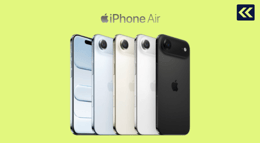
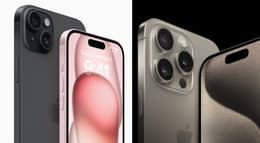
iPhone 15 vs iPhone Air
- 1-year warranty
- Free standard shipping
- Free 30-day returns
Differences at a glance
The iPhone 15 (2023) and the iPhone Air (2025) represent two different design and performance approaches within Apple's smartphone lineup. While the iPhone 15 serves as a standard foundational model, the iPhone Air introduces an ultra-slim profile and upgraded internals, creating distinct choices for everyday users.
Both devices run on iOS, ensuring access to the same core software ecosystem, but they differ significantly in hardware architecture, physical dimensions, and generational positioning.
Available Models
Colour
Storage (GB)
Scores
Durability
When evaluating longevity and structural durability, the iPhone 15 and iPhone Air offer different timelines and physical protections based on their respective release years.
- Release timeline and software support: The iPhone 15 arrived in 2023, while the iPhone Air launched in 2025, giving the newer model an extended software update window and longer overall support expectations.
- Build materials and physical protection: The iPhone 15 uses an aluminum frame with color-infused glass, whereas the iPhone Air features a titanium frame and upgraded ceramic shielding on both sides for enhanced scratch and crack resistance.
- Expected practical lifespan: Both devices handle daily routines reliably, though users seeking maximum future-proofing for software evolution will find the newer internal framework of the iPhone Air advantageous.
Release year
2023
2025
Compatible with latest Update
Yes
Yes
Operating system
iOS
iOS
Foldable
No
No
Performance
Underneath the exterior, these smartphones handle demanding applications and multitasking differently due to generational leaps in internal architecture and memory capacity.
- System responsiveness and multitasking: The iPhone Air handles intensive applications, heavy multitasking, and complex graphics smoothly thanks to its higher RAM allocation and current-generation processor, whereas the iPhone 15 manages everyday tasks like web browsing and messaging efficiently with its standard configuration.
- Battery behavior: The iPhone 15 offers dependable all-day usage for standard routines, while the iPhone Air optimizes power efficiency through advanced internal components, though its thinner body houses a more compact battery capacity.
- Storage options: The iPhone 15 starts with modest baseline storage capacities suitable for general use, while the iPhone Air begins at higher storage tiers to accommodate media-heavy workflows and extensive application libraries.
Screen quality
Display characteristics vary notably between the two models, impacting outdoor visibility, scrolling smoothness, and media consumption experiences.
- Refresh rate technology: The iPhone Air includes high refresh rate technology up to 120Hz for fluid scrolling and animations, while the iPhone 15 operates at a standard 60Hz refresh rate.
- Panel size and resolution: The iPhone Air provides a larger 6.5-inch OLED display with higher resolution, compared to the 6.1-inch OLED screen on the iPhone 15.
- Outdoor brightness: Both models deliver clear visibility in bright sunlight, with the iPhone Air reaching a higher peak outdoor brightness level for demanding lighting conditions.
Resolution
1179 x 2556
2736x1260
Screen type
Super Retina XDR OLED
Super Retina XDR
Audiovisual
Photography and audio-visual capabilities differ to accommodate the physical constraints and target capabilities of each device design.
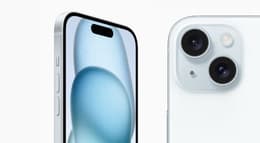
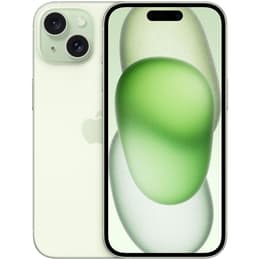
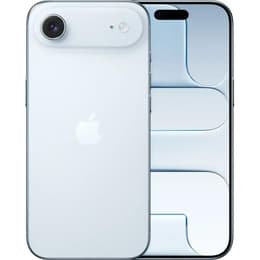
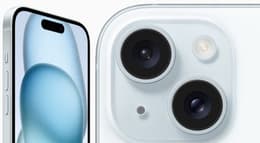
- Camera systems: The iPhone 15 features a dual-lens rear camera setup including a main and ultra-wide lens, whereas the iPhone Air streamlines photography with a single high-resolution main camera system housed within an elevated plateau.
- Video and low-light performance: Both devices capture detailed 4K video and handle low-light environments effectively using computational photography, though the newer processing pipeline on the iPhone Air enhances clarity and detail preservation.
- Audio output: Both models provide clear stereo sound for media playback and phone calls, maintaining balanced dialogue clarity and adequate volume for everyday use.
Main camera
48 megapixels
48 megapixels
Front camera
12 megapixels
18 megapixels
Miscellaneous
Practical everyday features, connectivity standards, and physical handling characteristics set these two smartphones apart in day-to-day use.
- Physical dimensions and weight: The iPhone Air focuses on an ultra-thin profile and lightweight titanium build that sits distinctively in the hand, while the iPhone 15 offers a more traditional, contoured aluminum form factor.
- Connectivity and ports: Both models use a USB-C port for charging and data transfer, with the iPhone Air incorporating newer internal wireless networking chips for advanced Wi-Fi and Bluetooth capabilities.
- Biometrics and sensors: Both devices rely on Face ID technology housed in the Dynamic Island for secure authentication and device unlocking.
Weight
171 oz
165 oz
Screen size (in)
6.1
6.5
Network
5G
5G
SIM card
Physical SIM + eSIM
eSIM
Carrier compatibility
Unlocked
Unlocked
Connector
USB-C (USB 2)
USB-C
What the community thinks
User feedback from community discussions highlights distinct preferences for each device. Owners of the iPhone 15 frequently praise its reliable everyday performance, comfortable proportions, and balanced feature set for standard tasks. Conversely, users of the iPhone Air highlight its striking physical thinness, expansive high-refresh-rate display, and responsive processing speeds as standout qualities, though some note that the single-camera setup requires adjusting traditional multi-lens photography habits.
Users prioritizing a lightweight, ultra-slim design and a larger, fluid display will find the iPhone Air well-suited to their preferences. Meanwhile, users looking for a compact, traditional smartphone experience with a versatile multi-lens camera setup will lean toward the iPhone 15. For those exploring sustainable purchasing paths, choosing a quality-assured refurbished option provides a reliable, eco-friendly alternative to acquire either model.