Compare models
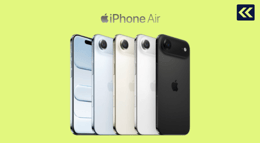
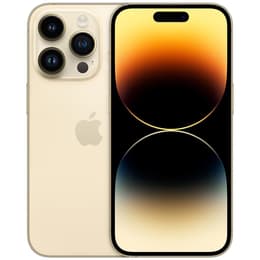
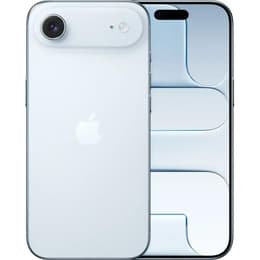
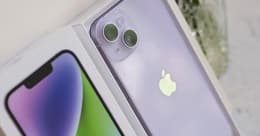
iPhone 14 Pro vs iPhone Air
- 1-year warranty
- Free standard shipping
- Free 30-day returns
Differences at a glance
The iPhone 14 Pro (2022) and the iPhone Air (2025) represent two distinct approaches to smartphone engineering, balancing mature flagship design with ultra-slim innovation. While the iPhone 14 Pro established a robust template with versatile multi-lens photography and a compact form factor, the newer iPhone Air introduces a radically thin profile, a larger screen, and updated internals. Both devices operate on iOS, providing access to familiar application ecosystems and long-term software support, yet they serve entirely different user preferences regarding physical handling and feature distribution.
Available Models
Colour
Storage (GB)
Scores
Durability
When evaluating the long-term utility of these devices, differences in release schedules, structural durability, and update horizons become key factors for everyday users.
- Software support lifecycle: The iPhone Air benefits from a more recent release year, granting it an extended window for upcoming operating system upgrades and security patches compared to the older iPhone 14 Pro.
- Build durability: Both models utilize sturdy frame materials and reinforced front glass designed to withstand daily wear, though the iPhone Air incorporates newer ceramic-infused glass protection on both sides for enhanced scratch resistance.
- Expected practical lifespan: Routine software optimizations and robust physical construction allow both smartphones to maintain dependable daily usability across several years of ownership.
Release year
2022
2025
Compatible with latest Update
Yes
Yes
Operating system
iOS
iOS
Foldable
No
No
Performance
Handling everyday applications, multitasking, and resource-heavy tasks highlights noticeable variations in processing capabilities, memory capacity, and energy management between these two generations.
- System responsiveness: The iPhone Air handles demanding apps, heavy multitasking, and modern games with exceptional fluidity thanks to its current-generation processor and generous memory capacity, whereas the iPhone 14 Pro remains entirely capable for daily communication, media streaming, and standard productivity tasks.
- Battery behavior: The iPhone 14 Pro manages daily energy demands reliably through a traditional footprint, while the exceptionally slim body of the iPhone Air requires streamlined power efficiency to sustain a full day of mixed usage under typical conditions.
- Multitasking efficiency: Higher memory allocations on the iPhone Air allow background applications to remain active longer without reloading, supporting smoother transitions during heavy multi-app workflows.
Screen quality
Visual immersion and panel technologies differ significantly in physical dimensions, outdoor visibility, and motion smoothness during daily media consumption.
- Display technology: Both devices employ vibrant OLED panels with deep black levels and accurate color reproduction, but the iPhone Air introduces a larger 6.5-inch viewing area compared to the 6.1-inch screen on the iPhone 14 Pro.
- Brightness and outdoor clarity: The iPhone Air achieves higher peak outdoor brightness levels, making on-screen content easier to read under direct sunlight, while the iPhone 14 Pro remains adequately bright for standard daylight viewing.
- Motion smoothness: Both models support adaptive high refresh rates up to 120Hz for fluid scrolling and responsive touch tracking, though the iPhone Air includes advanced low-brightness scaling for power-efficient ambient display features.
Resolution
1179 x 2556
2736x1260
Screen type
LTPO Super Retina XDR OLED
Super Retina XDR
Audiovisual
Multimedia capture and audio output capabilities diverge notably, reflecting different design priorities between multi-lens flexibility and single-lens minimalism.
- Camera system versatility: The iPhone 14 Pro features a triple-lens setup including a dedicated optical zoom telephoto lens and an ultra-wide sensor, whereas the iPhone Air relies on a single high-resolution main camera system that utilizes sensor cropping for dual-lens focal lengths.
- Low-light and video performance: Both smartphones capture detailed everyday photos and stable high-definition video, but the multi-lens array on the iPhone 14 Pro offers greater framing flexibility for close-up portraits and expansive landscapes.
- Audio and media output: Built-in speaker systems on both devices deliver clear sound for hands-free calls and casual video playback, though internal space constraints in the ultra-thin iPhone Air shape its acoustic profile differently than the thicker housing of the iPhone 14 Pro.
Main camera
48 megapixels
48 megapixels
Front camera
12 megapixels
18 megapixels
Miscellaneous
Physical dimensions, connectivity standards, and daily handling characteristics establish distinct user experiences outside of core processing and optics.
- Handling and ergonomics: The iPhone Air stands out for its remarkably thin profile and lightweight titanium build, making it exceptionally comfortable to hold and carry, while the iPhone 14 Pro offers a denser, more compact feel in the hand.
- Port and charging standards: The iPhone 14 Pro utilizes a lightning connection alongside wireless charging options, whereas the iPhone Air adopts the universal USB-C standard alongside modern wireless charging compatibility.
- Connectivity and sensors: Both models integrate secure facial recognition technology and rapid wireless communication protocols, ensuring fast network access and reliable device security.
Weight
206 oz
165 oz
Screen size (in)
6,1
6.5
Network
5G
5G
SIM card
Physical SIM + eSIM
eSIM
Carrier compatibility
Unlocked
Unlocked
Connector
Lightning
USB-C
What the community thinks
Community discussions across online tech forums reveal that users appreciate the iPhone 14 Pro for its comprehensive multi-lens camera setup, compact dimensions, and reliable everyday reliability. At the same time, owners of the iPhone Air frequently praise its remarkably lightweight feel, modern aesthetic, and expansive display real estate, though some users note that a single-lens camera system offers less framing versatility than a traditional multi-lens array.
Users prioritizing a compact device with versatile zoom photography and a traditional robust feel will find the iPhone 14 Pro well-suited to their daily routines. Conversely, users prioritizing an exceptionally thin, lightweight profile, a larger screen, and modern charging standards may lean toward the iPhone Air. For those seeking an eco-friendly alternative, choosing a quality-assured refurbished option provides a sustainable way to acquire either device without compromising on performance or reliability.