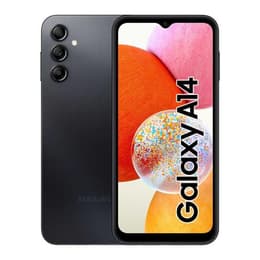
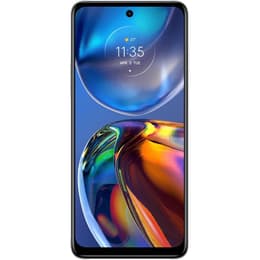

Galaxy A14 vs Motorola Moto E32

Galaxy A14
Galaxy A14
Starting at

Refurbished price:A$215.00

Versus A$390.00 new

See options
Motorola Moto E32
Motorola Moto E32
See options

The Samsung Galaxy A14, released in early 2023, and the Motorola Moto E32, launched in mid-2022, are both smartphones designed for everyday use. While they share a similar operating system foundation in Android, they present different strengths in areas such as display clarity, camera capabilities, and software longevity. This comparison aims to highlight these practical differences to assist in making an informed purchasing decision.

Scores

Durability

When considering the long-term usability of these devices, their release timelines and software support policies are key factors.

  • Release Timeline: The Motorola Moto E32 was introduced in May 2022, making it an older model compared to the Samsung Galaxy A14, which saw its 4G version released in February 2023 and its 5G variant in January 2023. This difference in launch dates impacts their expected software support.
  • Software Support: The Galaxy A14 launched with Android 13 and is expected to receive two major Android OS updates, extending its software currency up to Android 15, along with four years of security updates until early 2027. In contrast, the Moto E32, which debuted with Android 11, typically receives one major OS update (expected to be Android 12) and around two years of security updates.
  • Physical Durability: The Moto E32 offers an IP52 rating, indicating a degree of protection against dust and splashing water. The Galaxy A14 does not carry an official IP rating, suggesting less inherent resistance to environmental elements. Both devices feature plastic constructions for their frames and backs.

Release year

2023

2022

Compatible with latest Update

No

No

Operating system

Android

Android

Foldable

No

No

Performance

The responsiveness and capability of a smartphone's internal components directly influence daily user experience, from app loading to multitasking.

  • Processing Power: The Galaxy A14 is equipped with a processor that generally offers a more capable experience for handling applications and general system tasks. The Moto E32 features a processor that provides adequate performance for basic daily activities, though users have reported occasional lag, particularly when running more demanding applications or games.
  • Memory and Storage: The Galaxy A14 typically comes with 4GB or 6GB of RAM and storage options of 64GB or 128GB, providing more headroom for multitasking and app installation. The Moto E32 is available with 2GB, 3GB, or 4GB of RAM and 32GB or 64GB of internal storage. Both models support expandable storage via a microSD card, allowing users to increase their storage capacity up to 1TB.
  • Battery Life and Charging: Both smartphones house a substantial 5000 mAh battery, which generally translates to long usage times. Users of both devices often report that the battery can last through a full day of heavy use and potentially up to two days with moderate usage. The Galaxy A14 supports 15W wired charging, while the Moto E32 supports 18W fast charging, though it typically ships with a 10W charger.

Memory (GB)

4 GB

4 GB

Screen quality

The display is a primary interface for any smartphone, and differences in screen technology and specifications can significantly impact the visual experience.

  • Display Technology and Resolution: Both devices feature LCD panels. The Samsung Galaxy A14 offers a 6.6-inch PLS LCD display with a Full HD+ resolution (1080 x 2408 pixels), resulting in a sharper and more detailed image. The Motorola Moto E32 has a 6.5-inch IPS LCD screen with an HD+ resolution (720 x 1600 pixels).
  • Refresh Rate: The Moto E32 stands out with a 90Hz refresh rate, which provides a smoother visual experience during scrolling and animations. The 4G version of the Galaxy A14 features a standard 60Hz refresh rate, while its 5G variant offers a 90Hz refresh rate.
  • Brightness: The Galaxy A14 (5G variant) can reach a peak brightness of around 480 nits, which contributes to better visibility in brighter conditions. The Moto E32's display is noted to be relatively dim, with a maximum brightness of approximately 375 cd/m², which might make outdoor viewing more challenging.

Resolution

1080 x 2408

720 x 1600

Screen type

PLS LCD

IPS LCD

Audiovisual

For many users, the camera system is a crucial aspect of a smartphone, influencing how everyday moments are captured and shared.

  • Rear Camera System: The Samsung Galaxy A14 (4G model) features a versatile triple-camera setup, including a 50 MP main sensor with a wide aperture, a 5 MP ultrawide lens, and a 2 MP macro lens. The Motorola Moto E32 also has a triple-camera array, consisting of a 16 MP main sensor, a 2 MP macro lens, and a 2 MP depth sensor. The Galaxy A14's higher resolution main sensor and inclusion of an ultrawide lens on the 4G model offer more photographic flexibility.
  • Front Camera: For selfies and video calls, the Galaxy A14 is equipped with a 13 MP front-facing camera. The Moto E32 features an 8 MP front camera.
  • Photography Performance: The Galaxy A14 generally performs well in bright lighting conditions, capturing decent detail, but its performance diminishes in low-light environments, lacking a dedicated night mode on the 4G version. User reviews for the Moto E32 indicate modest camera capabilities, with potential exposure issues, noticeable noise in less-than-ideal lighting, and sometimes washed-out colors. Both devices record video at 1080p resolution at 30 frames per second.

Main camera

50 megapixels

16 megapixels

Front camera

13 megapixels

8 megapixels

Miscellaneous

Beyond the core specifications, various practical features contribute to the overall user experience and device utility.

  • Connectivity: The Samsung Galaxy A14 supports Wi-Fi 5 (802.11 a/b/g/n/ac) and Bluetooth 5.1, and includes NFC for contactless payments. The Motorola Moto E32 supports Wi-Fi 4 (802.11 b/g/n) and Bluetooth 5.0, but it lacks NFC functionality.
  • Ports and Biometrics: Both smartphones retain a 3.5mm headphone jack, offering compatibility with wired audio accessories. They also both feature a USB-C port for charging and data transfer. For security and convenience, both devices incorporate a side-mounted fingerprint sensor.
  • Design and Handling: The Galaxy A14 measures 167.7 x 78 x 9.1 mm and weighs 201g. The Moto E32 is slightly more compact and lighter at 164 x 75 x 8.5 mm and 184g. Both phones are constructed with plastic materials for their body, contributing to their overall feel and durability.

Weight

201 oz

184 oz

Screen size (in)

6.6

6,5

Network

4G

4G

SIM card

Physical SIM

Dual Physical SIM

Carrier compatibility

Unlocked

Unlocked

The Samsung Galaxy A14 and Motorola Moto E32 cater to users seeking functional smartphones, each with distinct advantages. User feedback indicates that the Galaxy A14 is often praised for its long battery life and a main camera that performs well in adequate lighting conditions. Its software update policy is also a notable strength for its segment, offering extended support. However, some users have noted that its performance can feel less fluid with demanding applications, and the 4G model's display has a standard refresh rate.

The Moto E32 receives positive remarks for its 90Hz display, which provides a smoother visual experience, and its generally clean Android interface. Its battery life is also consistently highlighted as a strong point. Criticisms often revolve around its modest camera performance, especially in challenging lighting, and a processor that can lead to noticeable lag during intensive use.

Users prioritizing a sharper display for media consumption, a more versatile camera system with an ultrawide lens, and a longer commitment to software updates may find the Samsung Galaxy A14 better suited to their needs. Conversely, individuals who value a smoother scrolling experience, a slightly lighter and thinner device, and a degree of splash resistance might lean towards the Motorola Moto E32. Both devices offer a solid foundation for daily tasks, and considering a quality-assured refurbished option for either model can be an eco-friendly alternative to purchasing new.


See all articles

Our recent comparisons