

Compare models

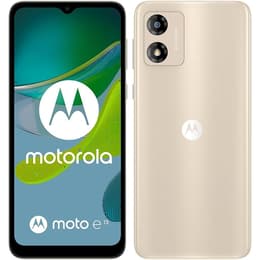
iPhone Air vs Motorola Moto E13

  • 1-year warranty
  • Free standard shipping
  • Free 30-day returns
iPhone Air
Starting at

Refurbished price:A$1,061.00

Versus A$1,899.00 new

See options

Differences at a glance

The Apple iPhone Air (2025) and the Motorola Moto E13 (2023) are distinct smartphones built for different tiers of mobile technology and user requirements. While the iPhone Air is a contemporary, ultra-slim device positioned in the flagship segment running iOS, the Motorola Moto E13 is an entry-level Android Go device focused on basic utility. These two models diverge significantly in design philosophy, processing power, and software ecosystem.

Available Models

Colour

Storage (GB)

Scores

Durability

Device longevity and software support differ substantially due to their respective release years and market positioning, impacting how long each phone remains current in daily use.

  • Release Timeline and Software Support: The iPhone Air launched in late 2025 with Apple's modern mobile operating system, benefiting from a multi-year window of software and security updates. The Motorola Moto E13 debuted in early 2023 running lightweight system software tailored for entry-level hardware, meaning its major software upgrade cycle concludes much sooner.
  • Build Integrity and Repairability: The iPhone Air utilizes rigid titanium framing and hardened glass protection, requiring professional service procedures for structural repairs. The Motorola Moto E13 employs a plastic back and frame construction that handles minor impacts resiliently, though parts availability varies.
  • Expected Lifespan: High-tier internal components allow the iPhone Air to retain rapid processing speeds over many years, whereas the Motorola Moto E13 is better suited for shorter-term or backup deployment.

Release year

2025

2023

Compatible with latest Update

Yes

No

Operating system

iOS

Android

Foldable

No

No

Performance

System responsiveness and everyday capabilities vary widely, reflecting the different hardware configurations housed inside each chassis.

  • Storage and Multitasking: The iPhone Air starts with generous internal storage capacities paired with ample memory for running multiple demanding applications simultaneously. The Motorola Moto E13 relies on modest memory configurations and lighter storage tiers, though it includes expandable storage via a dedicated card slot.
  • Execution Speed: Advanced processing architecture enables the iPhone Air to load heavy applications instantly, render complex graphics seamlessly, and switch between tasks without hesitation. The Motorola Moto E13 handles basic functions like web browsing, messaging, and light media playback at a measured, steady pace.
  • Battery Behavior: The iPhone Air balances slim dimensions with efficient power management for a full day of mixed use, while the Motorola Moto E13 pairs its lower-resolution screen and frugal processor with a large battery capacity to sustain extended standby times.

Screen quality

Visual output and display responsiveness create notably different media consumption experiences across both handsets.

  • Display Technology: The iPhone Air features an advanced OLED panel that delivers deep black levels, high contrast, and vivid color reproduction. The Motorola Moto E13 uses a standard IPS LCD screen with a lower HD+ resolution, prioritizing functional readability over high-definition clarity.
  • Brightness and Outdoor Legibility: Peak brightness levels on the iPhone Air allow content to remain clearly visible under direct sunlight. The Motorola Moto E13 requires manual adjustments in bright outdoor environments to maintain comfortable legibility.
  • Refresh Rate and Fluidity: A smooth high refresh rate on the iPhone Air ensures animations and scrolling appear fluid, whereas the Motorola Moto E13 uses a standard 60 Hz refresh rate common in entry-level devices.

Resolution

2736x1260

720 x 1600

Screen type

Super Retina XDR

IPS LCD

Audiovisual

Photography and media recording capabilities reflect the contrasting engineering goals of a premium slim device and a budget-oriented utility phone.

  • Camera Hardware: The iPhone Air is equipped with a high-resolution main camera system and an advanced front-facing sensor, supporting detailed everyday photography and low-light optimization. The Motorola Moto E13 features a single basic rear sensor and a modest front camera designed for straightforward snapshots and video calls.
  • Video and Audio Recording: High-definition video recording on the iPhone Air includes sophisticated stabilization features and crisp audio capture tools. Video utility on the Motorola Moto E13 is restricted to basic standard-definition capture without advanced stabilization suites.
  • Media Playback: Built-in audio output on the iPhone Air delivers clear sound for casual listening, while the Motorola Moto E13 provides adequate speaker performance alongside the convenience of a traditional wired headphone jack.

Main camera

48 megapixels

13 megapixels

Front camera

18 megapixels

5 megapixels

Miscellaneous

Practical physical attributes, connectivity standards, and daily handling characteristics establish distinct user experiences.

  • Connectivity Standards: The iPhone Air supports advanced wireless protocols, high-speed cellular networks, and modern short-range data sharing. The Motorola Moto E13 handles standard local wireless networks and 4G cellular connections without supporting high-speed next-generation data bands.
  • Physical Dimensions and Handling: Measuring exceptionally thin with lightweight materials, the iPhone Air offers a sleek profile in the hand. The Motorola Moto E13 features a thicker plastic build that provides a secure, traditional grip.
  • Interface Ports and Security: Universal USB-C connectivity is present on both models, though security authentication methods differ, with the iPhone relying on advanced facial recognition and the Motorola utilizing basic screen-lock protections.

Weight

165 oz

181 oz

Screen size (in)

6.5

6.5

Network

5G

4G

SIM card

eSIM

Dual Physical SIM

Carrier compatibility

Unlocked

Unlocked

What the community thinks

User feedback highlights distinct preferences for each device depending on daily requirements. Owners of the iPhone Air frequently praise its exceptionally thin profile, fluid display performance, and capable camera system, though some note that its premium pricing reflects its advanced positioning. Conversely, users of the Motorola Moto E13 appreciate its straightforward functionality, lightweight interface, and straightforward utility, while frequently observing that heavy multitasking and demanding applications push the hardware beyond its limits.

Users prioritizing high-end performance, photography versatility, and modern software longevity will find the iPhone Air well-suited to their needs. Meanwhile, users prioritizing a simple, dedicated communication tool for basic tasks may lean toward the Motorola Moto E13. For those seeking a quality-assured refurbished option, exploring eco-friendly alternatives on Back Market provides a sustainable way to access these technologies with verified reliability.