
Compare models
Google Pixel 7 vs iPhone Air
- 1-year warranty
- Free standard shipping
- Free 30-day returns
Differences at a glance
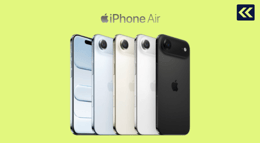
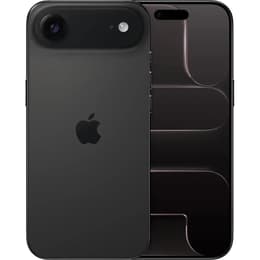
The Google Pixel 7 (2022) and the Apple iPhone Air (2025) are distinctive smartphones representing different eras and design philosophies in mobile technology. While the Google Pixel 7 focuses on an integrated software experience and balanced everyday capability, the iPhone Air introduces an ultra-thin form factor and modern processing power. Operating on Android and iOS respectively, these devices cater to users looking for distinct ecosystem interactions and hardware layouts.
Available Models
Colour
Storage (GB)
Scores
Durability
Evaluating the lifespan and durability of these devices involves examining their launch timelines, software support windows, and physical build resilience under normal daily wear.
- Release timeline and software longevity: The Google Pixel 7 launched in late 2022 and provides multi-year software updates extending into 2027. The iPhone Air entered the market in late 2025 running iOS, offering a longer remaining window of active system updates due to its newer release year.
- Build materials and repairability: The Google Pixel 7 utilizes aluminum and durable glass protection, maintaining standard industry repair paths. The iPhone Air features a slim titanium frame paired with reinforced glass layers, prioritizing a rigid structural feel within a compact thickness profile.
- Expected practical lifespan: Both devices deliver solid long-term usability, though users seeking extended operating system support cycles will find the more recent Apple model suited to longer retention timelines.
Release year
2022
2025
Compatible with latest Update
Yes
Yes
Operating system
Android
iOS
Foldable
No
No
Performance
Daily speed, multitasking capability, and energy management differ notably between these two hardware configurations and operating systems.
- Multitasking and system responsiveness: The Google Pixel 7 handles everyday apps, browsing, and switching between tasks smoothly using its custom processor architecture and ample memory. The iPhone Air delivers accelerated performance for demanding applications and heavy multitasking thanks to its advanced generation processor and high memory capacity.
- Storage capacity configurations: The Google Pixel 7 offers standard tiers suited to typical media storage needs, whereas the iPhone Air provides expanded high-capacity tiers starting at larger baselines for media-heavy users.
- Battery behavior in typical use: The Google Pixel 7 manages daily energy use reliably for standard tasks, while the iPhone Air balances its slim physical battery footprint with power-efficient internal components to maintain stable daily endurance.
Screen quality
Display characteristics define the visual interaction for media consumption, outdoor legibility, and everyday navigation.
- Display technology and clarity: The Google Pixel 7 features a vibrant OLED screen with crisp resolution and comfortable viewing angles. The iPhone Air incorporates an advanced Super Retina XDR OLED panel with high pixel density for sharp text and detailed imagery.
- Brightness and outdoor visibility: The Google Pixel 7 offers sufficient outdoor brightness levels for clear visibility under direct sunlight, while the iPhone Air reaches higher peak brightness thresholds to combat heavy ambient glare.
- Refresh rate and smoothness: The Google Pixel 7 utilizes a moderate refresh rate for standard scrolling fluidity, whereas the iPhone Air supports an adaptive high refresh rate that scales dynamically for smoother motion during interaction.
Resolution
1080 x 2400
2736x1260
Screen type
AMOLED
Super Retina XDR
Audiovisual
Optics, video recording features, and multimedia playback capabilities shape how each device captures memories and consumes audio.
- Camera system capabilities: The Google Pixel 7 relies on a dual-lens rear arrangement optimized by computational photography for detailed everyday and low-light shots. The iPhone Air employs a high-resolution single primary camera setup designed for sharp clarity and advanced video capture features.
- Video and audio performance: Both smartphones record high-definition video with effective stabilization, while their built-in stereo speakers deliver clear audio output for calls and casual media streaming.
Main camera
50 megapixels
48 megapixels
Front camera
10.8 megapixels
18 megapixels
Miscellaneous
Physical dimensions, connectivity standards, and daily ergonomics dictate how comfortable each smartphone feels in regular handling.
- Dimensions and handling: The Google Pixel 7 features a comfortable, rounded profile with standard thickness that rests securely in one hand. The iPhone Air focuses on a breakthrough ultra-thin profile and lighter weight distribution for a distinct in-hand feel.
- Connectivity and ports: Both models support modern 5G cellular networks, advanced Wi-Fi standards, and reliable Bluetooth pairing, utilizing reversible USB connectivity ports for charging and data transfer.
Weight
212 oz
165 oz
Screen size (in)
6.3
6.5
Network
5G
5G
SIM card
Physical SIM + eSIM
eSIM
Carrier compatibility
Unlocked
Unlocked
What the community thinks
User community discussions indicate that the Google Pixel 7 receives consistent praise for its intuitive software interface, reliable everyday camera results, and balanced everyday utility. Common feedback notes that its charging speeds and battery longevity align with standard daily expectations. Conversely, the iPhone Air earns recognition for its remarkably thin titanium design, bright display panel, and robust processing headroom, though users occasionally note the absence of multiple physical rear camera lenses.
Users prioritizing a comfortable, software-driven Android experience with dependable photo tools will find the Google Pixel 7 well-suited to their needs. Meanwhile, users looking for an exceptionally thin build, modern processing capability, and ecosystem integration may lean toward the iPhone Air. Exploring a quality-assured refurbished option provides a sustainable choice for acquiring either device while reducing electronic waste.