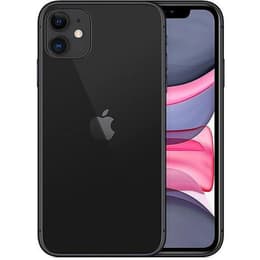

Google Pixel 7 vs iPhone 11

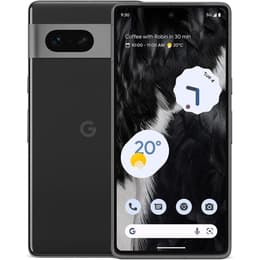
Google Pixel 7
Google Pixel 7
Starting at

Refurbished price:A$348.00

Versus A$879.00 new

See options
iPhone 11
iPhone 11
Starting at

Refurbished price:A$270.00

Versus A$769.00 new

See options

Ratings

The Google Pixel 7, released in October 2022, and the Apple iPhone 11, launched in September 2019, represent different generations and operating systems in the smartphone market. While the iPhone 11 runs on Apple's iOS, the Pixel 7 operates on Google's Android platform. Key differentiators between these two devices include their display technology, camera capabilities, and overall software approach, reflecting their respective release timelines.

Scores

Durability

The age difference between the Pixel 7 and iPhone 11 significantly impacts their expected practical lifespan and software support.

  • Release Timeline: The Pixel 7 is a newer device, released in late 2022, while the iPhone 11 was released in late 2019. This three-year gap means the Pixel 7 benefits from more recent hardware and a longer remaining support window.
  • OS Support Duration: Google has extended software support for the Pixel 7 series, guaranteeing five years of OS and security updates from its release date, meaning updates until at least October 2027. The iPhone 11, while known for Apple's long-term support, has already received several major iOS updates and is expected to receive iOS 18 in September 2024 and iOS 26 in September 2025, but its update cycle will conclude sooner than the Pixel 7's.
  • Durability: Both devices feature glass backs and aluminum frames, offering a degree of robustness. The iPhone 11 was noted for its strong glass and IP68 water and dust resistance, capable of submersion up to 2 meters for 30 minutes. The Pixel 7 also boasts IP68 water and dust resistance and uses Gorilla Glass Victus for enhanced screen protection.

Performance

Performance varies between these two smartphones, influenced by their respective processors and RAM configurations.

  • Processor Capabilities: The Pixel 7 is equipped with Google's Tensor G2 chip, designed for efficient machine learning and handling demanding applications smoothly. The iPhone 11 features Apple's A13 Bionic chip, which, despite its age, still provides capable performance for everyday tasks and many modern applications.
  • Multitasking and Responsiveness: The Pixel 7 comes with 8GB of RAM, contributing to smooth multitasking and app switching. The iPhone 11 has 4GB of RAM. While iOS is optimized to run efficiently with less RAM, the Pixel 7's higher RAM capacity generally offers more headroom for keeping multiple applications open simultaneously without slowdowns.
  • Battery Behavior: The Pixel 7 has a 4355 mAh battery, often providing over 24 hours of use for many users. The iPhone 11 has a 3110 mAh battery, which typically provides a full day of moderate use, though heavy users might require more frequent charging.

Memory (GB)

8 GB

4 GB

Screen quality

The display technologies and specifications differ notably between the Pixel 7 and iPhone 11, impacting the visual experience.

  • Display Technology: The Pixel 7 features a 6.3-inch OLED display, known for its deep blacks, high contrast, and vibrant colors. In contrast, the iPhone 11 uses a 6.1-inch Liquid Retina IPS LCD display. LCD technology generally offers good color accuracy but cannot achieve the same level of contrast or true blacks as OLED.
  • Resolution and Brightness: The Pixel 7 offers a higher resolution of 2400 x 1080 pixels, resulting in a sharper image. The iPhone 11 has a resolution of 1792 x 828 pixels. The Pixel 7 also provides higher peak brightness, reaching up to 1400 nits, making it more visible in bright outdoor conditions. The iPhone 11 has a typical maximum brightness of 625 nits.
  • Refresh Rate: The Pixel 7 features a 90Hz refresh rate, which provides a smoother scrolling experience and more fluid animations compared to the iPhone 11's standard 60Hz refresh rate.

Audiovisual

Both devices offer capable camera systems, but their approaches and capabilities reflect their different release years and computational photography philosophies.

  • Rear Camera System: The Pixel 7 features a dual-camera setup with a 50MP main sensor and a 12MP ultrawide lens. The iPhone 11 also has a dual-camera system, consisting of two 12MP lenses for wide and ultrawide shots. The Pixel 7's larger main sensor and Google's computational photography excel in detail and low-light performance.
  • Photography Performance: Users often praise the Pixel 7 for its consistent image quality, natural colors, and strong low-light capabilities, including an effective Night Sight mode. The iPhone 11 also delivers good image quality with reliable exposure and colors, and was the first iPhone to introduce a dedicated Night Mode. However, the Pixel 7 generally offers more detail and better dynamic range, especially in challenging conditions.
  • Video Recording and Front Camera: Both phones support 4K video recording at up to 60 frames per second. The Pixel 7's front camera is 10.8MP, while the iPhone 11 has a 12MP front camera. The Pixel 7 also includes features like Cinematic Blur for video.

Miscellaneous

Beyond core performance, several practical elements differentiate the Pixel 7 and iPhone 11.

  • Connectivity: The Pixel 7 supports 5G connectivity, offering faster mobile data speeds in compatible areas, along with Wi-Fi 6E and Bluetooth 5.2. The iPhone 11 supports 4G LTE, Wi-Fi 6, and Bluetooth 5.0.
  • Charging and Ports: The Pixel 7 features a USB-C 3.2 port for charging and data transfer, and supports fast charging, wireless charging, and reverse wireless charging. The iPhone 11 uses Apple's proprietary Lightning port and supports fast charging and wireless charging, but not reverse wireless charging.
  • Biometric Security: The Pixel 7 offers both an under-display optical fingerprint scanner and face unlock for security. The iPhone 11 relies solely on Face ID for biometric authentication.
  • Design and Build: The Pixel 7 has a slightly larger form factor and is heavier at 197g, compared to the iPhone 11's 194g. Both devices feature glass backs and aluminum frames, contributing to a premium feel.

Screen size (in)

6.3

6.1

SIM card

Physical SIM + eSIM

Physical SIM + eSIM

Carrier compatibility

Unlocked

Unlocked

User feedback often highlights the Pixel 7's camera as a significant strength, particularly its computational photography features that enhance low-light performance and overall image quality. Many users appreciate its clean Android experience and the Tensor G2 chip's smooth performance for daily tasks. Criticisms sometimes point to the Pixel 7's battery life being good but not exceptional for heavy users, and some users might prefer a telephoto lens, which is absent on the base model.

The iPhone 11 is frequently praised for its consistent performance, robust build quality, and the reliability of the iOS ecosystem. Its camera, while older, still delivers dependable results for general photography. Common criticisms include its LCD display, which is less vibrant than modern OLED screens, and its battery life, which may not suffice for power users as the device ages.

Users prioritizing advanced camera features, a vibrant OLED display, and longer software support will find the Google Pixel 7 well-suited to their needs. Its 5G connectivity and modern processor offer a more future-proof experience. Conversely, users who value the established iOS ecosystem, consistent performance for everyday tasks, and a slightly more compact design may lean toward the iPhone 11. Both devices offer a quality-assured refurbished option, providing a sustainable choice for consumers.

See all articles

Our recent comparisons