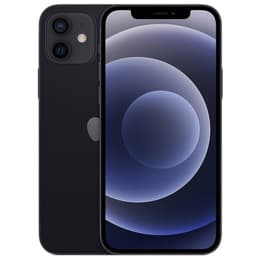

Google Pixel 7 vs iPhone 12

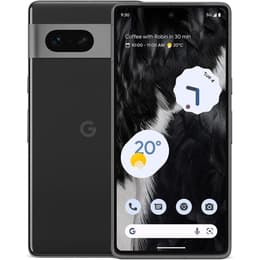
Google Pixel 7
Google Pixel 7
Starting at

Refurbished price:A$348.00

Versus A$879.00 new

See options
iPhone 12
iPhone 12
Starting at

Refurbished price:A$310.00

Versus A$1,049.00 new

See options

Ratings

The Google Pixel 7, released in October 2022, and the iPhone 12, launched in October 2020, represent distinct approaches to the modern smartphone experience. While both offer capable performance and camera systems, they differ significantly in their operating systems and core philosophies. The Pixel 7 operates on Android, emphasizing computational photography and smart software features, whereas the iPhone 12 runs on iOS, known for its integrated ecosystem and consistent performance.

Scores

Durability

When considering the long-term usability of these devices, their release timelines and software support policies are key factors.

  • Release Timeline: The Google Pixel 7 was released in October 2022, making it two years newer than the iPhone 12, which launched in October 2020. This difference in age directly impacts their remaining software support.
  • Software Support: The Pixel 7 is expected to receive OS and security updates until October 2027, offering a total of five years of support from its release. The iPhone 12, while still receiving updates, typically gets major iOS updates for 5-6 years from its launch, meaning its official support window is nearing its end.
  • Repairability: Both devices have similar repairability scores, with the iPhone 12 rated at 6 out of 10 by iFixit, and the Pixel 7 also scoring around 6/10. However, the iPhone 12 has specific challenges related to part authentication for repairs, which can complicate independent servicing.

Performance

The performance of a smartphone is crucial for daily tasks, and both the Pixel 7 and iPhone 12 deliver smooth experiences, though with different underlying hardware and battery characteristics.

  • Processor Capabilities: The Pixel 7 is equipped with a current-generation processor that handles demanding applications and multitasking smoothly. The iPhone 12 features a robust processor that provides a responsive experience for everyday use and gaming.
  • RAM and Storage: The Pixel 7 typically comes with 8GB of RAM, supporting efficient multitasking. The iPhone 12 has 4GB of RAM. Both offer various storage options, including 128GB and 256GB, with the iPhone 12 also having a 64GB option.
  • Battery Behavior: The Pixel 7, with its 4355 mAh battery, generally provides a full day of power for moderate users, though heavy usage might require a top-up. The iPhone 12, with a 2815 mAh battery, has been noted by users to sometimes require more frequent charging, especially for heavy use, as its battery health naturally degrades over time.

Memory (GB)

8 GB

4 GB

Screen quality

The visual experience on a smartphone is largely defined by its display, and both devices offer vibrant screens with distinct characteristics.

  • Display Technology and Size: The Google Pixel 7 features a 6.3-inch OLED display, providing deep blacks and vibrant colors. The iPhone 12 has a 6.1-inch Super Retina XDR OLED display, also known for its excellent contrast and color accuracy.
  • Resolution and Clarity: The Pixel 7 offers a resolution of 1080 x 2400 pixels, resulting in a clear viewing experience. The iPhone 12 has a resolution of 1170 x 2532 pixels, providing a slightly higher pixel density on its smaller screen.
  • Refresh Rate and Brightness: The Pixel 7 boasts a 90Hz refresh rate, contributing to smoother scrolling and animations. It can reach a peak brightness of up to 1400 nits, ensuring good visibility outdoors. The iPhone 12 features a 60Hz refresh rate and offers a peak brightness of 1200 nits for HDR content.

Audiovisual

Both the Google Pixel 7 and iPhone 12 are recognized for their camera capabilities, each excelling in different aspects of photography and videography.

  • Camera System: The Pixel 7 features a dual-camera setup with a 50MP main sensor and a 12MP ultrawide lens. The iPhone 12 also has a dual-camera system, consisting of a 12MP wide and a 12MP ultrawide lens.
  • Photography Performance: The Pixel 7 is highly praised for its computational photography, delivering excellent low-light performance with a fast Night Sight mode and capturing significant detail with natural background blur. The iPhone 12 provides reliable image quality with good color reproduction and dynamic range, and its low-light performance was an improvement over its predecessors. Neither phone includes a dedicated telephoto lens.
  • Video Recording and Audio: Both devices are capable of recording video at 4K resolution at 60 frames per second. The Pixel 7's video quality is strong, with quick adjustments for exposure and fast focusing. The iPhone 12 also offers solid video capabilities. User reviews suggest the Pixel 7's stereo speakers provide a full sound experience.

Miscellaneous

Beyond core performance, several practical elements contribute to the overall user experience of these smartphones.

  • Connectivity and Ports: The Google Pixel 7 supports modern connectivity standards, including 5G and current Wi-Fi standards, and features a USB-C port for charging and data transfer. The iPhone 12 also supports 5G and Wi-Fi 6, but it utilizes Apple's proprietary Lightning port.
  • Biometric Security: The Pixel 7 offers both face unlock and an under-display fingerprint sensor for secure access. The iPhone 12 relies on Face ID for biometric authentication.
  • Build Materials and Dimensions: The Pixel 7 features Gorilla Glass Victus on both the front and back, with an aluminum frame, and measures 155.6 x 73.2 x 8.7mm, weighing 197g. The iPhone 12 incorporates Ceramic Shield on the front for enhanced durability, a glass back, and an aluminum frame, with dimensions of 146.7 x 71.5 x 7.4mm and a weight of 162g. Both devices carry an IP68 rating for water and dust resistance.

Screen size (in)

6.3

6.1

SIM card

Physical SIM + eSIM

Physical SIM + eSIM

Carrier compatibility

Unlocked

Unlocked

User feedback for the Google Pixel 7 frequently praises its exceptional camera performance, particularly in low-light conditions, and its smooth Android operating system experience. Common criticisms include inconsistent battery life for very heavy users and the absence of a dedicated telephoto lens. For the iPhone 12, users often highlight its continued smooth operation, reliable camera for general use, and durable build quality. However, some users note that its 60Hz display can feel less fluid compared to devices with higher refresh rates, and battery degradation over time can be a significant concern for those with demanding usage patterns.

Users prioritizing advanced computational photography, a vibrant 90Hz display, and a longer remaining software support window may find the Google Pixel 7 well-suited to their needs. Conversely, individuals who prefer the established iOS ecosystem, a slightly more compact design, and a consistently reliable camera for everyday moments may lean towards the iPhone 12. Both devices offer strong capabilities, and considering a quality-assured refurbished option for either model can be an eco-friendly alternative to extend their lifecycle.

See all articles

Our recent comparisons