Compare models

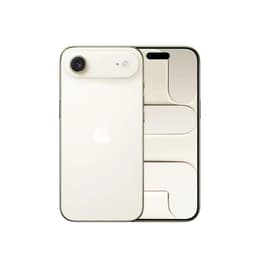
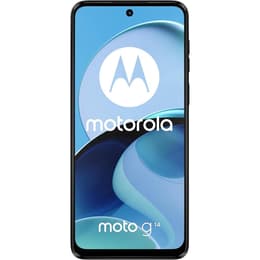
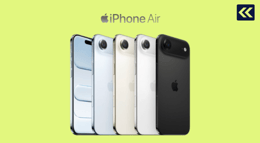
iPhone Air vs Motorola Moto G14

  • 1-year warranty
  • Free standard shipping
  • Free 30-day returns
iPhone Air
Starting at

Refurbished price:A$1,099.00

Versus A$1,899.00 new

See options

Differences at a glance

The iPhone Air (2025) and the Motorola Moto G14 (2023) are distinct smartphones targeting very different segments of the mobile market. The iPhone Air is a contemporary, ultra-slim flagship running iOS, designed for users prioritizing lightweight handling and advanced processing power. Conversely, the Motorola Moto G14 is an entry-level Android device built for essential daily communication and straightforward media consumption. While both devices feature 6.5-inch screens, they differ vastly in release timelines, operating systems, and internal capabilities.

Available Models

Colour

Storage

Scores

Durability

When examining hardware longevity and software support, both devices offer contrasting timelines that influence their practical lifespan for everyday users.

  • Release timeline and support: The iPhone Air launched in late 2025 with Apple's long-term iOS update cycle, ensuring extensive software lifespan. The Motorola Moto G14 debuted in mid-2023 running Android 13, with a more modest security update schedule typical of entry-level hardware.
  • Software longevity: The iPhone Air handles demanding background tasks and future software upgrades smoothly due to its high-tier architecture. The Moto G14 supports standard daily applications reliably, though its update window is more limited over time.
  • Repairability and build: Both models utilize modern assembly methods that require professional care for internal components, though standard screen and battery replacements are widely supported through authorized and quality-assured refurbished service channels.

Release year

2025

2023

Compatible with latest Update

Yes

Yes

Operating system

iOS

Android

Foldable

No

No

Performance

System responsiveness and daily multitasking capabilities vary significantly based on the internal hardware configuration of each device.

  • Storage options: The iPhone Air provides expansive high-speed storage starting at 256 GB without expandable slots. The Moto G14 offers a fixed internal capacity paired with a dedicated microSD card slot for expandable media storage.
  • Everyday processing: The iPhone Air handles heavy applications, professional graphics, and intensive multitasking without hesitation. The Moto G14 manages routine messaging, web browsing, and casual media playback dependably, though heavy gaming or rapid switching between demanding apps will reveal processing limitations.
  • Battery behavior: The iPhone Air balances its ultra-thin profile with power-efficient component design for a full day of mixed use. The Moto G14 features a higher-capacity battery paired with modest hardware, easily lasting through extended daily usage on a single charge.

Screen quality

Display technology and visual output differ notably, affecting outdoor clarity, motion smoothness, and media viewing experiences.

  • Display technology: The iPhone Air utilizes an advanced OLED panel with deep contrast levels, rich color reproduction, and high peak outdoor brightness. The Moto G14 employs an IPS LCD screen that delivers clear text and natural colors for indoor viewing.
  • Refresh rate and smoothness: The iPhone Air supports an adaptive refresh rate scaling up to 120 Hz for fluid scrolling and animations. The Moto G14 operates at a standard 60 Hz refresh rate suitable for general navigation.
  • Outdoor visibility: The iPhone Air reaches high luminance levels to maintain visibility under direct sunlight, whereas the Moto G14 requires shade for comfortable outdoor reading.

Resolution

2736x1260

1080 x 2400

Screen type

Super Retina XDR

IPS LCD

Audiovisual

Photography and audio capabilities reflect the distinct engineering focuses of each device category.

  • Camera systems: The iPhone Air features a high-resolution single main sensor backed by advanced computational photography for detailed low-light shots and crisp video recording. The Moto G14 includes a primary sensor paired with a macro lens for straightforward daytime captures and casual snapshots.
  • Video and audio output: The iPhone Air records stable, high-definition video with spatial audio capture. The Moto G14 provides mono or basic stereo speaker output suitable for casual hands-free calls and short video clips.
  • Microphone performance: Both devices handle voice calls clearly, though the iPhone Air incorporates advanced background noise reduction for professional recording environments.

Main camera

48 megapixels

50 megapixels

Front camera

18 megapixels

8 megapixels

Miscellaneous

Physical design, connectivity standards, and daily handling characteristics set these two models apart in practical use.

  • Build and dimensions: The iPhone Air focuses on a featherlight, ultra-slim titanium profile measuring 5.6 mm in thickness. The Moto G14 utilizes a traditional plastic and glass-like structure with comfortable, standard ergonomics.
  • Connectivity: The iPhone Air supports current-generation Wi-Fi and 5G cellular networks. The Moto G14 relies on 4G LTE connectivity and standard wireless protocols.
  • Ports and security: The iPhone Air utilizes a USB-C port and facial recognition security. The Moto G14 features a USB-C port, a traditional headphone jack, and a side-mounted fingerprint sensor.

Weight

165 oz

177 oz

Screen size (in)

6.5

6.5

Network

5G

4G

SIM card

eSIM

Dual Physical SIM

Carrier compatibility

Unlocked

Unlocked

Connector

USB-C

USB-C + Jack 3.5mm

What the community thinks

Choosing between these two smartphones depends heavily on individual daily requirements and software preferences. Users prioritizing advanced processing power, high-refresh-lightweight design, and long-term software updates will find the iPhone Air well-suited to their needs. Conversely, users seeking a straightforward device for essential communication, media viewing, and expandable storage will lean toward the Motorola Moto G14.

Reviewers and everyday community members frequently praise the iPhone Air for its remarkable thinness and robust system speed, though some note its single-camera configuration requires reliance on digital zoom. For the Moto G14, users appreciate the reliable battery longevity and inclusion of a headphone jack, while acknowledging that processing speeds are best kept to casual tasks. For those exploring sustainable technology upgrades, opting for a quality-assured refurbished option provides an eco-friendly alternative that extends device lifecycles without compromising performance standards. Ultimately, evaluating personal usage habits will guide the most appropriate selection.