
Compare models

Google Pixel 7a vs iPhone 16 Pro Max

  • 1-year warranty
  • Free standard shipping
  • Free 30-day returns
Google Pixel 7a
Starting at

Refurbished price:A$310.00

Versus A$789.27 new

See options
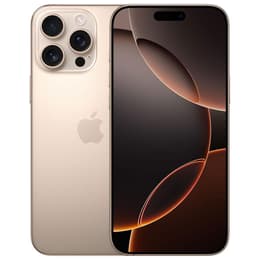
iPhone 16 Pro Max
Starting at

Refurbished price:A$1,249.00

Versus A$2,499.00 new

See options

Differences at a glance

The Google Pixel 7A (released in May 2023) and the iPhone 16 Pro Max (launched in September 2024) represent distinct segments of the smartphone market, offering different experiences tailored to varying user needs. While the Pixel 7A provides a focused Android experience with strong camera capabilities, the iPhone 16 Pro Max delivers a premium iOS ecosystem with advanced performance, a larger display, and a more comprehensive camera system. Both devices operate on their respective flagship operating systems, Android and iOS, providing unique software environments.

Available Models

Colour

Storage (GB)

Scores

Durability

When considering the long-term usability of these devices, several factors come into play, including their release timelines, software support, and physical resilience.

  • Release Timeline: The Google Pixel 7A was introduced in May 2023, making it a mid-range device from the previous year. The iPhone 16 Pro Max, released in September 2024, benefits from being a newer, high-end model, typically receiving software updates for a longer duration.
  • Software Longevity: The Pixel 7A launched with Android 13 and is expected to receive a minimum of five years of security updates from its release date, with current versions reaching Android 16 and beta Android 17. The iPhone 16 Pro Max comes pre-installed with iOS 18 and is designed to support future iOS versions, including iOS 26, indicating a potentially longer period of software support.
  • Physical Durability: The Pixel 7A features Corning Gorilla Glass 3 for screen protection and an aluminum frame, offering IP67 dust and water resistance. The iPhone 16 Pro Max incorporates a titanium design with a Ceramic Shield front, which Apple states is significantly tougher than previous generations and other smartphone glass, alongside IP68 water resistance. While the iPhone's Ceramic Shield offers enhanced scratch resistance, its glass construction can still be vulnerable to drops. The Pixel 7A received a repairability score of 5/10 from iFixit, indicating a fair level of repairability.

Release year

2023

2024

Compatible with latest Update

Yes

Yes

Foldable

No

No

Performance

The performance of a smartphone is crucial for daily tasks, from app usage to demanding multimedia experiences. These two devices offer different levels of processing power and efficiency.

  • Processing Capabilities: The Google Pixel 7A is powered by the Google Tensor G2 chip, which enables smooth navigation, efficient handling of everyday applications, and advanced AI-driven features, particularly in photography. The iPhone 16 Pro Max features the A18 Pro chip, designed for high-intensity tasks, complex graphics, and seamless multitasking, providing substantial performance headroom for demanding applications and gaming.
  • Memory and Storage: The Pixel 7A comes with 8GB of RAM and 128GB of non-expandable internal storage, which is suitable for most users but may be a consideration for those requiring extensive local storage or heavy multitasking. The iPhone 16 Pro Max offers storage options starting from 256GB and going up to 1TB, providing ample space for media, applications, and files, and is equipped with 8GB of RAM to support its advanced features and Apple Intelligence.
  • Battery Performance: The Pixel 7A has a 4385 mAh battery, supporting up to 18W wired fast charging and 7.5W wireless charging. User experiences suggest its battery life is adequate for moderate use but may require more frequent charging with heavy usage. The iPhone 16 Pro Max is equipped with a larger 4685 mAh battery, delivering significantly extended usage times, with reports indicating up to 33 hours of offline video playback and over 17 hours of web browsing, making it one of the longest-lasting iPhones.

Screen quality

The display is a primary interface for smartphone interaction, and both devices offer distinct visual experiences.

  • Display Technology and Size: The Google Pixel 7A features a 6.1-inch OLED display with a resolution of 2400x1080 pixels, resulting in a pixel density of approximately 429-431 ppi. This size offers a compact form factor. The iPhone 16 Pro Max boasts a larger 6.9-inch Super Retina XDR OLED display with a resolution of 2868x1320 pixels and a pixel density of 460 ppi, providing an expansive viewing area.
  • Refresh Rate and Brightness: The Pixel 7A's OLED panel supports a 90Hz refresh rate, which can be enabled for smoother scrolling and animations, and offers HDR support. The iPhone 16 Pro Max features ProMotion technology, offering an adaptive refresh rate up to 120Hz for fluid visuals and an Always-On display. In terms of brightness, the iPhone 16 Pro Max reaches up to 1000 nits typical, 2000 nits peak for HDR content, and an impressive 3000 nits peak for outdoor visibility, ensuring excellent readability in various lighting conditions. The Pixel 7A also offers high brightness mode for outdoor use.
  • Visual Clarity and Features: Both displays offer vibrant colors and deep blacks characteristic of OLED technology. The iPhone 16 Pro Max's display also features thinner borders, contributing to a more immersive viewing experience, and includes the Dynamic Island for interactive alerts and activities.

Resolution

1080 x 2400

1320 x 2868

Screen type

OLED

LTPO Super Retina XDR OLED

Audiovisual

Both smartphones are recognized for their photographic capabilities, though they approach imaging with different hardware and software philosophies.

  • Rear Camera Systems: The Google Pixel 7A features a dual-camera setup with a 64MP wide-angle main sensor (f/1.9, OIS, dual pixel PDAF) and a 13MP ultrawide sensor (f/2.2, 120˚ field of view). It excels in computational photography, offering features like Super Res Zoom (up to 8x digital) and strong low-light performance with Night Sight. The iPhone 16 Pro Max boasts a more versatile triple-lens Pro camera system, including a 48MP wide-angle main sensor (f/1.78, OIS), a 48MP ultrawide sensor (f/2.2, 120˚ FOV), and a 12MP 5x telephoto lens with a tetraprism design and optical image stabilization. It also includes a LiDAR scanner for enhanced depth sensing.
  • Photography Performance: The Pixel 7A is highly praised for its photo quality, often compared favorably to higher-priced phones, particularly for its color reproduction and dynamic range. Its ultrawide camera can show noise in low-light conditions. The iPhone 16 Pro Max offers high-resolution photography across its lenses, with the new 48MP ultrawide being a significant improvement. Its telephoto lens provides genuine optical zoom capabilities.
  • Video Recording and Audio: Both devices are capable of 4K video recording. The Pixel 7A supports 4K at 30/60fps, with good image stabilization. The iPhone 16 Pro Max elevates video capabilities with support for 4K at up to 120fps, ProRes video recording, Log video, and spatial video recording, catering to professional users. It also features studio-quality microphones for enhanced audio capture. The iPhone 16 Pro Max introduces a new Camera Control button for quick access and adjustments to camera features.

Main camera

64 megapixels

48 megapixels

Front camera

13 megapixels

12 megapixels

Miscellaneous

Beyond core performance and imaging, several practical features contribute to the overall user experience.

  • Connectivity and Ports: The Google Pixel 7A supports 5G, Wi-Fi 6E, Bluetooth 5.3, and NFC, utilizing a USB-C 3.2 port for charging and data transfer. The iPhone 16 Pro Max steps up with Wi-Fi 7 support, 5G connectivity, and a USB-C port that also supports DisplayPort, offering faster data transfer and external display capabilities. It exclusively uses dual eSIM technology, foregoing a physical SIM card slot.
  • Biometric Security and Interface: The Pixel 7A offers both an under-display fingerprint sensor and face unlock for secure access. The iPhone 16 Pro Max relies on Face ID, Apple's advanced facial recognition system, and features an Action button that can be customized for various functions, including quick access to the camera or other shortcuts.
  • Design and Ergonomics: The Pixel 7A has dimensions of 152 mm (height) x 72.9 mm (width) x 9 mm (depth) and weighs 193.5g, offering a relatively compact and manageable size. It uses recycled materials in its construction. The iPhone 16 Pro Max is a larger device at 163 mm (height) x 77.6 mm (width) x 8.25 mm (depth) and weighs 227g, featuring a titanium frame that contributes to its lightweight yet durable build.

Weight

193 oz

227 oz

Screen size (in)

6.1

6.9

Network

5G

5G

SIM card

Physical SIM + eSIM

Physical SIM + eSIM

Carrier compatibility

Unlocked

Unlocked

Connector

USB-C

USB-C (USB 3)

What the community thinks

User sentiment for the Google Pixel 7A often highlights its exceptional camera performance for its price point, with many appreciating its ability to deliver high-quality photos and a clean Android experience. Common criticisms sometimes point to its battery life being merely adequate for heavy users and its display, while good, not matching the brightness or refresh rate of higher-end devices. Users generally praise its value as a mid-range option that brings many flagship Pixel features to a more accessible price.

For the iPhone 16 Pro Max, user feedback frequently emphasizes its industry-leading performance, significantly extended battery life, and the versatility of its advanced camera system, particularly for video recording and low-light photography. The larger, brighter, and smoother display is also a consistent point of praise. Some users note its substantial size and weight as a factor to consider for one-handed use, and while its durability is improved with Ceramic Shield and titanium, the glass construction still presents a vulnerability to drops.

Users prioritizing a compact device with a strong camera for everyday photography and a pure Android experience may find the Google Pixel 7A well-suited to their needs. Its focus on computational photography and a balanced feature set makes it a practical choice. Conversely, users who require the utmost in processing power, an expansive and vibrant display, a comprehensive and advanced camera system for both photos and professional-grade video, and extended battery life will likely lean towards the iPhone 16 Pro Max. Its larger form factor and premium features cater to those seeking a top-tier smartphone experience within the iOS ecosystem. For those considering either device, exploring quality-assured refurbished options can provide an eco-friendly alternative to acquiring these technologies.