
Compare models
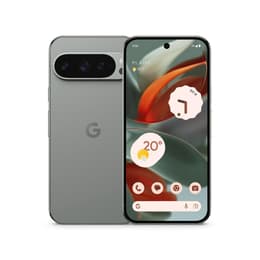
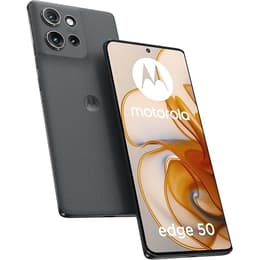
Google Pixel 9 Pro vs Motorola Edge 50
- 1-year warranty
- Free standard shipping
- Free 30-day returns
Differences at a glance
The Google Pixel 9 Pro (2024) and the Motorola Edge 50 (2024) are contemporary smartphones designed for users seeking advanced everyday capabilities in sleek modern form factors. While both devices run on the Android operating system, they approach hardware design and user experience through distinct engineering choices. The primary differentiators between these two models lie in their physical dimensions, display proportions, and overall hardware ecosystem integration.
Available Models
Colour
Storage
Scores
Durability
Both smartphones provide reliable long-term usability, though their update schedules and hardware longevity timelines differ based on release timing and manufacturer support commitments.
- Software longevity: The Google Pixel 9 Pro benefits from an extended multi-year software support commitment covering operating system upgrades and security patches, whereas the Motorola Edge 50 offers a more standard update cycle.
- Build durability: Each device features robust dust and water resistance alongside reinforced glass or polymer back panels designed to withstand everyday wear and tear.
- Expected lifespan: With robust internal memory configurations and quality components, both models maintain dependable performance characteristics over several years of regular daily use.
Release year
2024
2024
Operating system
Android
Android
Foldable
No
No
Performance
System responsiveness and hardware capabilities vary, reflecting different design priorities for multitasking, energy efficiency, and storage management.
- Multitasking capacity: The Google Pixel 9 Pro utilizes generous system memory allocation to handle demanding applications and intensive background tasks smoothly, while the Motorola Edge 50 balances everyday workloads efficiently with balanced processor architecture.
- Battery behavior: Both handsets manage typical daily use reliably, though physical battery capacity and charging speeds differ, with one emphasizing rapid replenishment technologies and the other focusing on optimized background power management.
- Storage options: Users can select from multiple internal storage tiers to accommodate large media libraries and applications, though neither device supports expandable storage via memory cards.
Screen quality
Viewing experiences differ notably due to panel dimensions, curvature design, and maximum luminance capabilities during outdoor usage.
- Display technology: Both models employ vibrant organic light-emitting diode panels that deliver deep contrast levels, wide viewing angles, and fluid high refresh rate scrolling.
- Brightness and clarity: The Google Pixel 9 Pro achieves exceptionally high peak luminance levels for clear outdoor visibility under direct sunlight, while the Motorola Edge 50 provides a larger screen expanse suited for immersive media consumption.
- Form factor: The Pixel 9 Pro favors a more compact, pocket-friendly footprint, whereas the Edge 50 utilizes a broader curved-edge profile.
Resolution
1280x2856
1220x2712
Audiovisual
Imaging hardware and audio-visual output cater to different content creation preferences and media playback requirements.
- Camera versatility: The Google Pixel 9 Pro features a comprehensive triple-lens rear layout with high-resolution telephoto zoom capabilities, whereas the Motorola Edge 50 equips a versatile main sensor and optical zoom system for clear everyday photography.
- Video and low light: Both devices capture detailed video footage and handle challenging low-light environments effectively through advanced image stabilization and computational processing.
- Audio output: Integrated stereo speakers deliver clear sound reproduction for hands-free calls, podcasts, and casual video viewing.
Miscellaneous
Practical physical characteristics and connectivity standards shape how each device fits into daily routines and travel requirements.
- Connectivity: Both smartphones support modern fifth-generation cellular networks, fast wireless protocols, and precise location-tracking sensors.
- Physical handling: The Google Pixel 9 Pro features flat metallic sides and a compact form factor, whereas the Motorola Edge 50 offers a slim profile with contoured edges and alternative back textures.
- Security biometrics: Each model incorporates responsive biometric authentication through secure in-screen fingerprint sensors and facial recognition capabilities.
Weight
199 oz
180 oz
Screen size (in)
6.3
6.7
Network
5G
5G
SIM card
Physical SIM + eSIM
Physical SIM
Carrier compatibility
Unlocked
Unlocked
What the community thinks
User discussions and community feedback indicate that both smartphones satisfy distinct sets of consumer preferences. Owners of the Google Pixel 9 Pro frequently highlight its compact handling, bright display clarity, and robust photo processing capabilities. Conversely, users frequently praise the Motorola Edge 50 for its sleek contoured design, immersive large screen, and rapid charging speeds. When evaluating quality-assured refurbished options on Back Market, shoppers can find both models thoroughly tested and restored to working order as a sustainable choice that reduces electronic waste.
Users who prioritize a compact form factor, extended software support, and advanced telephoto zoom will find the Google Pixel 9 Pro well-suited to their needs. Meanwhile, users who value a larger display canvas, rapid charging convenience, and a lightweight profile may lean toward the Motorola Edge 50. Reviewing individual feature priorities helps determine which device aligns best with your daily routine.