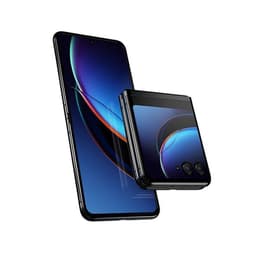

Motorola Edge 50 vs Motorola Razr 40 Ultra

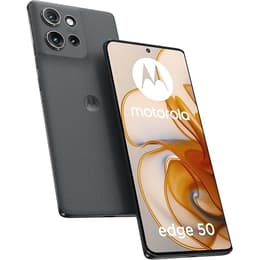
Motorola Edge 50
Motorola Edge 50
See options
Motorola Razr 40 Ultra
See options

The Motorola Edge 50, released in August 2024, and the Motorola Razr 40 Ultra, launched in June 2023, represent distinct approaches to smartphone design and functionality. While the Edge 50 offers a traditional smartphone experience with a focus on a large display and robust camera system, the Razr 40 Ultra stands out with its foldable clamshell design and a prominent external display. Both devices operate on the Android platform, but their form factors and core features cater to different user preferences.

Scores

Durability

When considering the long-term usability of these devices, their release timelines and software support policies are key factors. The Motorola Edge 50, being a more recent release, benefits from a slightly longer expected period of software updates compared to its foldable counterpart.

  • Release Timeline: The Motorola Edge 50 was released in August 2024, making it a newer device than the Motorola Razr 40 Ultra, which launched in June 2023. This difference in release date means the Edge 50 will likely receive software support for a longer duration.
  • OS Support Duration: The Motorola Edge 50 is expected to receive three years of Android operating system updates and four years of security updates. The Motorola Razr 40 Ultra is also promised three years of Android updates and four years of bi-monthly security updates.
  • Durability Features: The Edge 50 features an IP68 rating for dust and water protection, indicating a high level of resistance to environmental elements. The Razr 40 Ultra has an IP52 water-repellent design, offering protection against splashes but not full submersion. Its foldable nature introduces a hinge mechanism, which users report holds up well over time, though dust ingress can be a consideration.

Release year

2024

2023

Compatible with latest Update

Yes

Yes

Operating system

Android

Android

Foldable

No

Yes

Performance

The performance capabilities of these two Motorola devices are influenced by their internal components, impacting how smoothly they handle daily tasks and demanding applications.

  • Processor Capabilities: The Motorola Edge 50 is equipped with a current-generation processor that handles everyday tasks and multitasking efficiently. The Motorola Razr 40 Ultra features a higher-tier processor, which provides a responsive experience for demanding applications and gaming.
  • System Responsiveness: Users of the Edge 50 generally report a smooth and lag-free software experience, benefiting from Motorola's near-stock Android interface. The Razr 40 Ultra is noted for its fast and zippy performance, with users experiencing no significant performance issues even with intensive use.
  • Battery Behavior: The Edge 50 houses a larger battery, which users often find provides impressive battery life, lasting through a full day of use. The Razr 40 Ultra, due to its foldable design and smaller form factor, has a smaller battery capacity, which typically provides sufficient power for a moderate day of use but may require a top-up for heavy users.

Memory (GB)

12 GB

8 GB

Screen quality

The display experience on the Motorola Edge 50 and Motorola Razr 40 Ultra differs significantly, primarily due to their distinct form factors and display technologies.

  • Display Technology and Size: The Motorola Edge 50 features a 6.7-inch P-OLED display, offering deep blacks and vibrant colors across its traditional slab form. The Motorola Razr 40 Ultra boasts a 6.9-inch pOLED main foldable display and a 3.6-inch pOLED external display, providing versatility in how users interact with the device.
  • Resolution and Clarity: The Edge 50's display has a resolution of 1220x2712 pixels, resulting in a pixel density that ensures sharp and clear visuals. The Razr 40 Ultra's main display offers a resolution of 2640x1080 pixels, with a pixel density that also delivers clear images. The external display on the Razr 40 Ultra is notably large and useful for quick interactions and previews.
  • Brightness and Smoothness: Both devices offer high refresh rates for smooth scrolling and animations; the Edge 50 has a 120Hz refresh rate, while the Razr 40 Ultra's main display goes up to 165Hz. Both displays also achieve high peak brightness levels, making them suitable for outdoor visibility.

Resolution

1220x2712

1080 x 2640

Audiovisual

The camera systems on the Motorola Edge 50 and Motorola Razr 40 Ultra are designed with different strengths, catering to varying photographic needs.

  • Rear Camera System: The Motorola Edge 50 features a versatile triple-camera setup, including a 50MP main lens with optical image stabilization (OIS), a 13MP ultrawide lens, and a 10MP telephoto lens with 3x optical zoom. This configuration allows for a range of photographic styles, from wide landscapes to zoomed-in shots. The Razr 40 Ultra has a dual-camera system on the rear, comprising a 12MP main lens with OIS and a 13MP ultrawide lens that also functions for macro photography.
  • Photography Performance: The Edge 50 is praised for taking good photos with sharp detail and balanced colors, particularly from its main lens, and offers 4K video recording. The Razr 40 Ultra can capture good photos in well-lit conditions, but some users note it may struggle with motion and its ultrawide lens is not as wide as some competitors. Its foldable design allows for unique shooting angles and hands-free photography.
  • Front Camera and Audio: Both devices feature a 32MP front-facing camera for selfies and video calls. The Edge 50 offers clear and loud stereo speakers with audio enhancement technology. The Razr 40 Ultra also includes stereo speakers for an enhanced media consumption experience.

Front camera

32 megapixels

32 megapixels

Miscellaneous

Beyond their core features, several practical elements differentiate the Motorola Edge 50 and Motorola Razr 40 Ultra, influencing daily convenience and user interaction.

  • Connectivity and Ports: Both smartphones support 5G connectivity, Wi-Fi, and Bluetooth, ensuring modern wireless communication capabilities. The Edge 50 uses a USB Type-C port, while the Razr 40 Ultra also features a USB Type-C port. Neither device includes a traditional headphone jack.
  • Biometric Security: The Motorola Edge 50 incorporates an in-display fingerprint sensor for secure unlocking. The Motorola Razr 40 Ultra utilizes a side-mounted fingerprint reader, often integrated into the power button, along with face unlock capabilities.
  • Design and Handling: The Edge 50 has a traditional slab design, measuring 160.8 x 72.4 x 7.79mm and weighing 180g, with a comfortable eco-leather back. The Razr 40 Ultra's foldable design means it is compact when closed (88.42 x 73.95 x 15.1mm) and expands to a larger size when open (170.83 x 73.95 x 6.99mm), weighing between 184.5g and 188.5g depending on the finish. This allows for a smaller footprint when not in use.

Weight

180 oz

1 oz

Screen size (in)

6.7

6.9

Network

5G

5G

SIM card

Physical SIM

Dual Physical SIM

Carrier compatibility

Unlocked

Unlocked

The Motorola Edge 50 and Motorola Razr 40 Ultra cater to distinct user needs, each excelling in different areas. Users frequently praise the Edge 50 for its impressive battery life, vibrant display, and capable camera system, particularly its dedicated telephoto lens. Its traditional form factor and IP68 rating offer a sense of robust reliability. Some criticisms include occasional camera focus issues in low light and mixed opinions on battery performance, though many find it sufficient for daily use.

Conversely, the Motorola Razr 40 Ultra receives acclaim for its innovative foldable design and the utility of its large external display, which allows for quick interactions without opening the phone. Its premium feel and smooth performance are also frequently highlighted. However, common concerns revolve around its smaller battery capacity compared to traditional smartphones and its camera performance, which, while good in optimal conditions, may not match the versatility of some non-foldable flagships.

Users prioritizing a long-lasting battery, a dedicated telephoto camera, and a highly durable, traditional smartphone design may find the Motorola Edge 50 well-suited to their needs. Its larger battery and higher ingress protection rating make it a practical choice for extended use and varied environments. On the other hand, individuals who value a compact form factor, a unique interactive experience with an external display, and a device that stands out from conventional smartphones will likely lean towards the Motorola Razr 40 Ultra. Its foldable nature offers a blend of portability and a large screen when needed.

Both devices offer compelling features within their respective categories. For those considering either model, exploring quality-assured refurbished options can provide an eco-friendly alternative to new purchases, allowing for informed and sustainable choices.
See all articles

Our recent comparisons