
Compare models
Google Pixel 9 vs iPhone 17 Pro
- 1-year warranty
- Free standard shipping
- Free 30-day returns
Differences at a glance
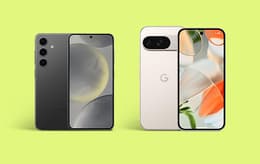
The Google Pixel 9 (2024) and the Apple iPhone 17 Pro (2025) represent two distinct approaches to flagship mobile technology. Operating on different software ecosystems, the Pixel 9 runs on Android, while the iPhone 17 Pro utilizes iOS. Both devices cater to users seeking high-end performance, yet they differ significantly in their overall design philosophy, software experience, and hardware capabilities.
Available Models
Colour
Storage (GB)
Scores
Durability
When evaluating the long-term viability of both smartphones, factors such as software update longevity, build resilience, and component durability play vital roles in daily ownership.
- Software support longevity: The Google Pixel 9 benefits from a multi-year commitment of major operating system upgrades, ensuring extended feature relevance. Similarly, the iPhone 17 Pro receives long-term system updates backed by extended support cycles.
- Build materials and physical protection: Both handsets feature robust exterior construction, incorporating strengthened front glass panels and reinforced metallic frames designed to withstand everyday wear and tear.
- Expected practical lifespan: Due to powerful internal memory configurations and robust physical engineering, both devices are built to maintain reliable daily operation across several years of continuous use.
Release year
2024
2025
Compatible with latest Update
Yes
Yes
Operating system
Android
iOS
Foldable
No
No
Performance
System responsiveness and day-to-day multitasking capabilities dictate how smoothly demanding software runs on each respective handset.
- App loading and multitasking speed: Both devices manage intensive applications, split-screen workflows, and background tasks smoothly without noticeable stutter or slowdown.
- Battery behavior and endurance: The Pixel 9 and iPhone 17 Pro both house efficient power systems capable of sustaining typical daily usage involving web browsing, messaging, and media streaming through a full day.
- Storage capacity configurations: Multiple internal storage tiers are available across both models, accommodating extensive photo libraries, offline media, and large applications.
Screen quality
Viewing comfort, outdoor legibility, and visual clarity depend heavily on the display technology integrated into each smartphone.
- Display panel technology: Both models utilize advanced organic light-emitting diode panels, delivering deep black levels, high contrast ratios, and vivid color reproduction for videos and photos.
- Outdoor brightness capabilities: High peak luminance modes ensure that screens remain easily legible even under direct sunlight or bright ambient lighting conditions.
- Refresh rate smoothness: High refresh rate support enables fluid scrolling through web pages, smooth animations, and responsive touch feedback during navigation.
Resolution
1080 x 2424
2622x1206
Screen type
OLED
Super Retina XDR
Audiovisual
Imaging hardware and software processing determine how effectively each smartphone captures everyday moments and records video content.
- Main camera versatility: Both devices feature multi-lens rear camera arrays that capture sharp, detailed photos across diverse lighting conditions, including challenging low-light environments.
- Video recording quality: High-resolution video capture modes benefit from advanced stabilization features, ensuring steady footage during motion or handheld recording.
- Audio and media output: Built-in stereo speaker configurations provide clear vocal output for phone calls and immersive sound staging for media consumption.
Main camera
50 megapixels
48 megapixels
Front camera
10.5 megapixels
18 megapixels
Miscellaneous
Practical usability is further shaped by connectivity standards, physical dimensions, and hardware security features integrated into the physical body.
- Connectivity standards: Both smartphones support rapid cellular data networks, advanced wireless local area networks, and short-range peripheral pairing protocols.
- Biometric security sensors: Secure device unlocking is handled via responsive facial recognition systems or fast under-display fingerprint sensors.
- Physical dimensions and handling: Ergonomically designed body proportions ensure comfortable one-handed operation and secure pocket storage. Choosing a quality-assured refurbished option provides a sustainable choice for environmentally conscious consumers.
Weight
198 oz
206 oz
Screen size (in)
6.3
6.3
Network
5G
5G
SIM card
Physical SIM + eSIM
eSIM
Carrier compatibility
Unlocked
Unlocked
What the community thinks
User feedback from online communities highlights strong general satisfaction with the dependable daily performance, responsive displays, and capable camera systems found on both the Google Pixel 9 and the iPhone 17 Pro. Pixel users frequently praise the intuitive software integration and intelligent assistant capabilities, while iPhone users often emphasize the cohesive ecosystem connectivity and consistent video recording performance. Common points of discussion involve the distinct handling feel of their respective form factors and differing preferences for operating system layouts.
Users who prioritize deep customization and artificial intelligence tools integrated natively into an Android environment will find the Google Pixel 9 well-suited to their preferences. Conversely, users who favor the Apple software ecosystem and streamlined cross-device syncing will lean toward the iPhone 17 Pro. Selecting either device comes down to matching personal software preferences with individual daily workflow requirements, and opting for a quality-assured refurbished model serves as an eco-friendly alternative for conscious buyers.