

Compare models
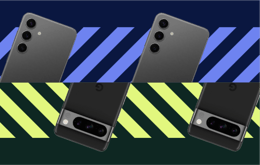
Google Pixel 8 Pro vs Google Pixel 9 Pro
- 1-year warranty
- Free standard shipping
- Free 30-day returns
Differences at a glance
The Google Pixel 8 Pro (2023) and the Google Pixel 9 Pro (2024) represent successive generations of Google's flagship smartphone lineup, offering advanced capabilities within the Android ecosystem. While both devices share core software philosophies and triple-camera setups, the Pixel 9 Pro transitions to a more compact form factor alongside refined internal processing and expanded memory. Both smartphones run on Android and receive long-term software support directly from Google.
Available Models
Colour
Storage (GB)
Scores
Durability
Both models benefit from long-term software support windows and durable physical construction, though their release years create distinct hardware longevity timelines.
- Software Support Duration: Both devices are backed by a multi-year update commitment from Google spanning seven years from their respective launch windows, ensuring extended access to security patches and system features.
- Build Longevity: The Pixel 8 Pro and Pixel 9 Pro utilize robust aluminum frames and hardened glass panels, though the newer model incorporates updated glass protection standards for improved scratch resistance.
- Expected Practical Lifespan: Thanks to substantial internal memory configurations and continuous software optimization, both smartphones are well-equipped to maintain reliable daily operation over several years of continuous use.
Release year
2023
2024
Compatible with latest Update
Yes
Yes
Foldable
No
No
Performance
Performance capabilities scale between generations through improvements in internal component architecture and multitasking capacity.
- Multitasking and Memory: The Pixel 9 Pro features an increased RAM capacity compared to the Pixel 8 Pro, enabling smoother switching between demanding background applications and intensive productivity tools.
- Everyday Responsiveness: Both devices handle standard web browsing, media streaming, and routine tasks without friction, while current-generation processors ensure efficient handling of complex on-device computational tasks.
- Battery Behavior: The Pixel 8 Pro relies on a slightly larger physical battery capacity to power its expansive screen, whereas the Pixel 9 Pro implements power-efficient internal components to balance endurance within a smaller footprint.
Screen quality
Display characteristics vary primarily in physical dimensions and peak brightness parameters, catering to different handling preferences.
- Display Technology: Both models utilize vibrant OLED panels with adaptive refresh rates scaling up to 120Hz for fluid scrolling and responsive touch interactions.
- Size and Form Factor: The Pixel 8 Pro provides a larger viewing area suited for media consumption, while the Pixel 9 Pro adopts a more compact 6.3-inch screen size that improves single-handed reachability.
- Outdoor Visibility: Both displays incorporate high peak brightness thresholds that maintain clear legibility under direct sunlight, with the newer model offering incremental luminance enhancements for bright environments.
Resolution
1344 x 2992
1280x2856
Screen type
LTPO OLED
LTPO OLED
Audiovisual
Imaging hardware across both generations delivers versatile photography options supported by advanced computational processing tools.
- Lens Configuration: Both devices feature high-resolution main, ultra-wide, and telephoto rear camera arrays capable of detailed optical zoom and macro photography.
- Low-Light and Video: Computational algorithms on both smartphones manage challenging lighting conditions effectively, producing balanced exposures and stable video footage across various recording modes.
- Media and Audio Output: Integrated stereo speakers deliver clear audio output for hands-free calls and casual media playback, complemented by multi-microphone arrays that isolate voice input during video recording.
Main camera
50 megapixels
50 megapixels
Front camera
10.5 megapixels
42 megapixels
Miscellaneous
Physical design adjustments and connectivity standards define the day-to-day usability of each device.
- Dimensions and Handling: The Pixel 8 Pro features a larger and heavier chassis, whereas the Pixel 9 Pro reduces overall thickness and weight for a more comfortable pocket profile.
- Connectivity Options: Both models support 5G cellular networks, modern Wi-Fi standards, Bluetooth connectivity, and near-field communication for contactless payments.
- Security Sensors: Responsive under-display fingerprint scanners and secure facial recognition features are integrated into both devices for quick unlocking. A quality-assured refurbished option provides a sustainable choice for acquiring either model without compromising on performance.
Weight
213 oz
199 oz
Screen size (in)
6.7
6.3
Network
5G
5G
SIM card
Physical SIM + eSIM
Physical SIM + eSIM
Carrier compatibility
Unlocked
Unlocked
What the community thinks
User discussions across community forums frequently highlight the Pixel 8 Pro for its spacious display layout and comfortable weight distribution on media-heavy tasks, though some users note its larger footprint can feel cumbersome for one-handed operation. Conversely, the Pixel 9 Pro receives praise for introducing a more manageable physical size combined with expanded memory headroom, while occasional discussions point out that its more compact screen offers less canvas area for split-screen multitasking.
Users prioritizing a larger viewing area and expansive screen space for media will find the Pixel 8 Pro well-suited to their daily routine. Meanwhile, users prioritizing a more compact physical build and increased multitasking memory may lean toward the Pixel 9 Pro. Opting for a quality-assured refurbished option from Back Market allows consumers to select either device as a sustainable, eco-friendly alternative that aligns with their specific handling and performance preferences.