
Compare models

Google Pixel 9 Pro vs iPhone 16

  • 1-year warranty
  • Free standard shipping
  • Free 30-day returns
Google Pixel 9 Pro
Starting at

Refurbished price:A$760.00

Versus A$2,205.75 new

See options
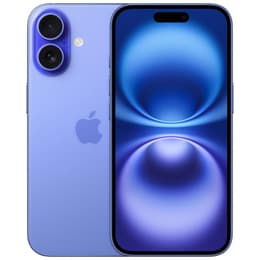
iPhone 16
Starting at

Refurbished price:A$953.00

Versus A$1,349.00 new

See options

Differences at a glance

The Google Pixel 9 Pro (2024) and the Apple iPhone 16 (2024) represent two distinct approaches to flagship smartphone design, operating systems, and ecosystem integration. While both devices offer premium build quality, advanced photography tools, and daily reliability, they cater to different software preferences and workflow habits.

The Google Pixel 9 Pro runs on the Android operating system with an emphasis on integrated artificial intelligence assistance, while the iPhone 16 operates on iOS, focusing on seamless ecosystem synchronization and streamlined navigation.

Available Models

Colour

Storage (GB)

Scores

Durability

Both smartphones launched in late 2024, providing a current technological foundation designed to receive long-term software support and regular security patches from their respective manufacturers.

  • Software longevity: Both Google and Apple commit to approximately seven years of full operating system upgrades and security maintenance, ensuring extended usability and long-term viability.
  • Repairability and build: Both models utilize robust aluminum frames and reinforced glass fronts designed to withstand daily wear, supported by established service networks for component replacements.
  • Expected lifespan: Solid internal hardware and generous memory allocations mean both devices comfortably maintain responsive performance over years of routine ownership.

Release year

2024

2024

Compatible with latest Update

Yes

Yes

Foldable

No

No

Performance

The Google Pixel 9 Pro and iPhone 16 handle demanding applications, heavy multitasking, and everyday navigation with high efficiency, utilizing robust hardware architectures to maintain smooth system responsiveness.

  • Multitasking capacity: Generous onboard memory allocations on both models allow users to switch rapidly between resource-heavy applications without experiencing noticeable slowdowns or app reloads.
  • Gaming and app loading: Current-generation processors on both devices load complex games and graphic-intensive software quickly, accompanied by thermal management systems that sustain performance during extended sessions.
  • Battery behavior: Energy-efficient components ensure both phones typically last through a full day of mixed usage involving web browsing, messaging, and media streaming before requiring a recharge.

Screen quality

Display technology on both devices delivers sharp visual clarity, deep contrast levels, and vibrant color reproduction suitable for reading, media viewing, and outdoor use.

  • Display technology: Both models feature advanced OLED panels that produce rich blacks and vivid colors, though the Pixel 9 Pro incorporates an adaptive refresh rate technology that scales smoothly up to 120Hz for fluid scrolling.
  • Outdoor visibility: High peak brightness capabilities on both screens ensure content remains clearly legible even under direct sunlight or bright ambient lighting conditions.
  • Viewing experience: The iPhone 16 offers a compact 6.1-inch form factor, while the Pixel 9 Pro provides a slightly larger 6.3-inch canvas with narrow bezels, catering to slightly different preferences for screen workspace.

Resolution

1280x2856

1179 x 2556

Screen type

LTPO OLED

Super Retina XDR OLED

Audiovisual

Equipped with sophisticated multi-lens arrays and advanced image processing pipelines, both smartphones capture detailed photos and stable video across diverse lighting conditions.

  • Photography capabilities: The iPhone 16 features a reliable dual-lens system excelling in everyday snapshots and rapid point-and-shoot scenarios, whereas the Pixel 9 Pro adds a dedicated telephoto lens with high-optical-zoom range for distant subjects.
  • Video recording: Both devices deliver high-resolution video capture with advanced stabilization features, ensuring clear footage during movement and balanced exposure in challenging lighting.
  • Audio and media: Stereo speaker configurations on both models produce clear, balanced sound output for hands-free calls, podcasts, and casual video playback.

Main camera

50 megapixels

48 megapixels

Front camera

42 megapixels

12 megapixels

Miscellaneous

Practical everyday features, connectivity standards, and physical handling characteristics define how each device integrates into daily routines and travel.

  • Connectivity standards: Both models support modern 5G networks, fast Wi-Fi standards, and Bluetooth for reliable accessory pairing and rapid data transfers.
  • Physical handling: The iPhone 16 weighs 170 grams with a 6.1-inch frame, offering a lightweight feel in the hand, while the Pixel 9 Pro weighs 199 grams and features a distinct horizontal camera bar on the rear.
  • Biometric security: The iPhone 16 relies on 3D facial recognition, whereas the Pixel 9 Pro incorporates a responsive under-display fingerprint sensor alongside facial unlock options.

Weight

199 oz

170 oz

Screen size (in)

6.3

6.1

Network

5G

5G

SIM card

Physical SIM + eSIM

Physical SIM + eSIM

Carrier compatibility

Unlocked

Unlocked

What the community thinks

User feedback highlights distinct preferences for each device based on ecosystem familiarity and hardware priorities. Owners of the Google Pixel 9 Pro frequently praise its advanced camera zoom capabilities, helpful assistant integration, and smooth high-refresh-rate display. Conversely, iPhone 16 users often emphasize the reliability of iOS, straightforward operation, and seamless integration with other Apple hardware. Common discussions across user communities often weigh the preference for customized Android flexibility against the streamlined consistency of the Apple environment.

Users prioritizing deep customization, flexible multitasking features, and long-range optical zoom will find the Google Pixel 9 Pro well-suited to their workflow. Meanwhile, users prioritizing a lightweight build, simplified interface navigation, and tight ecosystem continuity may lean toward the iPhone 16. For buyers exploring sustainable purchasing alternatives, a quality-assured refurbished option provides a reliable and eco-friendly path to owning either of these modern smartphones.