
Asus Zenfone 9 vs iPhone 13 mini

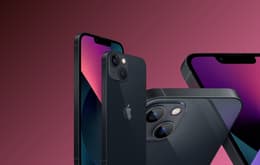
Asus Zenfone 9
Asus Zenfone 9
See options
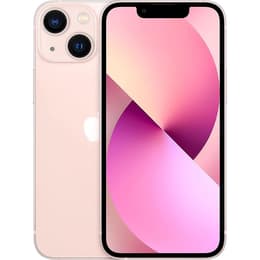
iPhone 13 mini
iPhone 13 mini
Starting at

Refurbished price:A$369.00

Versus A$1,049.00 new

See options

The Asus Zenfone 9, released in September 2022, and the iPhone 13 Mini, launched in September 2021, both cater to users seeking a compact smartphone experience. While the Zenfone 9 runs on the Android operating system and offers a high refresh rate display, the iPhone 13 Mini operates on iOS and integrates deeply within Apple's ecosystem. Both devices deliver flagship-level performance in a smaller form factor, appealing to those who prefer one-handed use.

Scores

Durability

When considering the long-term usability of these compact devices, their release timelines and software support are key factors.

  • Release Timeline and Software Support: The iPhone 13 Mini, released in September 2021, typically receives iOS updates for approximately 5-6 years from its launch, suggesting continued full software support until around 2026 or 2027, followed by security updates. The Asus Zenfone 9, launched in September 2022, generally receives about two years of major Android updates, with potential for extended security patches, meaning its major OS update cycle likely concluded around July 2024.
  • Repairability: The Asus Zenfone 9 received a repairability score of 4.5 out of 10, with screen replacement noted as particularly challenging. The iPhone 13 Mini initially scored 5/10, which improved to 6/10 after an iOS update addressed Face ID issues related to screen replacements, though independent repairs can still be complex due to part pairing.
  • Practical Lifespan: Users of the iPhone 13 Mini often report that the device remains capable and responsive for several years, with battery degradation being a primary factor influencing perceived longevity. For the Zenfone 9, some users have reported hardware issues such as battery health degradation, and problems with speakers or microphones after about two years of use, which could impact its practical lifespan.

Release year

2022

2021

Compatible with latest Update

Yes

Yes

Operating system

Android

iOS

Foldable

No

No

Performance

Both smartphones offer robust performance for their respective operating systems, though they approach it with different hardware configurations.

  • Processing Power: The iPhone 13 Mini is equipped with a powerful processor that ensures smooth operation across applications, efficient multitasking, and capable handling of graphically intensive games. The Asus Zenfone 9 features a current-generation processor that allows it to manage demanding apps and multitasking smoothly, providing a responsive user experience.
  • Multitasking and RAM: The iPhone 13 Mini comes with 4GB of RAM, which is optimized by iOS to handle typical daily usage and app switching effectively, though some users note that multiple apps in the background might occasionally be reloaded. The Asus Zenfone 9 offers higher RAM configurations, with options for 8GB or 16GB, which contributes to its ability to keep more applications active in memory and provide a fluid multitasking experience.
  • Battery Behavior: The iPhone 13 Mini's smaller battery capacity often results in users needing to charge the device by the evening, especially with moderate to heavy use. The Asus Zenfone 9, with its larger battery, generally provides better endurance, with many users reporting it can last through a full day and sometimes into the next with typical usage.

Memory (GB)

6 GB

4 GB

Screen quality

The display is a central component of any smartphone, and these two devices offer distinct viewing experiences.

  • Display Technology and Clarity: The iPhone 13 Mini features a 5.4-inch Super Retina XDR OLED display, providing deep blacks, vibrant colors, and a high pixel density for sharp text and images. The Asus Zenfone 9 sports a slightly larger 5.9-inch Super AMOLED display, also delivering rich colors and clear visuals with a high resolution.
  • Refresh Rate and Smoothness: A notable difference lies in the refresh rate. The iPhone 13 Mini has a standard 60Hz refresh rate, which provides a consistent but less fluid scrolling experience compared to higher refresh rate displays. The Asus Zenfone 9 boasts a 120Hz refresh rate, offering noticeably smoother scrolling and more responsive animations, though some users have reported that the auto refresh rate can sometimes be inconsistent.
  • Brightness and Outdoor Visibility: Both phones offer good brightness levels, with the iPhone 13 Mini reaching up to 800 nits typical and 1200 nits peak for HDR content. The Asus Zenfone 9 also achieves a peak brightness of 1100 nits. However, some Zenfone 9 users have noted that its screen brightness can feel weak in direct sunlight compared to other devices.

Resolution

1080 x 2400

1080 x 2340

Screen type

Super AMOLED

Super Retina XDR OLED

Audiovisual

Both devices offer capable camera systems, but with different strengths and user experiences.

  • Rear Camera System: The Asus Zenfone 9 features a 50 MP main camera with a 6-Axis Hybrid Gimbal Stabilizer, designed for enhanced stability in photos and videos, alongside a 12 MP ultrawide lens that also supports macro shots. The iPhone 13 Mini includes a dual 12 MP camera system with a wide lens featuring sensor-shift optical image stabilization and an ultrawide lens.
  • Photography Performance: User feedback for the Zenfone 9's stock camera suggests it performs well in ideal conditions but can struggle with moving subjects, low light, and exhibits over-sharpening and noise. The iPhone 13 Mini's cameras are generally praised for their consistent performance and ability to capture good photos in various conditions, with users noting they have aged gracefully.
  • Video Recording and Audio: The Zenfone 9 supports video recording up to 8K at 24fps and 4K at 120fps, with its gimbal stabilization benefiting video capture. The iPhone 13 Mini offers HDR video recording with Dolby Vision up to 4K at 60fps, known for its cinematic quality. For audio, the Zenfone 9 includes a 3.5mm headphone jack and dual stereo speakers with Dirac HD Sound, while the iPhone 13 Mini relies on its Lightning port for wired audio and features stereo speakers.

Main camera

50 megapixels

12 megapixels

Front camera

12 megapixels

12 megapixels

Miscellaneous

Beyond core features, several practical elements differentiate these two compact smartphones.

  • Connectivity and Ports: The Asus Zenfone 9 supports Wi-Fi 6/6E and Bluetooth 5.2, and notably includes a 3.5mm headphone jack and a USB Type-C port, though the USB-C port operates at USB 2.0 speeds. The iPhone 13 Mini supports Wi-Fi 6 and Bluetooth 5.0, and uses Apple's proprietary Lightning port, lacking a traditional headphone jack.
  • Biometric Security: The Zenfone 9 integrates a fingerprint sensor into its side-mounted power button, which users generally find fast and convenient. The iPhone 13 Mini utilizes Face ID for biometric authentication, offering secure facial recognition.
  • Design and Build: The Zenfone 9 features a glass front (Gorilla Glass Victus), a plastic back, and an aluminum frame, weighing 169 grams. The iPhone 13 Mini has a Ceramic Shield front, a glass back, and an aluminum frame, weighing 141 grams, making it lighter. Both devices carry an IP68 rating for dust and water resistance. The Zenfone 9 does not support wireless charging, a feature present in the iPhone 13 Mini, which includes MagSafe and Qi wireless charging.

Weight

169 oz

140 oz

Screen size (in)

5.9

5,4

Network

5G

5G

SIM card

Dual Physical SIM

Physical SIM + eSIM

Carrier compatibility

Unlocked

Unlocked

Connector

USB-C + Jack 3.5mm

Lightning

The Asus Zenfone 9 and iPhone 13 Mini both offer compelling options for users seeking a powerful device in a compact form. Users often praise the Zenfone 9 for its excellent performance, larger battery capacity for its size, the inclusion of a 3.5mm headphone jack, and its unique gimbal camera stabilization. However, some criticisms include its limited software update policy, inconsistent camera performance in challenging conditions, and the absence of wireless charging.

The iPhone 13 Mini is frequently lauded for its exceptionally small size, robust performance, long-term software support, and the consistent quality of its camera system for everyday photography. Common concerns for the iPhone 13 Mini revolve around its shorter battery life, the standard 60Hz display, and the proprietary Lightning port.

Users prioritizing a high refresh rate display, a larger battery, and the flexibility of Android with a headphone jack may find the Asus Zenfone 9 well-suited to their needs. Conversely, those who value the iOS ecosystem, extended software longevity, a slightly lighter device, and consistent camera performance, even with a smaller battery, might lean towards the iPhone 13 Mini. Both devices represent a commitment to compact design, and exploring quality-assured refurbished options for either model can provide an eco-friendly alternative for consumers.


See all articles

Our recent comparisons