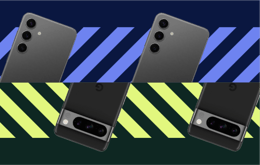


Compare models
Google Pixel 8a vs Google Pixel 9 Pro
- 1-year warranty
- Free standard shipping
- Free 30-day returns
Differences at a glance
The Google Pixel 8a (2024) and the Google Pixel 9 Pro (2024) represent two distinct tiers within Google's smartphone lineup, balancing mid-range accessibility with top-tier flagship engineering. While both run on the Android operating system and share Google's signature software experience, they diverge significantly in hardware sophistication, build materials, and imaging capabilities. Choosing between them depends on whether you prioritize streamlined essentials or advanced multi-lens photography and expanded memory capacity.
Available Models
Colour
Storage (GB)
Scores
Durability
When examining hardware longevity and software support, both devices benefit from Google's commitment to long-term updates, though their release timelines and physical builds create different expectations for practical durability.
- Software Support Duration: Both models receive extended operating system and security updates for approximately seven years from their respective launch dates, ensuring long-term software relevance.
- Build and Materials: The Pixel 9 Pro incorporates sturdier glass protection and a refined aluminum frame, whereas the Pixel 8a utilizes a matte composite back combined with aluminum.
- Expected Lifespan: Both smartphones maintain dependable daily performance over years of use, with the Pixel 9 Pro's higher memory capacity offering additional headroom for future software demands.
Release year
2024
2024
Compatible with latest Update
Yes
Yes
Operating system
Android
Android
Foldable
No
No
Performance
Underneath the surface, these devices handle daily multitasking and demanding applications differently due to variations in internal processing architecture and available memory configurations.
- Multitasking Capability: The Pixel 9 Pro features a larger RAM capacity that allows multiple heavy applications to stay active simultaneously without reloading, compared to the lighter multitasking load handled by the Pixel 8a.
- System Responsiveness: Both units transition smoothly between home screens and web browsing, though current-generation internal hardware in the Pixel 9 Pro executes complex computational tasks and demanding mobile games with greater thermal efficiency.
- Storage and Battery Behavior: The Pixel 9 Pro provides higher storage tiers and efficient battery management that comfortably sustains a full day of mixed use, while the Pixel 8a relies on a slightly smaller battery configuration that handles standard daily routines reliably.
Screen quality
Visual output and display engineering differ noticeably in peak brightness, panel technology, and overall viewing clarity under various lighting conditions.
- Display Technology: The Pixel 9 Pro features an advanced LTPO OLED panel with adaptive refresh rates, while the Pixel 8a utilizes a standard OLED screen that also supports smooth high-refresh scrolling.
- Outdoor Visibility: Higher peak brightness levels on the Pixel 9 Pro make text and media easier to read under direct sunlight compared to the adequate brightness output of the Pixel 8a.
- Resolution and Clarity: Both devices deliver sharp text and vibrant colors for media consumption, though the Pixel 9 Pro offers a slightly denser pixel layout and a marginally larger viewing canvas.
Resolution
1080 x 2400
1280x2856
Screen type
OLED
LTPO OLED
Audiovisual
Imaging hardware and audio-visual performance represent one of the most substantial contrasts between these two models, catering to different photography preferences.
- Camera System Versatility: The Pixel 9 Pro includes a dedicated high-resolution telephoto lens alongside its main and ultra-wide sensors, whereas the Pixel 8a features a dual-lens setup focused on primary and ultra-wide photography.
- Detailed Capture and Video: The Pixel 9 Pro excels in distant zoom clarity, advanced low-light processing, and high-resolution video recording features, while the Pixel 8a provides reliable everyday snapshots and clear casual video clips.
- Media and Audio Output: Both smartphones deliver clear stereo sound for speakerphone calls and media playback, supported by balanced microphone arrays for voice recording.
Main camera
64 megapixels
50 megapixels
Front camera
13 megapixels
42 megapixels
Miscellaneous
Practical daily usability is shaped by physical dimensions, connectivity standards, and biometric security features built into each chassis.
- Handling and Form Factor: The Pixel 8a offers a slightly more compact and lightweight profile in the hand, whereas the Pixel 9 Pro features a slightly heavier, premium-weighted chassis with flatter side rails.
- Biometric Security: Both models utilize responsive in-display fingerprint sensors and facial recognition for secure unlocking.
Weight
188 oz
199 oz
Screen size (in)
6.1
6.3
Network
5G
5G
SIM card
Physical SIM + eSIM
Physical SIM + eSIM
Carrier compatibility
Unlocked
Unlocked
What the community thinks
User discussions across community forums frequently highlight the Pixel 8a for its practical approach to everyday smartphone essentials without unnecessary complexity. Owners often praise its reliable battery life and clean software interface, though some note that its charging speed and build materials reflect its targeted positioning. Conversely, community feedback for the Pixel 9 Pro centers on its exceptional multi-lens camera system, robust memory capacity, and bright display, while occasional discussions point out its heavier physical footprint and elevated retail positioning.
Users prioritizing compact daily reliability and straightforward communication tools will find the Pixel 8a well-suited to their needs. Meanwhile, users who prioritize advanced photography options, extensive multitasking headroom, and premium display brightness will lean toward the Pixel 9 Pro. For those seeking a quality-assured refurbished option, exploring certified pre-owned channels provides a sustainable choice that aligns with environmental consciousness without compromising on core functionality.