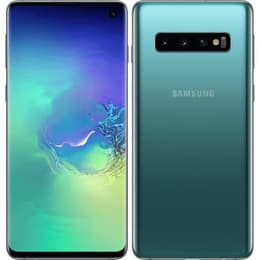
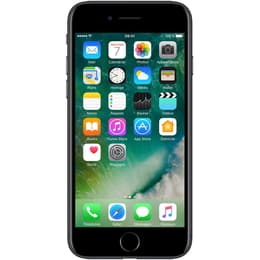

Galaxy S10 vs iPhone 7

Galaxy S10
Galaxy S10
Starting at

Refurbished price:A$359.00

Versus A$849.00 new

See options
iPhone 7
iPhone 7
Starting at

Refurbished price:A$102.00

Versus A$409.00 new

See options

Ratings

The Samsung Galaxy S10, released in March 2019, and the Apple iPhone 7, launched in September 2016, represent different eras and operating systems within the smartphone landscape. While both were flagship devices for their respective companies, the Galaxy S10 offers a more modern Android experience with advanced display and camera technology, whereas the iPhone 7 provides a classic iOS experience with a focus on core performance. Their primary differentiators lie in their release timelines, display characteristics, and camera systems, catering to distinct user preferences.

Scores

Durability

When considering the practical lifespan of these devices, their release dates and subsequent software support are key factors. The Galaxy S10, being a 2019 device, received major Android updates up to Android 12, with its official security patch support ending around April 2023. This means it no longer receives official security updates, which can impact its long-term usability and security. The iPhone 7, released in 2016, received iOS updates up to iOS 15.8.7, with security updates still being provided as of March 2026, though it does not support newer iOS versions like iOS 16 or later.

  • Release Timeline: The Galaxy S10 is a significantly newer device, launched over two years after the iPhone 7, which generally translates to a longer period of modern feature support.
  • Software Longevity: The iPhone 7, despite its older release, continued to receive security updates for iOS 15 into early 2026, offering extended security support for its last compatible operating system. The Galaxy S10's official software and security support concluded in early 2023, meaning it no longer receives updates.
  • Practical Lifespan: Users prioritizing ongoing security updates and compatibility with the latest apps may find the iPhone 7's continued security patches more reassuring, despite its inability to run the newest iOS versions. The Galaxy S10, while offering a more recent Android experience, has reached its official end-of-life for software support.

Release year

2019

2016

Compatible with latest Update

No

No

Operating system

Android

iOS

Foldable

No

No

Performance

The performance of both devices reflects their respective generations, with the Galaxy S10 offering a more contemporary experience due to its newer internal components. The iPhone 7, while capable for its time, shows its age when handling more demanding applications and multitasking.

  • Processor Capabilities: The Galaxy S10 features a more advanced processor, enabling smoother operation for current applications, more efficient multitasking, and better handling of graphically intensive games. The iPhone 7's processor, while robust for its release year, is less capable with modern, resource-heavy tasks.
  • System Responsiveness: Users will generally experience quicker app loading times and more fluid navigation on the Galaxy S10. The iPhone 7 provides a responsive experience for everyday tasks, but may exhibit occasional delays with newer or more complex applications.
  • Multitasking and Storage: The Galaxy S10 typically comes with more RAM (8GB) and higher base storage options (128GB), facilitating seamless switching between multiple applications and providing ample space for files and media. The iPhone 7, with 2GB of RAM and base storage starting at 32GB, is more suited for lighter multitasking and users with fewer storage demands.

Memory (GB)

8 GB

2 GB

Screen quality

The display technologies and sizes on these two smartphones present a clear distinction, influencing the overall viewing experience for users.

  • Display Technology and Clarity: The Galaxy S10 features a 6.1-inch Dynamic AMOLED display with a high resolution of 1440x3040 pixels, offering vibrant colors, deep blacks, and excellent contrast. The iPhone 7 has a smaller 4.7-inch IPS LCD display with a resolution of 750x1334 pixels, which provides good color accuracy but does not match the contrast or sharpness of an AMOLED panel.
  • Brightness and Outdoor Visibility: The Galaxy S10's Dynamic AMOLED screen generally achieves higher peak brightness, making it more comfortable to view content in bright outdoor conditions. The iPhone 7's LCD screen offers adequate brightness for most environments, but may struggle more under direct sunlight.
  • Screen Size and Viewing Experience: The larger 6.1-inch screen of the Galaxy S10 provides a more immersive experience for media consumption and productivity tasks. The 4.7-inch screen of the iPhone 7 is more compact, making it easier for one-handed use, but offers a smaller viewing area.

Resolution

1440 x 3040

750 x 1334

Screen type

Dynamic AMOLED

Retina IPS LCD

Audiovisual

The camera systems on the Galaxy S10 and iPhone 7 reflect the advancements in smartphone photography over their respective release periods, with the S10 offering greater versatility.

  • Camera System Capabilities: The Galaxy S10 boasts a versatile triple-camera setup on the rear, including a 12-megapixel wide-angle lens, a 12-megapixel telephoto lens, and a 16-megapixel ultrawide lens, providing options for various shooting scenarios. The iPhone 7 features a single 12-megapixel rear camera with optical image stabilization, known for its consistent and reliable performance.
  • Photography Performance: The Galaxy S10 excels in offering a broader range of photographic styles, including ultrawide shots and optical zoom, and generally produces detailed and vibrant images in good lighting. The iPhone 7's single camera delivers strong, clear, and detailed photos, particularly in well-lit conditions, and performs well in everyday photography.
  • Video Recording and Audio: Both devices are capable of recording high-quality video. The Galaxy S10 offers more advanced video features and stabilization. The iPhone 7 also provides solid video recording, and both phones offer decent microphone quality for calls and recordings. The iPhone 7 was also the first iPhone to include stereo speakers, enhancing its media consumption experience.

Main camera

12 megapixels

12 megapixels

Front camera

10 megapixels

7 megapixels

Miscellaneous

Beyond core performance, several practical features differentiate the Galaxy S10 and iPhone 7, impacting daily usability and connectivity.

  • Connectivity and Ports: The Galaxy S10 supports newer Wi-Fi standards and Bluetooth versions, offering potentially faster and more stable wireless connections. It also retains a 3.5mm headphone jack and uses a USB-C port for charging and data transfer. The iPhone 7 relies on Apple's proprietary Lightning port for charging and audio, notably lacking a traditional 3.5mm headphone jack.
  • Biometric Security: The Galaxy S10 features an ultrasonic in-display fingerprint sensor, allowing for a seamless front design. The iPhone 7 utilizes a physical, capacitive home button with Touch ID for fingerprint recognition.
  • Build Materials and Durability: Both devices offer water and dust resistance, with the Galaxy S10 rated IP68 and the iPhone 7 rated IP67. The Galaxy S10 generally has a larger form factor and a higher screen-to-body ratio, while the iPhone 7 is more compact.

Weight

157 oz

138 oz

Screen size (in)

6.1

4.7

Network

4G

4G

SIM card

Physical SIM

Physical SIM

Carrier compatibility

Unlocked

Unlocked

The Samsung Galaxy S10 and iPhone 7 cater to different user needs and preferences, largely due to their generational gap and distinct operating systems. Users often praise the Galaxy S10 for its vibrant AMOLED display, versatile triple-camera system, and modern design with features like an in-display fingerprint sensor and Wireless PowerShare. Some users, however, noted that its battery life could be merely acceptable for heavy use. The iPhone 7 is frequently lauded for its consistent performance, reliable camera, and the intuitive iOS ecosystem. Common criticisms for the iPhone 7 often revolved around its battery life for some users after extended use and the controversial removal of the headphone jack.

Users prioritizing a more modern Android experience with a large, high-quality display, a flexible camera system, and contemporary features may find the Galaxy S10 well-suited to their needs. Conversely, individuals who prefer the simplicity and long-term security update support of iOS, a more compact form factor, and a reliable single camera will likely lean towards the iPhone 7. Both devices offer distinct advantages, and the choice often comes down to personal preference for operating system and desired feature set. For those looking for an eco-friendly and quality-assured alternative, considering refurbished options for either model can be a sustainable choice.

See all articles

Our recent comparisons