Compare models

iPhone 7 vs iPhone XS

  • 1-year warranty
  • Free standard shipping
  • Free 30-day returns
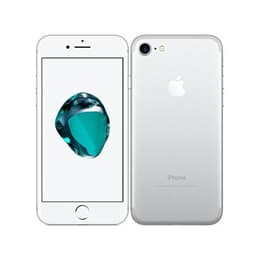
iPhone 7
iPhone 7
Starting at

Refurbished price:A$100.00

Versus A$409.00 new

See options
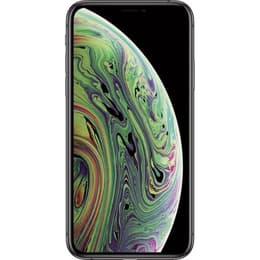
iPhone XS
iPhone XS
Starting at

Refurbished price:A$236.00

Versus A$1,199.00 new

See options

Differences at a glance

The iPhone 7, released in September 2016, and the iPhone Xs, launched in September 2018, represent different generations within Apple's smartphone lineup. While both devices operate on the iOS platform, the iPhone Xs introduced significant advancements in display technology, camera capabilities, and internal processing power, setting it apart from its predecessor.

Scores

Durability

When considering the longevity of these devices, several factors come into play, including their initial release and ongoing software support.

  • Release Timeline: The iPhone 7 was released in September 2016, making it an older model compared to the iPhone Xs, which launched in September 2018. This two-year difference impacts their respective lifespans.
  • Software Support: The iPhone 7 received major iOS updates up to iOS 15, with mainstream support concluding when iOS 16 was released in 2022. It has continued to receive security updates, with the latest being iOS 15.8.7 as of March 2026. The iPhone Xs, on the other hand, received major iOS updates up to iOS 18, with its mainstream support ending with the release of iOS 26 in September 2025. It is expected to receive security updates until at least late 2026. This means the iPhone Xs offers a longer period of active software support.
  • Repairability and Durability: The iPhone 7 received a repairability score of 7 out of 10 from iFixit, indicating a relatively straightforward repair process for certain components. The iPhone Xs scored 6 out of 10, suggesting a slightly more complex repair. In terms of physical resilience, the iPhone 7 features an aluminum unibody design and is rated IP67 for water and dust resistance, meaning it can withstand submersion in up to 1 meter of water for 30 minutes. The iPhone Xs features a glass front and back with a stainless steel frame and boasts an improved IP68 rating, allowing it to be submerged in up to 2 meters of water for 30 minutes.

Release year

2016

2018

Compatible with latest Update

No

Yes

Operating system

iOS

iOS

Foldable

No

No

Performance

The performance of a smartphone is largely determined by its internal components, influencing how smoothly applications run and how efficiently it handles various tasks.

  • Processing Power: The iPhone 7 is equipped with an older generation processor, which capably handles everyday tasks and lighter applications. However, for more demanding apps, intensive gaming, or heavy multitasking, users may experience slower loading times and less fluid operation. The iPhone Xs features a newer, more advanced processor, providing a noticeable boost in speed and efficiency. This translates to quicker app launches, smoother transitions between applications, and a more responsive experience, particularly with graphically intensive games and complex tasks.
  • Multitasking Capabilities: The iPhone 7 comes with 2GB of RAM, which is sufficient for basic multitasking but can lead to apps reloading when switching between many open applications. The iPhone Xs doubles this with 4GB of RAM, allowing it to keep more applications active in the background and switch between them more seamlessly without needing to reload.
  • Storage Options: The iPhone 7 was available with storage capacities including 32GB, 128GB, and 256GB. The iPhone Xs offered options starting from 64GB, 256GB, and up to 512GB, providing more space for apps, photos, and videos.
  • Battery Performance: The iPhone 7 has a 1960mAh battery, and many users reported that its battery life often struggled to last a full day with moderate to heavy use, sometimes requiring recharging before the day's end. The iPhone Xs, with a 2658 mAh battery, generally offers improved battery performance compared to the iPhone 7, though some real-world tests indicated it might not significantly exceed the battery life of its immediate predecessor, the iPhone X. Heavy users of the iPhone Xs might still find themselves needing to charge it once daily.

Memory (GB)

2 GB

4 GB

Screen quality

The display is a primary interface for smartphone interaction, and the quality of the screen significantly impacts the visual experience.

  • Display Technology: The iPhone 7 features a 4.7-inch Retina HD LCD display. The iPhone Xs, in contrast, boasts a 5.8-inch Super Retina HD OLED display. OLED technology provides deeper blacks, higher contrast ratios, and more vibrant colors compared to LCD.
  • Resolution and Clarity: The iPhone 7 has a resolution of 1334x750 pixels at 326 pixels per inch (ppi). The iPhone Xs offers a sharper viewing experience with a resolution of 2436x1125 pixels at 458 ppi. This higher pixel density on the iPhone Xs results in finer detail and clearer text and images.
  • Brightness and Color: Both devices offer a typical maximum brightness of 625 nits. However, the iPhone 7 can reach up to 705 nits with auto-brightness enabled in bright conditions. The iPhone Xs Max, a variant of the Xs, has been noted to achieve up to 660 nits of full-screen brightness. The iPhone 7 introduced a wide color display (DCI-P3), offering a broader range of colors. The iPhone Xs further enhances this with HDR support (HDR10 and Dolby Vision), providing a more dynamic range for compatible content.
  • Screen Size and Design: The iPhone 7 features a traditional design with bezels above and below the 4.7-inch screen. The iPhone Xs adopts a more modern, edge-to-edge design with a larger 5.8-inch display in a form factor that is only slightly larger than the iPhone 7, thanks to reduced bezels.

Resolution

750 x 1334

1125 x 2436

Screen type

Retina IPS LCD

Super Retina OLED

Audiovisual

For many users, the camera system is a crucial aspect of a smartphone, influencing how they capture and share moments.

  • Rear Camera System: The iPhone 7 features a single 12-megapixel wide-angle rear camera with an f/1.8 aperture and optical image stabilization. The iPhone Xs significantly upgrades this with a dual 12-megapixel camera system, comprising a wide-angle lens (f/1.8 aperture) and a telephoto lens (f/2.4 aperture). This dual-camera setup enables features like 2x optical zoom and improved Portrait mode with Depth Control.
  • Photography Features: The iPhone Xs benefits from Smart HDR, which captures multiple frames at different exposures and combines them to create a single image with enhanced detail in both highlights and shadows. It also offers advanced bokeh and Depth Control for Portrait mode, allowing users to adjust the background blur after taking a photo. The iPhone 7 provides solid everyday photography but lacks these more advanced computational photography features.
  • Front Camera: Both devices feature a 7-megapixel front-facing camera. However, the iPhone Xs's front camera benefits from the newer image signal processor, potentially offering better detail and dynamic range in selfies.
  • Video Recording: Both the iPhone 7 and iPhone Xs are capable of recording 4K video. The iPhone Xs offers more advanced video recording capabilities, including extended dynamic range for video up to 30 frames per second and improved optical image stabilization for smoother footage. The iPhone Xs also introduced stereo audio recording for videos.
  • Audio Experience: The iPhone 7 was the first iPhone to feature stereo speakers, providing a more immersive audio experience than previous models. The iPhone Xs continues with stereo speakers, likely with refinements for improved sound quality for media consumption.

Main camera

12 megapixels

12 megapixels

Front camera

7 megapixels

7 megapixels

Miscellaneous

Beyond the core features, several practical elements contribute to the overall user experience and device functionality.

  • Connectivity: The iPhone 7 supports LTE, Wi-Fi 802.11 a/b/g/n/ac, and Bluetooth 4.2. The iPhone Xs offers enhanced connectivity with LTE Advanced, featuring 4x4 MIMO for potentially faster cellular data speeds, and Bluetooth 5.0 for more efficient and stable wireless connections with accessories. It also introduced dual-SIM capability through a combination of a physical nano-SIM and an eSIM.
  • Ports and Biometrics: Both devices utilize Apple's proprietary Lightning port for charging and data transfer. A notable difference is the absence of a 3.5mm headphone jack on the iPhone 7, a design choice that continued with the iPhone Xs. For security and convenience, the iPhone 7 relies on Touch ID, an integrated fingerprint sensor in the home button. The iPhone Xs replaced this with Face ID, an advanced facial recognition system for unlocking the device and authenticating purchases.
  • Physical Design and Materials: The iPhone 7 features an aluminum unibody construction. The iPhone Xs showcases a more premium design with a glass front and back, complemented by a stainless steel frame. This choice of materials contributes to the iPhone Xs's slightly heavier feel compared to the iPhone 7 (177 grams vs. 138 grams). The dimensions also differ, with the iPhone 7 measuring 138.3 x 67.1 x 7.1 mm and the iPhone Xs at 143.6 x 70.9 x 7.7 mm.

Weight

138 oz

177 oz

Screen size (in)

4.7

5.8

Network

4G

4G

SIM card

Physical SIM

Physical SIM + eSIM

Carrier compatibility

Unlocked

Unlocked

Connector

Lightning

Lightning

What the community thinks

The iPhone 7 and iPhone Xs, while both offering the core Apple experience, cater to different user expectations due to their generational differences. The iPhone 7, as an older model, is often praised for its foundational iPhone experience and still capable camera for everyday use. However, common criticisms often point to its more limited battery life for heavy users and the absence of a headphone jack, which was a significant change at its release. Users appreciate its compact size and the reliability of Touch ID.

The iPhone Xs, on the other hand, generally receives praise for its vibrant OLED display, significantly improved dual-camera system with advanced features like Smart HDR, and its more powerful processor that ensures smooth performance across a wider range of applications. User feedback sometimes notes that while its battery life is an improvement over the iPhone 7, it might not always deliver exceptional longevity compared to some contemporaries, particularly the larger iPhone Xs Max variant. Its Face ID system is generally well-regarded for its convenience and security.

Users prioritizing a more modern visual experience with a larger, more immersive screen, along with enhanced photography capabilities and robust performance for demanding applications, may find the iPhone Xs better suited to their needs. Its extended software support also offers a longer period of up-to-date functionality. Conversely, users who prefer a more compact device, are accustomed to Touch ID, and primarily use their phone for essential tasks and casual photography might still find the iPhone 7 to be a functional choice. For those considering either device, exploring quality-assured refurbished options can provide an eco-friendly alternative, extending the life cycle of these products.