
Google Pixel 7a vs iPhone 14 Pro

Google Pixel 7a
Google Pixel 7a
Starting at

Refurbished price:A$337.00

Versus A$749.00 new

See options
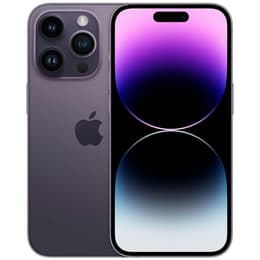
iPhone 14 Pro
iPhone 14 Pro
Starting at

Refurbished price:A$622.00

Versus A$1,749.00 new

See options

Ratings

The Google Pixel 7a, released in May 2023, and the iPhone 14 Pro, launched in September 2022, represent distinct approaches to the modern smartphone experience. While both devices offer advanced capabilities, they cater to different user preferences through their respective operating systems and hardware philosophies. The Pixel 7a operates on Android, emphasizing Google's AI-driven features and computational photography, whereas the iPhone 14 Pro runs on iOS, focusing on a cohesive ecosystem, robust performance, and a refined user interface. Key differentiators include their camera systems, display technologies, and overall design.

Scores

Durability

When considering the longevity of these devices, several factors come into play, including their release timelines, software support, and physical resilience.

  • Release Timeline and Software Support: The iPhone 14 Pro, released in September 2022, typically receives iOS updates for approximately five to six years from its launch. The Google Pixel 7a, launched in May 2023, benefits from Google's commitment to several years of Android version updates and security patches, with its original OS being Android 13 and current being Android 16. This means the Pixel 7a will likely receive software support for a slightly longer period due to its later release date.
  • Physical Durability: The iPhone 14 Pro features a Ceramic Shield front cover and a surgical-grade stainless steel frame, contributing to its robust build and IP68 dust and water resistance, allowing submersion up to 6 meters for 30 minutes. The Pixel 7a incorporates Corning Gorilla Glass 3 on its front and an aluminum housing made with 100% recycled content, offering IP67 dust and water resistance, protecting against submersion up to 1 meter for 30 minutes.
  • Repairability: The Pixel 7a initially received a repairability score of 4/10 from iFixit, which was later uprated to 5/10 after Google provided a comprehensive service manual. Information regarding the iPhone 14 Pro's repairability score from iFixit was not readily available, but Apple has historically focused on authorized repairs.

Release year

2022

2022

Compatible with latest Update

Yes

Yes

Operating system

Android

iOS

Foldable

No

No

Performance

The performance of a smartphone is crucial for daily tasks, from navigating applications to engaging in demanding multimedia activities. Both devices offer capable hardware designed for smooth operation.

  • Processing Capabilities: The iPhone 14 Pro is equipped with a powerful current-generation processor that handles demanding applications and multitasking with notable efficiency. This allows for fluid gaming experiences and quick rendering of complex tasks. The Pixel 7a features a processor designed by Google, which provides a responsive experience for everyday use and excels in AI-driven tasks, including advanced computational photography.
  • System Responsiveness and Multitasking: Users of the iPhone 14 Pro can expect consistently smooth system responsiveness, even with numerous applications running simultaneously, due to its optimized software and hardware integration. The Pixel 7a, with 8 GB of RAM, also offers a capable multitasking experience, allowing users to switch between apps without significant delays.
  • Storage Options: The iPhone 14 Pro provides a range of storage configurations, starting from 128 GB and extending up to 1 TB, offering ample space for various user needs. The Pixel 7a comes with 128 GB of internal storage, which is non-expandable.
  • Battery Behavior: The iPhone 14 Pro's battery is designed to provide power for a full day of typical usage, with some users reporting consistent performance. The Pixel 7a, with its larger battery capacity, generally offers a full day of use for casual users, though heavy usage might necessitate more frequent charging. Both support fast wired charging, with the iPhone 14 Pro also supporting MagSafe wireless charging, while the Pixel 7a supports Qi wireless charging.

Memory (GB)

8 GB

6 GB

Screen quality

The display is a primary interface for smartphone interaction, and both the Pixel 7a and iPhone 14 Pro offer high-quality visual experiences with distinct characteristics.

  • Display Technology and Clarity: The iPhone 14 Pro features a 6.1-inch Super Retina XDR OLED display, delivering deep blacks, vibrant colors, and sharp text with a resolution of 2556x1179 pixels at 460 ppi. The Pixel 7a also uses a 6.1-inch OLED display with a resolution of 2400x1080 pixels, providing clear visuals at approximately 431 ppi.
  • Brightness and Outdoor Visibility: The iPhone 14 Pro stands out with impressive brightness levels, reaching up to 1000 nits typical, 1600 nits for HDR content, and a peak of 2000 nits for outdoor visibility, ensuring content remains legible even in bright sunlight. The Pixel 7a offers good brightness for its class, suitable for various lighting conditions.
  • Refresh Rate and Smoothness: The iPhone 14 Pro incorporates ProMotion technology, offering an adaptive refresh rate that can scale from 1 Hz to 120 Hz. This provides exceptionally smooth scrolling and responsiveness while conserving battery life when static content is displayed. The Pixel 7a features a 90 Hz refresh rate, which offers a noticeably smoother experience compared to standard 60 Hz displays, enhancing the fluidity of animations and interactions.
  • Unique Display Features: The iPhone 14 Pro introduces the Dynamic Island, an interactive area that dynamically adapts to display alerts, notifications, and background activities. It also features an Always-On display that can dim the entire lock screen while still showing widgets and wallpaper. The Pixel 7a includes an Always-On display feature, providing essential information at a glance.

Resolution

1080 x 2400

1179 x 2556

Screen type

OLED

LTPO Super Retina XDR OLED

Audiovisual

Both the Google Pixel 7a and the iPhone 14 Pro are recognized for their advanced camera capabilities, offering users versatile tools for photography and videography.

  • Rear Camera Systems: The iPhone 14 Pro features a Pro camera system with a 48 MP main sensor that uses quad-pixel technology, a 12 MP ultrawide lens with a 120-degree field of view, and a 12 MP telephoto lens offering 3x optical zoom. It also provides a 2x telephoto option by cropping the main sensor. The Pixel 7a is equipped with a 64 MP wide-angle main camera with optical image stabilization and a 13 MP ultrawide lens with a 120-degree field of view.
  • Photography Performance: The iPhone 14 Pro excels in capturing detailed and color-accurate images, particularly benefiting from its Photonic Engine for improved low-light performance across all lenses. Its 48 MP main sensor can capture high-resolution ProRAW images for greater editing flexibility. The Pixel 7a is praised for its computational photography, delivering sharp and well-exposed photos with good dynamic range, even in challenging conditions. Its Night Sight mode is noted for its speed and effectiveness.
  • Video Recording Capabilities: The iPhone 14 Pro offers extensive video features, including 4K recording at various frame rates, Cinematic mode for shallow depth-of-field effects up to 4K HDR, and Action mode for enhanced stabilization during movement. It also supports ProRes video recording. The Pixel 7a can record 4K video at 30 or 60 frames per second with its rear camera and 4K at 30 frames per second with its front camera, featuring good image stabilization.
  • Front Camera and Audio: The iPhone 14 Pro includes a 12 MP front camera with autofocus, capable of capturing detailed selfies and supporting 4K video recording. The Pixel 7a has a 13 MP ultrawide front camera, also capable of 4K video recording, which is beneficial for group selfies or capturing more of the background. Both devices offer stereo speakers and good microphone quality for calls and recordings.

Main camera

64 megapixels

48 megapixels

Front camera

13 megapixels

12 megapixels

Miscellaneous

Beyond core performance and display, several practical elements contribute to the overall user experience and daily utility of these smartphones.

  • Connectivity Standards: Both devices support 5G connectivity for faster mobile data speeds. The iPhone 14 Pro features Wi-Fi 6 and Bluetooth 5.3, while the Pixel 7a supports Wi-Fi 6E and Bluetooth 5.3, offering advanced wireless capabilities for internet and accessory connections.
  • Ports and Biometrics: The iPhone 14 Pro utilizes Apple's proprietary Lightning port for charging and data transfer, and features Face ID for secure facial recognition. The Pixel 7a uses a USB-C 3.2 port and offers both an under-display fingerprint sensor and Face Unlock for biometric authentication.
  • Physical Design and Handling: The iPhone 14 Pro has dimensions of 147.5 x 71.5 x 7.85 mm and weighs 206 grams, providing a compact yet substantial feel. The Pixel 7a measures 152 x 72.9 x 9 mm and weighs 193.5 grams, making it slightly taller and thicker but marginally lighter. The iPhone 14 Pro's build includes a stainless steel frame and Ceramic Shield front, while the Pixel 7a uses an aluminum frame and Gorilla Glass 3.
  • Additional Features: The iPhone 14 Pro includes a LiDAR scanner for enhanced augmented reality experiences and improved low-light focusing. The Pixel 7a integrates Google's suite of AI-powered features, such as Magic Eraser and Photo Unblur, directly into its software experience.

Weight

212 oz

206 oz

Screen size (in)

6.1

6,1

Network

5G

5G

SIM card

Physical SIM + eSIM

Physical SIM + eSIM

Carrier compatibility

Unlocked

Unlocked

Connector

USB-C

Lightning

The Google Pixel 7a and iPhone 14 Pro each offer compelling features, appealing to different user priorities. User feedback for the iPhone 14 Pro often highlights its exceptional camera system, robust performance, and the innovative Dynamic Island as significant advantages. Many appreciate the seamless integration within the Apple ecosystem and the consistent software experience. Criticisms sometimes point to its battery life being merely adequate compared to larger Pro Max models, and the continued use of the Lightning port rather than a more universal standard.

For the Pixel 7a, users frequently praise its outstanding camera capabilities, particularly its computational photography features that deliver impressive results for its category. The clean Android experience and the inclusion of Google's AI-driven functionalities are also well-received. Some users have noted that while battery life is generally good for casual use, heavy users might find it less enduring, and there have been occasional reports of heat generation during intensive tasks.

Users prioritizing a highly advanced camera system with extensive video features, a very bright and adaptive display, and a premium build with long-term software support may find the iPhone 14 Pro well-suited to their needs. Conversely, individuals who value a strong camera experience driven by AI, a clean Android interface, and a slightly more repairable design might lean towards the Pixel 7a. Both devices represent excellent choices, and considering a quality-assured refurbished option can be a sustainable way to acquire either of these capable smartphones.

See all articles

Our recent comparisons