Compare models

Galaxy A23 vs iPhone 17

  • 1-year warranty
  • Free standard shipping
  • Free 30-day returns
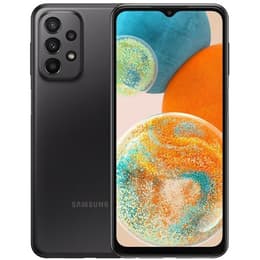
Galaxy A23
Starting at

Refurbished price:A$208.00

Versus A$715.00 new

See options
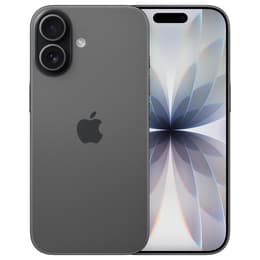
iPhone 17
Starting at

Refurbished price:A$1,503.05

Versus A$1,549.00 new

See options

Differences at a glance

The Samsung Galaxy A23 (2022) and Apple iPhone 17 (2025) represent vastly different generations, operating systems, and tiers within the smartphone market. The Galaxy A23 runs on Android and serves as an entry-level daily communication tool, while the iPhone 17 operates on iOS and functions as a contemporary flagship device. These two models diverge significantly in processing capability, materials, and overall user ecosystem, catering to distinct segments of mobile device users.

Available Models

Colour

Storage (GB)

Scores

Durability

When evaluating hardware longevity and software support, both smartphones offer very different timelines based on their release years and market positions.

  • Software support windows: The iPhone 17 benefits from Apple's extended multi-year update schedule, whereas the older Galaxy A23 approaches the latter stages of its supported software lifecycle.
  • Build durability: The iPhone 17 incorporates advanced scratch-resistant glass and robust water resistance ratings, while the Galaxy A23 relies on standard plastic composite materials and basic protective glass.
  • Expected lifespan: Users choosing the iPhone 17 can anticipate prolonged compatibility with newer applications, while the Galaxy A23 suits shorter-term utility needs.

Release year

2022

2025

Compatible with latest Update

Yes

Yes

Operating system

Android

iOS

Foldable

No

No

Performance

Daily operation and multitasking capabilities highlight a stark contrast in processing power and storage configurations between the two handsets.

  • Storage capacity: The iPhone 17 starts with larger baseline internal storage configurations, whereas the Galaxy A23 offers smaller entry-level capacities with microSD card expansion support.
  • System responsiveness: The iPhone 17 handles demanding gaming and intensive background multitasking with seamless fluid efficiency, while the Galaxy A23 manages routine web browsing and messaging tasks adequately.
  • Power efficiency: The current-generation hardware inside the iPhone 17 maintains steady power management during heavy daily tasks, compared to the modest processing setup of the Galaxy A23.

Screen quality

Visual output and display technologies differ greatly, influencing media consumption and clarity under various lighting conditions.

  • Display panels: The iPhone 17 features an advanced OLED screen with deep contrast ratios, whereas the Galaxy A23 utilizes a standard LCD panel.
  • Refresh rates: The iPhone 17 includes high-refresh-rate technology for smoother scrolling animations, compared to the standard refresh rate found on the Galaxy A23.
  • Outdoor visibility: High peak brightness capabilities on the iPhone 17 ensure legibility under direct sunlight, whereas the Galaxy A23 requires manual shade adjustments outdoors.

Audiovisual

Photography and media recording suites reflect each device's intended tier, offering distinct capabilities for creators and casual shooters.

  • Lens configurations: The iPhone 17 utilizes dual high-resolution main and ultra-wide sensors, while the Galaxy A23 employs a multi-lens setup featuring a primary sensor alongside supplementary macro and depth units.
  • Low-light performance: The iPhone 17 captures cleaner details and balanced exposures in dim environments, whereas the Galaxy A23 produces softer images when light levels drop.
  • Video and audio: High-definition video recording and stereo output on the iPhone 17 provide an immersive media playback experience, contrasting with the mono or basic stereo speaker setups typical of entry-level devices.

Front camera

8 megapixels

18 megapixels

Miscellaneous

Physical dimensions, connectivity standards, and daily handling characteristics complete the practical profile of each smartphone.

  • Connectivity standards: The iPhone 17 supports modern Wi-Fi and advanced 5G networking bands, whereas the Galaxy A23 relies on standard 4G LTE or basic regional 5G variants.
  • Physical ports: The iPhone 17 utilizes a reversible USB-C port for charging, while the Galaxy A23 retains both a USB-C port and a traditional 3.5mm headphone jack.
  • Handling and weight: Both devices offer comfortable daily grips, though differences in housing materials contribute to distinct weight distribution profiles in the hand.

Weight

197 oz

177 oz

Screen size (in)

6.6

6.3

Network

4G

5G

SIM card

Dual Physical SIM

Physical SIM + eSIM

Carrier compatibility

Unlocked

Unlocked

What the community thinks

Community discussions and user feedback highlight distinct patterns of praise and criticism for both models. Users frequently praise the iPhone 17 for its fluid display performance, robust build quality, and long-lasting software support, though some note the higher baseline tier requires a significant adaptation if switching ecosystems. Conversely, users appreciate the Galaxy A23 for practical everyday reliability and inclusion of expandable storage, while noting limitations in demanding gaming tasks and low-light photography.

Users prioritizing high-end processing power, advanced display tech, and long-term software updates will find the iPhone 17 well-suited to their needs. Meanwhile, users looking for a straightforward, essential communication tool with expandable storage may lean toward the Galaxy A23. For those evaluating sustainable purchasing decisions, choosing a quality-assured refurbished option provides an eco-friendly alternative that extends device lifecycles responsibly.


See all articles