
Compare models
iPhone 16 Pro vs iPhone 17
- 1-year warranty
- Free standard shipping
- Free 30-day returns
Differences at a glance
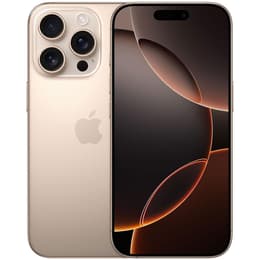
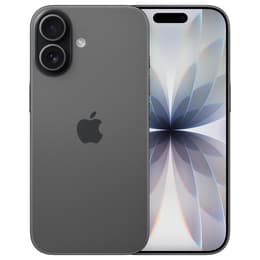
The iPhone 16 Pro (2024) and the iPhone 17 (2025) represent two different tiers within Apple's smartphone lineup, balancing professional-grade capabilities against newer generation standard features. While the iPhone 16 Pro brings advanced multi-lens flexibility from the professional tier, the iPhone 17 introduces generational updates to the standard line, including a faster processor and high refresh rate capabilities. Both devices operate on iOS, providing a consistent software foundation while catering to distinct hardware preferences.
Available Models
Colour
Storage (GB)
Scores
Durability
When evaluating hardware longevity and software support, both smartphones offer robust multi-year viability backed by Apple's standard update cycles, though their release timelines differ by a year.
- Software update timeline: The iPhone 17 benefits from a more recent release date, extending its active software support window slightly further into the future compared to the iPhone 16 Pro.
- Repairability and build: Both models utilize durable frame materials and internal layouts designed for component servicing, achieving comparable repairability scores across certified service channels.
- Practical lifespan: Both devices are engineered to handle demanding software updates for years, making quality-assured refurbished options a sustainable choice for long-term daily use.
Release year
2024
2025
Compatible with latest Update
Yes
Yes
Foldable
No
No
Performance
System responsiveness and everyday multitasking differ due to generation-gap hardware improvements and base memory configurations between the two models.
- App loading and multitasking: The iPhone 17 utilizes a newer-generation processor that handles resource-intensive apps and background tasks with improved thermal efficiency.
- Storage configurations: The iPhone 17 starts with a larger baseline storage capacity, whereas the iPhone 16 Pro includes a smaller entry-level tier alongside higher maximum capacities.
- Battery behavior: Both smartphones maintain sufficient power for full-day typical usage, though daily charging habits may vary depending on screen-on time and background app activity.
Screen quality
Viewing experiences on both devices offer exceptional clarity, deep contrast ratios, and vibrant color reproduction suitable for media consumption.
- Display technology: Both models feature advanced OLED panels that deliver deep blacks and sharp text rendering, with the iPhone 17 incorporating high refresh rate technology for smoother scrolling.
- Outdoor visibility: High peak brightness levels on both screens ensure content remains legible under direct sunlight, though the newer model reaches higher maximum luminance thresholds.
- Screen dimensions: Both phones provide identical diagonal screen sizes with minimal borders, offering an immersive viewing area without increasing physical footprint.
Audiovisual
Photography and video recording suites differ notably in hardware versatility, catering to distinct creative preferences.
- Lens versatility: The iPhone 16 Pro includes a dedicated telephoto zoom lens for distant subjects, while the iPhone 17 relies on a dual-camera system emphasizing high-resolution main and ultra-wide sensors.
- Low-light performance: Both devices capture detailed images in challenging lighting conditions through advanced image processing algorithms and large sensor surface areas.
- Audio and video output: Studio-quality microphone arrays and stereo speakers provide immersive audio capture during video recording and clear media playback on both models.
Front camera
12 megapixels
18 megapixels
Miscellaneous
Physical handling characteristics, connectivity standards, and daily convenience features show subtle refinements between the two releases.
- Build and weight: The iPhone 16 Pro utilizes titanium construction with a slightly heavier feel, whereas the iPhone 17 features an aluminum frame with a lighter overall mass.
- Connectivity standards: Both models support modern fast-wireless protocols, rapid USB-C data transfer speeds, and reliable global cellular connectivity.
- Authentication and sensors: Secure face recognition and precise spatial awareness sensors are integrated seamlessly into the display layout of both units.
Weight
199 oz
177 oz
Screen size (in)
6.3
6.3
Network
5G
5G
SIM card
eSIM
Physical SIM + eSIM
Carrier compatibility
Unlocked
Unlocked
Connector
USB-C (USB 3)
USB-C
What the community thinks
User discussions across community forums frequently highlight the iPhone 16 Pro for its dedicated optical zoom capabilities and professional video features, while praising the iPhone 17 for its balanced everyday feature set and refined display smoothness. Common criticisms for the older pro model center on its heavier weight, whereas some users note that the standard model lacks specialized telephoto reach.
Users prioritizing optical zoom versatility and multi-lens camera flexibility will find the iPhone 16 Pro well-suited to their needs, while users prioritizing a lighter build and smoother standard display performance may lean toward the iPhone 17. Choosing between these devices depends entirely on whether long-range photography or daily handling comfort takes priority.
For consumers seeking an eco-friendly alternative, exploring a quality-assured refurbished option provides a reliable path to acquiring either device while supporting sustainable technology consumption.