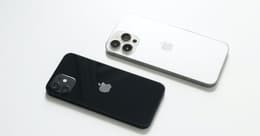
iPhone 12 vs iPhone 8 Plus

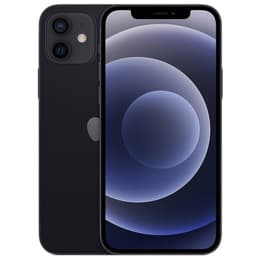
iPhone 12
iPhone 12
Starting at

Refurbished price:A$307.00

Versus A$1,049.00 new

See options
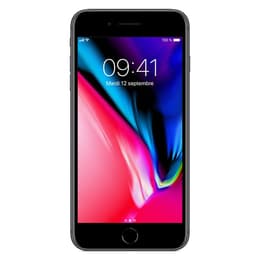
iPhone 8 Plus
iPhone 8 Plus
Starting at

Refurbished price:A$196.32

Versus A$499.00 new

See options

Ratings

The iPhone 12, released in October 2020, and the iPhone 8 Plus, launched in September 2017, represent different stages in Apple's smartphone development. While both devices operate on the iOS platform, the iPhone 12 features a more contemporary design, an advanced display, and significantly upgraded internal components compared to its predecessor. This comparison aims to highlight the practical differences between these two models, assisting users in determining which device best aligns with their needs.

Scores

Durability

The practical lifespan of these devices is influenced by their release dates, software support, and physical resilience.

  • Software Longevity: The iPhone 8 Plus has reached the end of its major iOS update cycle, supporting up to iOS 16.7.15, meaning it no longer receives new features or significant security patches. The iPhone 12, released later, is compatible with iOS 26.4 and is expected to receive updates for a longer period, offering more years of secure and feature-rich usage.
  • Physical Durability: The iPhone 12 features a Ceramic Shield front cover, designed to offer improved drop performance compared to the iPhone 8 Plus's glass front. Both models have glass backs. The iPhone 12 also offers enhanced water and dust resistance with an IP68 rating, allowing submersion up to 6 meters for 30 minutes, while the iPhone 8 Plus has an IP67 rating, for up to 1 meter for 30 minutes.
  • Expected Practical Lifespan: The iPhone 12's newer technology and extended software support suggest a longer practical lifespan for users who prioritize access to the latest features and security updates. The iPhone 8 Plus, while still functional for basic tasks, will gradually see app compatibility diminish as newer iOS versions become standard.

Release year

2020

2017

Compatible with latest Update

Yes

No

Operating system

iOS

iOS

Foldable

No

No

Performance

Performance differences are notable due to the generational gap in their internal processors and memory configurations.

  • Everyday Responsiveness: The iPhone 12 handles demanding applications, complex games, and intensive multitasking with ease, offering a consistently smooth and responsive user experience. Its more advanced processor ensures quick app loading and fluid navigation. The iPhone 8 Plus, while competent for everyday tasks like social media and browsing, will exhibit slower performance with newer or more resource-intensive applications.
  • Multitasking Capability: The iPhone 12 features 4GB of RAM, providing better performance when switching between multiple apps or running several simultaneously. The iPhone 8 Plus has 3GB of RAM, which may lead to more frequent app reloads when multitasking.
  • Battery Behavior: The iPhone 12 generally offers better battery efficiency and a slightly larger capacity (2815 mAh) compared to the iPhone 8 Plus (2691 mAh). This translates to longer usage times on a single charge for most users, benefiting from a more efficient processor and optimized power management.

Memory

4 GB

3 GB

Screen quality

The display technology is a key differentiator between these two iPhone models, significantly impacting the visual experience.

  • Display Technology: The iPhone 12 features a Super Retina XDR OLED display, which provides deep blacks, vibrant colors, and excellent contrast. In contrast, the iPhone 8 Plus uses a Retina HD LCD display, which offers good color accuracy but cannot match the contrast or true black levels of an OLED panel.
  • Resolution and Clarity: The iPhone 12 has a higher resolution of 2532 x 1170 pixels and a greater pixel density (460 ppi), resulting in sharper text and more detailed images. The iPhone 8 Plus's display has a resolution of 1920 x 1080 pixels (401 ppi), which is clear for its class but appears less crisp side-by-side.
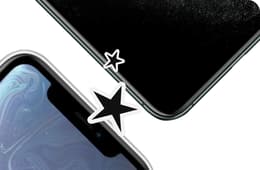
  • Screen Size and Viewing Experience: The iPhone 12 features a 6.1-inch display with significantly slimmer bezels, allowing for a larger screen in a more compact body and a more immersive viewing experience. The iPhone 8 Plus has a 5.5-inch display with larger bezels and a physical home button, giving it a more traditional appearance.

Resolution

1170 x 2532

1080 x 1920

Screen type

Super Retina XDR OLED

Retina IPS LCD

Audiovisual

The camera systems of the iPhone 12 and iPhone 8 Plus offer different capabilities, reflecting advancements in mobile photography over time.

  • Main Camera System: The iPhone 12 features a dual-camera system with a 12-megapixel Wide (f/1.6) and a 12-megapixel Ultra Wide (f/2.4) lens, allowing for broader landscape shots and more creative compositions. The iPhone 8 Plus also has a dual-camera system, but it pairs a 12-megapixel Wide (f/1.8) lens with a 12-megapixel Telephoto (f/2.8) lens, which is useful for optical zoom and portrait photography.
  • Low-Light Performance and Features: The iPhone 12 significantly outperforms the iPhone 8 Plus in low-light conditions, thanks to its Night mode feature, Deep Fusion, and Smart HDR 3, which capture brighter and more detailed photos in dim environments. The iPhone 8 Plus lacks Night mode and struggles more in challenging lighting.
  • Video Recording and Front Camera: Both phones can record 4K video at 60 frames per second. However, the iPhone 12 supports Dolby Vision HDR video recording, offering superior dynamic range and color accuracy, and includes advanced sensor-shift stabilization for smoother handheld video. The iPhone 12 also features a 12-megapixel TrueDepth front camera, while the iPhone 8 Plus has a 7-megapixel front camera.

Main camera

12 megapixels

12 megapixels

Front camera

12 megapixels

7 megapixels

Miscellaneous

Beyond core specifications, several practical elements contribute to the overall user experience and differentiate these models.

  • Connectivity: A major difference is 5G support on the iPhone 12, enabling faster cellular data speeds in compatible areas. The iPhone 8 Plus is limited to 4G LTE. Both support Wi-Fi, with the iPhone 12 featuring the newer Wi-Fi 6 standard for potentially faster and more stable wireless connections.
  • Biometric Authentication: The iPhone 12 uses Face ID for secure facial recognition. The iPhone 8 Plus relies on Touch ID, a fingerprint sensor integrated into its physical home button. User preference often dictates which method is more convenient.
  • Design and Handling: The iPhone 12 features a modern, flat-edged design with smaller bezels, allowing for a 6.1-inch screen in a more compact body (146.7 x 71.5 x 7.4 mm, 162g). The iPhone 8 Plus has a classic rounded design with larger bezels and a physical home button, and is physically larger and heavier (158.4 x 78.1 x 7.5 mm, 202g). The iPhone 12 also introduced MagSafe for faster wireless charging.

Weight

164 oz

202 oz

Screen size (in)

6.1

5.5

SIM card

Physical SIM + eSIM

Physical SIM

Carrier compatibility

Unlocked

Unlocked

Connector

Lightning

Lightning

User feedback for the iPhone 12 often highlights its modern design, enhanced camera capabilities, and the inclusion of 5G connectivity as significant advantages. Some users have noted concerns regarding standby battery drain and connectivity issues. The iPhone 8 Plus is frequently lauded for its familiar design, reliable Touch ID, and its ability to handle everyday tasks competently. However, common criticisms include its aging processor, the lack of 5G, and the cessation of major software updates, as well as its LCD display.

Users prioritizing a modern experience, enhanced camera features, 5G connectivity, and longer software support will find the iPhone 12 better suited to their needs. Its OLED display and improved performance make it a strong choice for media consumption and demanding applications. Conversely, users who prefer a physical home button, are comfortable with an older operating system, and primarily use their phone for basic communication and less intensive tasks may find the iPhone 8 Plus still meets their requirements. For those considering either model, exploring quality-assured refurbished options can provide an eco-friendly alternative.
See all articles

Our recent comparisons