Compare models
iPhone Air vs Motorola Moto G53
- 1-year warranty
- Free standard shipping
- Free 30-day returns
Differences at a glance
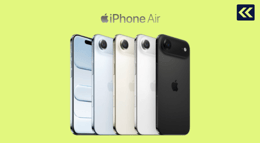
The iPhone Air (2025) and the Motorola Moto G53 (2022) are distinct smartphones targeting very different market segments through unique form factors and design philosophies. The iPhone Air emphasizes an exceptionally thin profile and advanced capabilities under Apple's iOS ecosystem, whereas the Motorola Moto G53 provides an accessible entry point focused on everyday reliability using Android. These devices differ significantly in their launch years, core processing power, and materials.
Available Models
Colour
Storage (GB)
Scores
Durability
When examining hardware longevity and software support, both devices handle updates according to their respective manufacturers' distinct lifecycles and release timelines.
- Software Longevity: The iPhone Air benefits from Apple's extended multi-year update schedule, ensuring ongoing system improvements, whereas the Motorola Moto G53 receives standard Android security patches and version upgrades appropriate for its entry-level classification.
- Build and Repairability: The iPhone Air utilizes a rigid titanium frame and reinforced glass construction, while the Motorola Moto G53 relies on a water-repellent plastic build. Both models maintain standard repair pathways through certified service channels.
- Expected Lifespan: Users can anticipate several years of functional service from both options, with the iPhone Air holding a hardware advantage for high-demand processing longevity.
Release year
2025
2022
Compatible with latest Update
Yes
Yes
Operating system
iOS
Android
Foldable
No
No
Performance
System performance and daily responsiveness vary widely between these two models due to their contrasting hardware platforms and memory configurations.
- Multitasking and Speed: The iPhone Air handles demanding multi-app workflows, high-end mobile gaming, and intensive background tasks smoothly, while the Motorola Moto G53 is tailored for routine daily actions like web browsing, messaging, and light media streaming.
- Storage Configurations: The iPhone Air offers high-capacity internal storage tiers starting at larger baselines without expandable options, whereas the Moto G53 features modest internal storage paired with a microSD card slot for media expansion.
- Battery Behavior: The Motorola model features a large battery capacity that easily sustains moderate use across an entire day, while the ultra-slim iPhone Air balances its compact battery footprint with power-efficient component design.
Screen quality
Display technology represents a major differentiator in visual clarity, brightness, and overall viewing comfort during outdoor or multimedia use.
- Display Technology: The iPhone Air features an advanced OLED screen delivering deep contrast levels and vibrant colors, whereas the Motorola Moto G53 uses an IPS LCD panel.
- Refresh Rate and Fluidity: Both devices support high refresh rates for smooth scrolling and interface navigation, though the iPhone Air implements adaptive scaling to optimize power usage.
- Outdoor Visibility: The iPhone Air achieves high peak brightness levels for clear visibility in direct sunlight, while the Moto G53 provides standard indoor-friendly luminance levels suited for casual outdoor glances.
Resolution
2736x1260
720 x 1600
Screen type
Super Retina XDR
IPS LCD
Audiovisual
Optics and multimedia output cater to different user expectations, ranging from simplified snapshot photography to high-resolution recording capabilities.
- Camera Systems: The iPhone Air employs a single high-resolution main camera setup backed by advanced computational processing, while the Motorola Moto G53 utilizes a dual-sensor arrangement featuring a standard main lens and a supplementary macro or depth helper.
- Video and Low-Light: The iPhone Air captures detailed video and manages challenging lighting conditions effectively, whereas the Moto G53 handles straightforward daylight photos and casual video calls adequately.
- Audio Output: Both devices include internal speaker arrangements capable of handling hands-free calls and casual media playback without requiring external accessories.
Main camera
48 megapixels
50 megapixels
Front camera
18 megapixels
8 megapixels
Miscellaneous
Practical physical traits, connectivity standards, and daily usability features define how each phone integrates into a user's routine.
- Physical Dimensions: The iPhone Air stands out for its record-breaking thinness and lightweight titanium frame, whereas the Motorola Moto G53 adopts a traditional thicker plastic profile that offers a sturdy grip.
- Connectivity: Both models support modern wireless standards including 5G connectivity, though Apple implements advanced Wi-Fi protocols and ultra-wideband features on its device.
- Biometrics and Ports: The iPhone Air relies on facial recognition and a USB-C data port, while the Moto G53 uses a side-mounted fingerprint sensor and includes a traditional headphone jack.
Weight
165 oz
183 oz
Screen size (in)
6.5
6,5
Network
5G
5G
SIM card
eSIM
Dual Physical SIM
Carrier compatibility
Unlocked
Unlocked
Connector
USB-C
USB-C + Jack 3.5mm
What the community thinks
User discussions and community feedback indicate that choice between these devices depends entirely on individual hardware expectations and ecosystem preference. Owners of the Motorola Moto G53 frequently praise its dependable everyday battery life and straightforward software experience, though some users note limitations in heavy gaming performance and screen brightness under bright sunlight. Conversely, community sentiment around the iPhone Air centers on appreciation for its remarkably slim profile, premium materials, and powerful processing headroom, though users acknowledge its higher-tier positioning within the market.
Users prioritizing an featherlight profile, top-tier display technology, and long-term processing power will find the iPhone Air well-suited to their needs. Meanwhile, users prioritizing a reliable device for essential communication, expandable storage, and everyday tasks may lean toward the Motorola Moto G53. Exploring a quality-assured refurbished option can also provide a sustainable choice for acquiring either device model with reduced environmental impact.