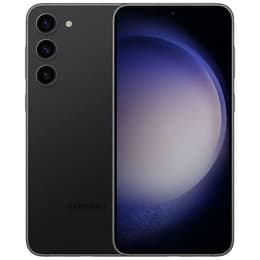
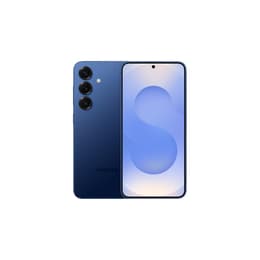
Galaxy S23+ vs Galaxy S25

Galaxy S23+
Galaxy S23+
Starting at

Refurbished price:A$539.00

Versus A$1,953.00 new

See options
Galaxy S25
Galaxy S25
Starting at

Refurbished price:A$855.00

Versus A$1,399.00 new

See options

Ratings

The Samsung Galaxy S23 Plus, released in February 2023, and the Samsung Galaxy S25, launched in February 2025, represent two generations of Samsung's flagship smartphone line. While both devices operate on the Android platform with Samsung's One UI, the Galaxy S25 introduces a newer processor, enhanced software longevity, and a brighter display, building upon the solid foundation established by its predecessor.

Scores

Durability

When considering the long-term usability of these devices, their release timelines and software support policies are key factors.

  • Release Timeline: The Galaxy S23 Plus was released in February 2023, making it a two-year-old device compared to the Galaxy S25, which launched in February 2025.
  • Software Longevity: The Galaxy S23 Plus is expected to receive approximately four years of major Android updates and five years of security updates, extending its support until around Android 17 in 2027. In contrast, the Galaxy S25 benefits from Samsung's extended commitment, offering seven years of OS upgrades and seven years of security updates, ensuring support up to Android 22 and through 2032. This makes the Galaxy S25 a more future-proof option in terms of software.
  • Repairability: Both devices feature an IP68 rating for dust and water resistance, indicating a similar level of protection against environmental elements. The Galaxy S25 series has generally received high repairability scores, with some models achieving 8.5 or 9 out of 10, suggesting a design that facilitates easier repairs compared to some past Samsung flagships.

Performance

The performance of a smartphone is largely determined by its internal components, influencing how smoothly applications run and how efficiently it handles demanding tasks.

  • Processor Capabilities: The Galaxy S23 Plus is powered by a processor from 2023, which delivers strong performance for everyday use, multitasking, and gaming. The Galaxy S25 features a newer generation processor, manufactured with a more advanced 3nm process. This newer processor provides a significant uplift in performance, allowing for smoother operation with resource-intensive applications and more efficient handling of AI-related processing.
  • Memory and Storage: The Galaxy S23 Plus typically comes with 8GB of RAM and storage options of 256GB or 512GB, utilizing UFS 4.0 for faster data access in higher storage configurations. The Galaxy S25 standard model is equipped with 12GB of RAM across all configurations, starting with 128GB of internal storage. The increased RAM in the Galaxy S25 can contribute to more fluid multitasking and better app retention in memory.
  • Battery Behavior: The Galaxy S23 Plus houses a 4700 mAh battery, which users frequently report as providing excellent endurance, often lasting through a full day of heavy use and sometimes up to two days with moderate usage. The Galaxy S25 features a 4000 mAh battery. While its newer, more efficient processor helps optimize power consumption, some user reports indicate that its battery life, while good, may not be its strongest attribute compared to its predecessor, with typical screen-on-time ranging from 8 to 12 hours.

Memory (GB)

8 GB

12 GB

Screen quality

The display is a primary interface for smartphone interaction, and both models offer a high-quality visual experience with some notable differences.

  • Display Technology and Resolution: Both the Galaxy S23 Plus and Galaxy S25 feature Dynamic AMOLED 2X displays, known for their vibrant colors and deep blacks. Both offer a Full HD+ resolution (2340 x 1080 pixels), providing clear and sharp visuals for typical viewing distances.
  • Brightness and Refresh Rate: The Galaxy S23 Plus has a peak brightness of 1750 nits, ensuring good visibility even in bright outdoor conditions. The Galaxy S25 elevates this with a peak brightness of 2600 nits, offering even better outdoor legibility and a more impactful HDR viewing experience. Both devices feature an adaptive 120Hz refresh rate, which provides smooth scrolling and fluid animations, adjusting dynamically to conserve battery life when high refresh rates are not needed.
  • Screen Size and Viewing Experience: The Galaxy S23 Plus features a 6.6-inch display. The Galaxy S25 has a slightly smaller 6.2-inch display. This difference in size can impact the overall viewing experience, with the S23 Plus offering a larger canvas for media consumption and productivity, while the S25 provides a more compact and potentially easier-to-handle form factor.

Audiovisual

Both the Galaxy S23 Plus and Galaxy S25 offer versatile camera systems designed for various photographic scenarios.

  • Camera System Configuration: Both smartphones are equipped with a triple-camera setup on the rear, typically comprising a 50MP main wide-angle sensor, a 12MP ultrawide sensor, and a 10MP telephoto lens with 3x optical zoom. The front-facing camera on both models is a 12MP sensor.
  • Photography Performance: The Galaxy S23 Plus is praised for its ability to capture detailed and colorful images in various lighting conditions, with improved low-light performance thanks to AI processing. The Galaxy S25 also delivers good daylight photos with natural colors and balanced dynamic range. While the main sensor on the S25 performs well in low light, the ultrawide camera may be considered average by some users. The S25 also benefits from AI-powered editing tools, which can enhance the post-processing of photos.
  • Video Recording Quality: Both devices are capable of recording video at up to 8K resolution at 30 frames per second. The S23 Plus offers natural color rendition in videos and improved stabilization. The S25 also provides smooth and stable video quality in 4K, making it suitable for everyday recording.

Miscellaneous

Beyond core specifications, several practical features contribute to the overall user experience of these smartphones.

  • Connectivity and Ports: Both the Galaxy S23 Plus and Galaxy S25 support 5G connectivity, ensuring fast mobile data speeds. The S23 Plus features Wi-Fi 6E and Bluetooth 5.3. The newer Galaxy S25 upgrades to Wi-Fi 7 and Bluetooth 5.4 or 5.5, offering potentially faster and more stable wireless connections. Both devices utilize a USB-C port for charging and data transfer.
  • Biometrics and Design: Both smartphones incorporate an ultrasonic in-screen fingerprint sensor for secure unlocking. The Galaxy S23 Plus features a design with Gorilla Glass Victus 2 on the front and back, and an Armor Aluminum frame. The Galaxy S25 also uses durable glass for its rear and an aluminum frame, with some models in the S25 series featuring Gorilla Glass Armor 2 and a titanium frame.
  • Physical Characteristics: The Galaxy S23 Plus measures 157.8 x 76.2 x 7.6 mm and weighs 196g. The Galaxy S25 is slightly more compact and lighter, with dimensions of 146.9 x 70.5 x 7.2 mm and a weight of 162g. This difference in size and weight can influence handling comfort and pocketability.

Screen size (in)

6.6

6.2

Network

5G

5G

SIM card

Physical SIM + eSIM

Physical SIM + eSIM

Carrier compatibility

Unlocked

Unlocked

User sentiment for the Galaxy S23 Plus often highlights its excellent battery life, robust performance for its generation, and capable camera system as strong points. Many users appreciate its balanced size, offering a larger screen than the base model without the bulk of the Ultra variant. Criticisms, when present, sometimes point to its camera system not being a significant leap over its predecessor, or the lack of certain premium features found in the Ultra model.

For the Galaxy S25, common praise centers on its powerful, efficient processor, the significantly extended software support, and the brighter display. Users also note its solid camera performance in good lighting and the benefits of AI-powered features. Some criticisms include the battery life not being a major improvement over the previous generation, and the camera hardware for the base model not always representing a substantial upgrade.

Users prioritizing long-term software support, cutting-edge processing power, and a brighter display may find the Galaxy S25 well-suited to their needs. Its more compact form factor might also appeal to those who prefer a smaller device. Conversely, users who prioritize maximum battery endurance and a slightly larger screen without needing the absolute latest processor might lean toward the Galaxy S23 Plus. Both devices offer a quality-assured refurbished option, providing an eco-friendly alternative for consumers.


See all articles

Our recent comparisons