Compare models
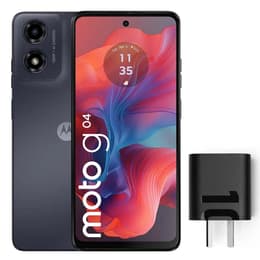
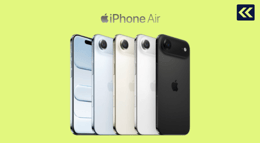
iPhone Air vs Motorola Moto G04
- 1-year warranty
- Free standard shipping
- Free 30-day returns
Differences at a glance
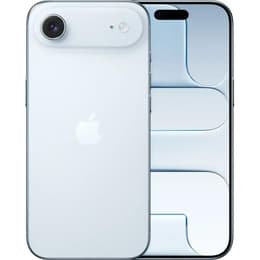
The iPhone Air (2025) and the Motorola Moto G04 (2024) represent entirely different approaches to modern smartphone engineering. The iPhone Air is a flagship-tier device built around an ultra-slim profile and advanced processing capabilities, running Apple's iOS ecosystem. In contrast, the Motorola Moto G04 is an entry-level device focused on core everyday usability, operating on the Android platform. While both serve everyday communication needs, they target vastly different user expectations and technological segments.
Available Models
Colour
Storage (GB)
Scores
Durability
Long-term durability and support structures differ substantially between these two devices based on their hardware tier and release schedules.
- Software longevity: The iPhone Air receives extended operating system updates and security patches spanning many years, whereas the Motorola Moto G04 is designed for a more standard entry-level software lifecycle.
- Build resilience: The iPhone Air utilizes reinforced glass and titanium materials with high-level water and dust resistance, while the Motorola Moto G04 employs a plastic frame with basic splash protection.
- Expected lifespan: Premium internal components allow the iPhone Air to retain high system responsiveness over years of heavy use, while the Moto G04 suits short-to-medium-term communication requirements well.
Release year
2025
2024
Compatible with latest Update
Yes
Yes
Operating system
iOS
Android
Foldable
No
No
Performance
Underneath their exteriors, these smartphones handle demanding tasks and daily workflows through very different hardware configurations.
- App loading and multitasking: The iPhone Air handles intensive applications, rapid task switching, and 3D gaming smoothly, whereas the Moto G04 manages basic tasks like web browsing and messaging comfortably.
- Storage capacity: The iPhone Air provides expansive storage tiers starting at larger capacities without expansion slots, while the Moto G04 offers smaller base storage supplemented by a dedicated memory card slot.
- Battery behavior: The Motorola Moto G04 features a high-capacity power cell that easily stretches across extended daily use, while the iPhone Air balances a slim profile with efficient power management for a standard daily cycle.
Screen quality
Viewing experiences vary widely due to the distinct display technologies integrated into each device model.
- Display technology: The iPhone Air features an advanced OLED screen delivering deep contrast levels and vibrant colors, whereas the Moto G04 utilizes an IPS LCD panel suited for clear, standard viewing.
- Refresh rate and smoothness: The iPhone Air incorporates a high adaptive refresh rate up to 120Hz for fluid scrolling, while the Moto G04 operates at a standard refresh rate.
- Outdoor visibility: High peak brightness capabilities on the iPhone Air maintain screen legibility in direct sunlight, whereas the Moto G04 performs adequately under moderate ambient lighting conditions.
Resolution
2736x1260
720 x 1612
Screen type
Super Retina XDR
IPS LCD
Audiovisual
Multimedia capture and audio output capabilities reflect the distinct design priorities of each smartphone category.
- Photography performance: The iPhone Air captures high-resolution detail with advanced low-light processing from its primary camera system, while the Moto G04 handles casual daytime snapshots using a straightforward single rear sensor.
- Video recording: The iPhone Air supports high-definition recording formats with advanced stabilization, whereas the Moto G04 records standard video suitable for casual sharing.
- Media consumption: The iPhone Air delivers rich stereo audio output for media playback, while the Moto G04 provides standard single-speaker sound alongside a traditional headphone jack.
Main camera
48 megapixels
16 megapixels
Front camera
18 megapixels
5 megapixels
Miscellaneous
Practical daily usability features shape how each device fits into travel, connectivity, and handling routines.
- Connectivity standards: The iPhone Air supports advanced tri-band wireless and high-speed 5G networks, while the Moto G04 covers standard 4G LTE and dual-band Wi-Fi connections.
- Physical handling: The iPhone Air offers a remarkably thin and lightweight titanium build, whereas the Moto G04 provides a lightweight plastic construction with a comfortable grip.
- Authentication: The iPhone Air relies on facial recognition technology, while the Moto G04 utilizes a convenient side-mounted fingerprint sensor.
Weight
165 oz
179 oz
Screen size (in)
6.5
6.56
Network
5G
4G
SIM card
eSIM
Dual Physical SIM
Carrier compatibility
Unlocked
Unlocked
Connector
USB-C
micro USB + Jack 3.5mm
What the community thinks
User feedback highlights distinct preferences for each device across online communities. Owners of the iPhone Air frequently praise its exceptionally thin profile, fluid display performance, and capable ecosystem integration. At the same time, some users note that its slim form factor limits absolute battery endurance compared to bulkier alternatives. For the Motorola Moto G04, buyers often appreciate its reliable battery longevity and straightforward interface, though users frequently point out that its performance struggles with heavy multitasking or demanding gaming apps.
Users prioritizing high-end photography, swift multitasking, and long-term software support will find the iPhone Air well-suited to their daily workflow. Conversely, users seeking a straightforward, reliable device for basic communication and media tasks will lean toward the Motorola Moto G04. Exploring a quality-assured refurbished option can also provide an eco-friendly alternative when making a sustainable purchasing choice.