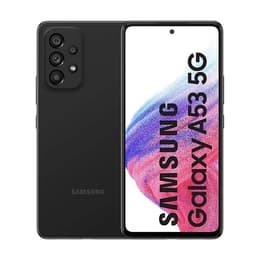
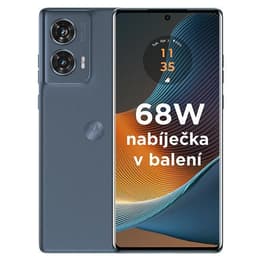

Galaxy A53 5G vs Motorola Edge 50 Fusion

Galaxy A53 5G
Galaxy A53 5G
Starting at

Refurbished price:A$342.00

Versus A$624.00 new

See options
Motorola Edge 50 Fusion
See options

The Samsung Galaxy A53 5G, released in March 2022, and the Motorola Edge 50 Fusion, launched in May 2024, are both Android smartphones designed for the mid-range market. While the Galaxy A53 5G offers a robust software support policy and a proven camera system, the newer Edge 50 Fusion brings a more modern processor, faster charging capabilities, and an enhanced display experience.

Scores

Durability

When considering the long-term usability of these devices, their release timelines and software support policies are key factors.

  • Release Timeline: The Samsung Galaxy A53 5G was released in March 2022, making it a two-year-old device at the time of the Motorola Edge 50 Fusion's launch in May 2024. This age difference means the Edge 50 Fusion benefits from more recent hardware and software optimizations.
  • Software Longevity: Samsung has a strong commitment to software updates for the Galaxy A53 5G, promising four generations of Android OS updates and five years of security updates from its release date. In contrast, the Motorola Edge 50 Fusion is expected to receive three major Android OS upgrades. This gives the Galaxy A53 5G a longer official software support window.
  • Durability Features: Both devices feature Corning Gorilla Glass 5 for screen protection. The Motorola Edge 50 Fusion boasts an IP68 rating for dust and water resistance, indicating it can withstand immersion in up to 1.5 meters of water for 30 minutes. The Samsung Galaxy A53 5G carries an IP67 rating, offering protection against dust and immersion in up to 1 meter of water for 30 minutes.

Performance

The performance of a smartphone is largely determined by its internal components, affecting everything from app loading to multitasking and gaming.

  • Processor Capabilities: The Motorola Edge 50 Fusion is equipped with a newer generation processor, which generally translates to more efficient handling of daily tasks and smoother operation. While it handles demanding apps and multitasking smoothly, some users have noted that it can struggle with very high-performance tasks or intensive gaming. The Samsung Galaxy A53 5G features an older processor, which delivers capable performance for everyday use but may exhibit some lag when switching between apps or running graphically intensive games.
  • Memory and Storage: The Edge 50 Fusion offers configurations with up to 12GB of RAM and 512GB of internal storage. The Galaxy A53 5G comes with up to 8GB of RAM and 256GB of internal storage. The Galaxy A53 5G also provides expandable storage via a microSD card slot, supporting up to 1TB. Expandable storage on the Edge 50 Fusion is less consistently reported across sources, with some indicating no card slot.
  • Battery Behavior: Both devices house a 5000 mAh battery, designed to provide ample power for a full day of use. The Motorola Edge 50 Fusion supports significantly faster 68W TurboPower charging, capable of reaching 50% charge in approximately 15 minutes, and includes the charger in the box. The Samsung Galaxy A53 5G supports 25W fast charging, but the charger is not included, and a full charge takes longer, around 90 minutes.

Memory (GB)

4 GB

12 GB

Screen quality

The display is a primary interface for smartphone interaction, and both models offer vibrant viewing experiences with distinct characteristics.

  • Display Technology and Clarity: Both the Motorola Edge 50 Fusion and the Samsung Galaxy A53 5G feature OLED display technology, specifically pOLED for the Motorola and Super AMOLED for the Samsung, which deliver deep blacks and vibrant colors. Both displays offer a Full HD+ resolution (1080x2400 pixels), ensuring sharp visuals for content consumption and daily tasks.
  • Refresh Rate and Smoothness: The Edge 50 Fusion features a higher refresh rate of 144Hz, providing a very fluid scrolling experience and smoother animations, particularly noticeable in fast-paced content or gaming. The Galaxy A53 5G offers a 120Hz refresh rate, which still provides a smooth experience compared to standard 60Hz displays.
  • Brightness and Viewing Experience: The Motorola Edge 50 Fusion boasts a peak brightness of 1600 nits, which contributes to excellent outdoor visibility and enhanced HDR content viewing. The Samsung Galaxy A53 5G has a peak brightness of 800 nits, which is sufficient for most indoor and outdoor conditions but may be less visible under direct sunlight. The Edge 50 Fusion also features a curved display, which can offer a more immersive viewing experience.

Audiovisual

Both smartphones offer capable camera systems designed to capture a variety of moments, with differences in their sensor configurations and processing.

  • Rear Camera System: The Motorola Edge 50 Fusion features a dual-camera setup with a 50MP main sensor that includes optical image stabilization (OIS) and a 13MP ultrawide lens that also functions for macro shots. The Samsung Galaxy A53 5G comes with a quad-camera array, including a 64MP main sensor with OIS, a 12MP ultrawide, a 5MP macro, and a 5MP depth sensor. User reviews suggest the Edge 50 Fusion's main camera produces sharp and clear photos, performing well in various lighting conditions. The Galaxy A53 5G's main camera is also noted for good image quality in daylight, though some find colors can be overly saturated.
  • Video Recording and Front Camera: Both devices are capable of recording video at 4K resolution at 30 frames per second from their main rear cameras. For selfies and video calls, both phones are equipped with a 32MP front-facing camera, also capable of 4K@30fps video recording.
  • Audio Experience: The Motorola Edge 50 Fusion includes stereo speakers with Dolby Atmos virtual surround sound, enhancing the media consumption experience. The Samsung Galaxy A53 5G also features stereo speakers.

Miscellaneous

Beyond core performance and display, several practical elements contribute to the overall user experience and daily convenience.

  • Connectivity Standards: The Motorola Edge 50 Fusion supports Wi-Fi 6, offering potentially faster and more stable wireless connections compared to the Wi-Fi 5 (802.11 a/b/g/n/ac) found in the Samsung Galaxy A53 5G. Both devices support 5G cellular connectivity and Bluetooth, with the Edge 50 Fusion featuring Bluetooth 5.2 and the Galaxy A53 5G using Bluetooth 5.1.
  • Physical Design and Ports: Both smartphones utilize a USB-C port for charging and data transfer, but neither includes a traditional 3.5mm headphone jack. The Edge 50 Fusion is slightly lighter at 174.9g and has a slimmer profile at 7.9mm thick, compared to the Galaxy A53 5G's 189g weight and 8.1mm thickness. The Motorola Edge 50 Fusion offers various back finishes, including vegan leather options, while the Galaxy A53 5G features a plastic back with a matte finish.
  • Biometric Security: Both phones incorporate an optical under-display fingerprint scanner for secure unlocking.

Screen size (in)

6.5

6.7

Network

5G

5G

SIM card

Physical SIM

Dual Physical SIM

Carrier compatibility

Unlocked

Unlocked

The Samsung Galaxy A53 5G and the Motorola Edge 50 Fusion cater to slightly different user priorities, largely influenced by their respective release dates and design philosophies.

Users often praise the Galaxy A53 5G for its extended software support, ensuring a longer period of security updates and new Android features. Its Super AMOLED display and capable main camera system are also frequently highlighted as strong points. However, some users have noted its processor can feel less responsive for demanding applications and that its charging speed is slower compared to newer alternatives.

The Motorola Edge 50 Fusion, being a more recent release, receives commendation for its vibrant 144Hz pOLED display and significantly faster 68W charging, with the convenience of an included charger. Its IP68 water and dust resistance is also a notable advantage for durability. While its main camera is generally well-regarded, some users have expressed that its overall performance, despite a newer processor, might not always meet expectations for heavy use, and its software update commitment is shorter than Samsung's.

Users prioritizing long-term software support and a proven, balanced camera system may find the Samsung Galaxy A53 5G a suitable choice. Conversely, those who value a more modern display with a higher refresh rate, faster charging, and superior water resistance might lean towards the Motorola Edge 50 Fusion. Both devices represent solid options in the Android smartphone market, and considering a quality-assured refurbished option for either model can be an eco-friendly alternative for consumers.


See all articles

Our recent comparisons