
Google Pixel 7 Pro vs Motorola Edge 50 Fusion

Google Pixel 7 Pro
Google Pixel 7 Pro
Starting at

Refurbished price:A$520.00

Versus A$1,219.00 new

See options
Motorola Edge 50 Fusion
See options

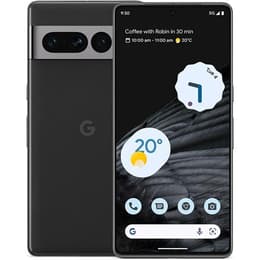
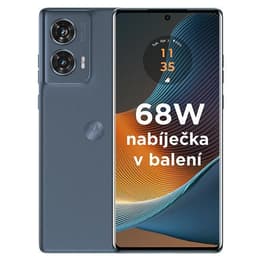
The Google Pixel 7 Pro, released in October 2022, and the Motorola Edge 50 Fusion, launched in April/May 2024, are both Android smartphones offering distinct experiences. While the Pixel 7 Pro arrived as a flagship device with a focus on advanced computational photography and a premium display, the Edge 50 Fusion enters the market as a more recent option, emphasizing a balanced feature set, strong battery performance, and a sleek design. Both devices run on the Android operating system, providing access to a wide ecosystem of applications and services.

Scores

Durability

When considering the long-term usability of these devices, their release timelines and software support policies are key factors.

  • Release and Software Support: The Google Pixel 7 Pro was released in October 2022 and typically receives three major Android OS updates, with Google promising at least three years of major Android updates and five years of security updates from its launch. The Motorola Edge 50 Fusion, launched in April/May 2024, comes with Android 14 out of the box and is promised three years of Android OS updates and four years of security updates. This means the Pixel 7 Pro may receive security updates for a slightly longer period overall.
  • Build Materials and Durability: Both phones feature IP68 ratings for dust and water resistance, indicating a high level of protection against environmental elements. The Pixel 7 Pro uses Gorilla Glass Victus for its front and back, paired with an aluminum frame. The Edge 50 Fusion utilizes Gorilla Glass 5 for its display protection and features a metal or aluminum frame, with back panel options including faux leather or polycarbonate.
  • Practical Lifespan: The newer release of the Motorola Edge 50 Fusion provides it with a more current starting point for software longevity. However, the Pixel 7 Pro's slightly longer security update commitment from Google offers extended protection. Both devices are built to withstand daily use, with their respective glass and frame materials contributing to their overall durability.

Release year

2022

2024

Compatible with latest Update

Yes

Yes

Foldable

No

No

Performance

The performance of a smartphone is influenced by its internal components, affecting how smoothly applications run and how efficiently it manages power.

  • Processing Power: The Google Pixel 7 Pro is equipped with a processor designed for flagship-level tasks, enabling smooth operation for demanding applications and multitasking. User experiences suggest it handles everyday tasks efficiently, though some reports indicate it can become warm during intensive use or gaming. The Motorola Edge 50 Fusion features a newer, upper mid-range processor that provides a responsive experience for daily activities, streaming, and light gaming.
  • Multitasking and Storage: The Pixel 7 Pro offers configurations with up to 12 GB of RAM, supporting robust multitasking capabilities. It comes with internal storage options up to 512 GB, though it does not support expandable storage. The Edge 50 Fusion also provides up to 12 GB of RAM, ensuring smooth transitions between apps. Some versions of the Edge 50 Fusion include a microSDXC slot for expandable storage, offering flexibility for users who require more space for media and files.
  • Battery Behavior: The Pixel 7 Pro houses a 5000 mAh battery, with user feedback on battery life being mixed; some users report it lasting a full day with moderate use, while others find it requires more frequent charging, especially with heavy usage or on mobile data. The Motorola Edge 50 Fusion also features a 5000 mAh battery, and it is frequently praised for its long battery life, often capable of lasting through a full day or even longer for average users.

Memory (GB)

12 GB

12 GB

Screen quality

The display is a primary interface for smartphone interaction, and both devices offer vibrant viewing experiences with distinct characteristics.

  • Display Technology and Resolution: The Google Pixel 7 Pro features a 6.7-inch QHD+ LTPO OLED display with a resolution of 1440 x 3120 pixels, resulting in a high pixel density that delivers sharp and detailed visuals. The Motorola Edge 50 Fusion comes with a 6.7-inch pOLED display offering a Full HD+ resolution of 1080 x 2400 pixels. Both OLED technologies provide deep blacks and vibrant colors, enhancing the viewing experience for media consumption.
  • Brightness and Refresh Rate: The Pixel 7 Pro's display supports a variable refresh rate up to 120 Hz, contributing to smooth scrolling and responsive interactions. It can reach a peak brightness of up to 1500 nits in certain conditions, ensuring good visibility outdoors. The Edge 50 Fusion boasts a higher refresh rate of 144 Hz, which can offer an even smoother visual experience, particularly in supported content and games. Its peak brightness is rated at 1600 nits, providing ample illumination for outdoor use.
  • Viewing Experience: Both phones feature curved displays, which contribute to an immersive viewing experience by extending content to the edges of the device. The Pixel 7 Pro's higher resolution offers a slightly crisper image, while the Edge 50 Fusion's 144 Hz refresh rate provides a fluid visual flow.

Resolution

1440 x 3120

1080 x 2400

Screen type

LTPO AMOLED

P-OLED

Audiovisual

Both smartphones offer capable camera systems, though they approach photography with different strengths and features.

  • Rear Camera Systems: The Google Pixel 7 Pro is equipped with a versatile triple-camera setup, including a 50 MP main sensor with optical image stabilization (OIS), a 12 MP ultrawide lens with a wide field of view, and a 48 MP telephoto lens capable of 5x optical zoom and up to 20x digital zoom. This telephoto capability allows for detailed zoomed-in shots. The Motorola Edge 50 Fusion features a dual-camera system with a 50 MP main sensor (Sony LYT-700C) with OIS and a 13 MP ultrawide lens that also functions for macro photography.
  • Photography Performance: The Pixel 7 Pro is widely recognized for its excellent still photography, producing detailed images with rich colors and strong dynamic range, especially in good lighting conditions. Its computational photography features, such as Macro Focus, enhance its versatility. The Edge 50 Fusion's main camera also delivers sharp and vibrant images, performing well in various lighting scenarios, including decent low-light performance.
  • Video and Audio: Both devices support 4K video recording at 30 or 60 frames per second. User feedback for the Pixel 7 Pro suggests that while its still photos are strong, video quality can sometimes exhibit noticeable exposure shifts and less smooth zoom transitions. Both phones feature stereo speakers, with the Edge 50 Fusion supporting Dolby Atmos for an enhanced audio experience.

Main camera

50 megapixels

50 megapixels

Front camera

10.8 megapixels

32 megapixels

Miscellaneous

Beyond core features, several practical elements contribute to the overall user experience and daily convenience of these devices.

  • Connectivity and Ports: Both the Google Pixel 7 Pro and the Motorola Edge 50 Fusion support 5G connectivity, ensuring access to faster mobile networks where available. They also include modern Wi-Fi standards and Bluetooth for wireless connections. Both devices utilize a USB-C port for charging and data transfer. The Edge 50 Fusion also offers eSIM support, providing flexibility for network management.
  • Biometric Security: For secure unlocking and authentication, both smartphones incorporate an optical under-display fingerprint scanner. The Pixel 7 Pro also includes face recognition capabilities.
  • Design and Handling: The Pixel 7 Pro has dimensions of 162.9 x 76.6 x 8.9 mm and weighs 212g, featuring a glass and aluminum construction. The Motorola Edge 50 Fusion is notably slimmer and lighter, measuring 161.9 x 73.1 x 7.9 mm and weighing 175g, which contributes to comfortable one-handed use and portability. The Edge 50 Fusion's curved display design, while aesthetically pleasing, has been noted by some users to occasionally lead to accidental touches.

Weight

212 oz

175 oz

Screen size (in)

67

6.7

SIM card

Physical SIM + eSIM

Dual Physical SIM

Carrier compatibility

Unlocked

Unlocked

Connector

USB-C

USB-C

The Google Pixel 7 Pro and the Motorola Edge 50 Fusion cater to different user priorities, reflecting their respective positions in the smartphone market. The Pixel 7 Pro, a 2022 flagship, is frequently praised for its exceptional still photography capabilities and its high-resolution QHD+ OLED display. However, some users have noted concerns regarding its battery life, potential for overheating during intensive tasks, and video recording performance.

Conversely, the Motorola Edge 50 Fusion, a more recent 2024 release, garners positive feedback for its impressive battery longevity, sleek and lightweight design, and a capable camera system that performs well across various conditions. Its 144 Hz pOLED display is also a highlight, offering a very smooth visual experience. Criticisms are less prevalent but may include the absence of a dedicated telephoto lens and a slightly shorter software update commitment compared to some competitors.

Users prioritizing advanced computational photography, particularly for still images, and a very high-resolution display may find the Google Pixel 7 Pro well-suited to their needs. Those who value extended battery life, a lightweight design, a very fluid display, and a balanced camera system for everyday use might lean towards the Motorola Edge 50 Fusion. Both devices offer a quality-assured refurbished option, providing an eco-friendly alternative for consumers seeking reliable technology.

See all articles

Our recent comparisons