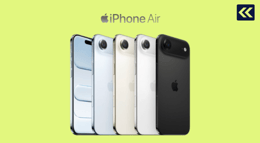
Compare models
iPhone Air vs Motorola Edge 50
- 1-year warranty
- Free standard shipping
- Free 30-day returns
Differences at a glance
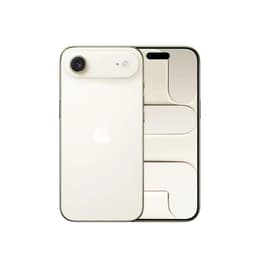
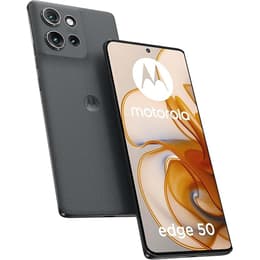
The iPhone Air (2025) and the Motorola Edge 50 (2024) represent two distinct approaches to modern smartphone engineering, prioritizing slim profiles and refined daily usability. While both devices deliver streamlined interfaces and contemporary styling, they differ significantly in their operating systems, physical form factors, and hardware configurations. Choosing between Apple's iOS ecosystem and Motorola's implementation of Android involves balancing distinct priorities in daily interaction and hardware layout.
Available Models
Colour
Storage
Scores
Durability
When evaluating long-term utility, both devices offer robust software backing and structural durability designed to handle years of daily wear, though their support models reflect different industry standards.
- Software longevity: The iPhone Air receives Apple's multi-year iOS upgrades, ensuring extended feature additions, while the Motorola Edge 50 follows Android upgrade schedules spanning several years of security patches.
- Build endurance: Both models incorporate high-grade water and dust resistance certifications, though the iPhone Air utilizes titanium framing compared to the Motorola Edge 50's polymer and glass finish.
- Repair infrastructure: Professional repair options and standardized component replacements are widely accessible for both manufacturers, supporting extended practical lifespans through sustainable choices like a quality-assured refurbished option.
Release year
2025
2024
Compatible with latest Update
Yes
Yes
Operating system
iOS
Android
Foldable
No
No
Performance
Daily responsiveness and multitasking capabilities vary across these devices due to differences in internal hardware architecture and memory management.
- Multitasking efficiency: Both phones handle everyday navigation, web browsing, and demanding applications smoothly, supported by robust memory configurations that keep background tasks active.
- Battery behavior: The Motorola Edge 50 features a larger battery capacity designed for extended endurance, whereas the iPhone Air balances a slim profile with optimized power efficiency to manage daily usage.
- System fluidity: Apps load quickly and interface animations remain fluid on both platforms, ensuring consistent responsiveness whether handling casual communication or intensive productivity workloads.
Screen quality
Visual output and display responsiveness play central roles in the user experience, with both manufacturers implementing vibrant panel technologies.
- Display technology: Both devices utilize advanced OLED panels that deliver deep contrast levels, rich color reproduction, and wide viewing angles for media consumption.
- Outdoor visibility: High peak brightness capabilities on both screens allow for clear legibility under direct sunlight, ensuring content remains easy to read outdoors.
- Refresh smoothness: High refresh rate support enables smooth scrolling through web pages and documents, while adaptive scaling technologies help preserve battery life during static viewing.
Resolution
2736x1260
1220x2712
Audiovisual
Capture capabilities and media consumption features differ notably in lens arrangement and audio output between the two models.
- Camera systems: The iPhone Air utilizes a streamlined single high-resolution rear sensor approach, whereas the Motorola Edge 50 incorporates a versatile multi-lens array including ultra-wide and telephoto options.
- Low-light photography: Advanced image processing on both devices helps retain detail and manage noise in challenging lighting conditions, yielding clear everyday snapshots.
- Media playback: Speaker output delivers clear dialogue for calls and casual video viewing, while integrated microphones ensure intelligible voice recording.
Front camera
18 megapixels
32 megapixels
Miscellaneous
Practical daily features, connectivity standards, and physical handling characteristics shape how each smartphone fits into routine use.
- Connectivity standards: Both devices support modern 5G networks, fast Wi-Fi protocols, and reliable Bluetooth pairing for wireless accessories.
- Physical dimensions: The iPhone Air focuses on an ultra-slim profile and light weight, while the Motorola Edge 50 offers a contoured form factor with a textured back finish for secure grip.
- Security integration: Biometric authentication is handled via facial recognition on the Apple device and an under-display fingerprint sensor on the Motorola model.
Weight
165 oz
180 oz
Screen size (in)
6.5
6.7
Network
5G
5G
SIM card
eSIM
Physical SIM
Carrier compatibility
Unlocked
Unlocked
Connector
USB-C
USB-C
What the community thinks
Community discussions and user feedback highlight distinct preferences for each device based on everyday priorities. Users frequently praise the iPhone Air for its exceptionally thin and lightweight titanium build, smooth operating system integration, and bright display. At the same time, commentators often note its minimalist camera selection and premium entry point. Conversely, users of the Motorola Edge 50 frequently highlight its comfortable textured grip, versatile multi-lens camera array, and rapid charging speeds as standout attributes, while some mention that software update pacing trails behind industry-leading timelines.
Users prioritizing a featherlight form factor and deep ecosystem integration may prefer the iPhone Air, while users prioritizing physical grip versatility and a multi-lens camera setup will lean toward the Motorola Edge 50. Exploring a quality-assured refurbished option offers an eco-friendly alternative for acquiring either device without compromising on performance or reliability. Ultimately, the right choice depends on individual preferences regarding software platforms and physical handling.