
Motorola Edge 50 vs Motorola Edge 50 Fusion

Motorola Edge 50
Motorola Edge 50
See options
Motorola Edge 50 Fusion
See options

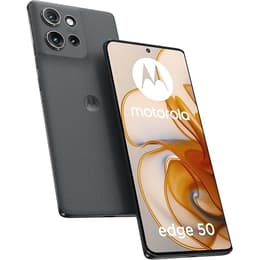
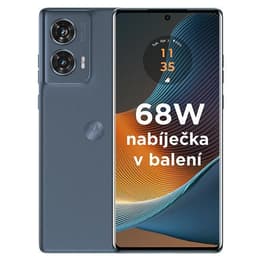
The Motorola Edge 50, released in August 2024, and the Motorola Edge 50 Fusion, launched in May 2024, are both Android smartphones designed to offer a balanced experience for everyday users. While sharing the same operating system and a similar design philosophy, the Edge 50 introduces a more capable camera system and a slightly more powerful processor, whereas the Edge 50 Fusion focuses on extended battery endurance and a high refresh rate display.

Scores

Durability

When considering the long-term usability of these devices, their release timelines and software support are key factors. Both phones launched with Android 14, providing a current software experience.

  • Software Longevity: The Motorola Edge 50 Fusion is expected to receive three major Android OS upgrades and four years of security updates, extending its functional life until approximately April 2028. The Motorola Edge 50 is anticipated to receive up to two major Android upgrades, offering a slightly shorter official software support window.
  • Physical Durability: Both devices feature an IP68 rating for dust and water resistance, indicating a high level of protection against environmental elements. The Edge 50 includes Gorilla Glass 5 for screen protection, while the Edge 50 Fusion also utilizes Gorilla Glass 5, providing comparable scratch and drop resistance for the display.
  • Practical Lifespan: Users can expect both phones to remain functional and receive security updates for several years. The Edge 50 Fusion's longer promised OS update cycle may appeal to those who prioritize extended software support.

Release year

2024

2024

Compatible with latest Update

Yes

Yes

Operating system

Android

Android

Foldable

No

No

Performance

The performance of a smartphone directly impacts how smoothly applications run and how efficiently daily tasks are handled. Both the Motorola Edge 50 and Edge 50 Fusion are equipped to manage typical smartphone usage, but they differ in their processing capabilities.

  • Everyday Responsiveness: The Motorola Edge 50, with its more advanced processor, generally offers a smoother and more responsive experience, particularly when running demanding applications or engaging in moderate gaming. Users report a lag-free software experience with the Edge 50. The Edge 50 Fusion handles daily tasks like browsing, streaming, and video calls smoothly, but may show minor stutters with more intensive use or heavy multitasking.
  • Multitasking and Storage: Both models typically come with 8GB of RAM, ensuring adequate memory for switching between multiple applications. The Edge 50 Fusion also offers a 12GB RAM option, which can further enhance multitasking fluidity. The Edge 50 comes with 256GB of internal storage, while the Edge 50 Fusion offers 128GB or 512GB options.
  • Battery Behavior: Both devices house a 5000mAh battery. The Edge 50 Fusion often demonstrates superior battery endurance in real-world usage, attributed to its processor being less power-intensive and its display having a lower resolution, which demands less graphical processing. The Edge 50 supports 68W wired charging and 15W wireless charging, while the Edge 50 Fusion supports 68W wired charging only.

Memory (GB)

12 GB

12 GB

Screen quality

The display is a primary interface for smartphone interaction, and both Motorola models offer vibrant viewing experiences with some key distinctions in their screen technology and specifications.

  • Display Technology and Clarity: Both the Edge 50 and Edge 50 Fusion feature a 6.7-inch pOLED display, known for producing deep blacks and vibrant colors. The Edge 50 offers a higher resolution of 1220 x 2712 pixels, resulting in a sharper image with a pixel density of 446 ppi. The Edge 50 Fusion has a resolution of 1080 x 2400 pixels, providing a clear Full HD+ viewing experience with 395 ppi.
  • Brightness and Smoothness: Both displays achieve a peak brightness of 1600 nits, ensuring good visibility even in bright outdoor conditions. The Edge 50 features a 120Hz refresh rate for smooth scrolling and animations. The Edge 50 Fusion steps up with a 144Hz refresh rate, offering an even more fluid visual experience, particularly noticeable in fast-paced content or gaming.
  • Viewing Experience: The Edge 50's higher resolution provides a slightly more detailed visual, which can be beneficial for consuming high-definition media. The Edge 50 Fusion's higher refresh rate contributes to a perceptibly smoother interaction, which users may appreciate for general navigation and certain types of content.

Resolution

1220x2712

1080 x 2400

Audiovisual

For many users, the camera system is a crucial component of a smartphone, and both the Motorola Edge 50 and Edge 50 Fusion offer capable setups for capturing photos and videos, with the Edge 50 providing more versatility.

  • Rear Camera Systems: The Motorola Edge 50 features a triple-camera setup, including a 50MP main sensor, a 13MP ultrawide lens, and a 10MP telephoto lens with 3x optical zoom. This telephoto lens allows for clearer zoomed-in shots without significant loss of detail. The Edge 50 Fusion comes with a dual-camera system, comprising a 50MP main sensor and a 13MP ultrawide lens.
  • Photography Performance: The Edge 50 is praised for its great camera quality, producing sharp details and balanced colors in various conditions, with stable video recording. Its telephoto lens enhances its capability for diverse photographic scenarios. The Edge 50 Fusion's cameras are considered capable for everyday photography, including holiday snaps and social media sharing, though some users note that detail can be lost or images can appear overly sharp.
  • Front Camera and Video: Both devices are equipped with a 32MP front-facing camera for selfies and video calls. Both support 4K video recording at 30 frames per second.

Front camera

32 megapixels

32 megapixels

Miscellaneous

Beyond the core features, several practical elements contribute to the overall user experience and differentiate these two Motorola smartphones.

  • Connectivity and Ports: Both the Edge 50 and Edge 50 Fusion support 5G connectivity, dual-band Wi-Fi, and Bluetooth, ensuring modern wireless communication capabilities. They both utilize a USB Type-C port for charging and data transfer.
  • Biometric Security: For secure unlocking, both models incorporate an in-display fingerprint sensor.
  • Design and Handling: The Motorola Edge 50 measures 160.8 x 72.4 x 7.79mm and weighs 180 grams. The Edge 50 Fusion is slightly larger and lighter at 162 x 73.1 x 7.8mm and 175 grams. Both phones feature a slim profile and are designed for comfortable handling. The Edge 50 is available in finishes like Jungle Green, Koala Grey, and Pantone Peach Fuzz, with a PU leather body. The Edge 50 Fusion offers Marshmallow Blue, Hot Pink (suede), and Forest Blue (plastic) finishes, with some variants featuring a 'vegan leather' texture.

Weight

180 oz

175 oz

Screen size (in)

6.7

6.7

Network

5G

5G

SIM card

Physical SIM

Dual Physical SIM

Carrier compatibility

Unlocked

Unlocked

Connector

USB-C

USB-C

The Motorola Edge 50 and Edge 50 Fusion cater to slightly different user priorities, despite their shared brand and similar release windows. User feedback for the Edge 50 often highlights its strong camera performance, smooth software experience, and robust build quality. However, some users have noted that its processor, while capable, might not be as cutting-edge as some alternatives, and battery life could be improved for very heavy usage.

Conversely, the Edge 50 Fusion is frequently praised for its impressive battery life, capable camera system for everyday use, and attractive design. Criticisms sometimes point to its processor being less powerful than the Edge 50, which can lead to minor stutters during demanding tasks, and the use of UFS 2.2 storage, which is not the fastest available.

Users prioritizing a more versatile camera system, including optical zoom, and a slightly more powerful processor for demanding applications may find the Motorola Edge 50 better suited to their needs. Those who value extended battery life, an even smoother display refresh rate, and a slightly longer software update commitment might lean towards the Motorola Edge 50 Fusion. Both devices offer a solid Android experience, and choosing between them often comes down to these specific trade-offs. For those considering a more sustainable choice, both models are available as quality-assured refurbished options.
See all articles

Our recent comparisons