Google Pixel 8 vs Motorola Edge 50

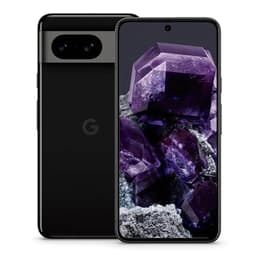
Google Pixel 8
Google Pixel 8
Starting at

Refurbished price:A$463.00

Versus A$1,245.00 new

See options
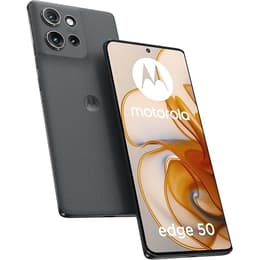
Motorola Edge 50
Motorola Edge 50
See options

The Google Pixel 8, released in October 2023, and the Motorola Edge 50 Pro, launched in April 2024, are contemporary smartphones offering distinct experiences within the Android ecosystem. While both devices aim to provide a capable user experience, they differentiate themselves through their approach to software longevity, camera capabilities, and overall design philosophy. Both run on the Android operating system, but their respective manufacturers offer varying commitments to software updates and feature sets.

Scores

Durability

When considering the long-term usability of a smartphone, software support and physical resilience are key factors. The Pixel 8 and Edge 50 Pro present different propositions in this regard.

  • Release Timeline and OS Support: The Google Pixel 8, launched in October 2023, benefits from an industry-leading commitment of seven years of OS and security updates, extending its software support until October 2030. This ensures a prolonged period of new features and security patches. In contrast, the Motorola Edge 50 Pro, released in April 2024, is slated to receive three major OS upgrades and four years of security updates.
  • Repairability and Physical Durability: The Pixel 8 features Gorilla Glass Victus for screen protection and holds an IP68 rating for dust and water resistance. Repairability scores for the Pixel 8 vary, with some assessments indicating a moderate repairability of 7 out of 10, suggesting that self-repairs are possible but not recommended for beginners. Other reports suggest a score of 5.5 out of 10, noting challenges with battery removal and a soldered charging port. The Motorola Edge 50 Pro also boasts an IP68 rating, signifying robust protection against dust and water immersion.
  • Expected Practical Lifespan: Users prioritising extended software longevity and access to the latest Android features will find the Pixel 8's seven-year update policy particularly appealing. The Edge 50 Pro, while offering a respectable update cycle, provides a shorter window of guaranteed software support.

Release year

2023

2024

Compatible with latest Update

Yes

Yes

Operating system

Android

Android

Foldable

No

No

Performance

The performance of a smartphone is largely dictated by its internal components, influencing how smoothly applications run and how efficiently it handles demanding tasks.

  • Processor Capabilities: The Google Pixel 8 is powered by Google's Tensor G3 processor. This chip is designed to optimize specific tasks and power AI capabilities, resulting in smooth performance for everyday use and multitasking. Users generally report no performance issues during typical usage, though it can get warm during intensive tasks like downloading large games. The Motorola Edge 50 Pro incorporates a Snapdragon 7 Gen 3 processor. This chipset provides good performance for average users, handling daily tasks and most applications effectively.
  • Multitasking and Storage: The Pixel 8 comes with 8GB of RAM, which is sufficient for managing multiple applications simultaneously. Storage options include 128GB and 256GB. The Edge 50 Pro offers configurations with 8GB or 12GB of RAM, providing flexibility for users who engage in more intensive multitasking or gaming. It also provides more storage options, including 128GB, 256GB, and 512GB.
  • Battery Behavior: The Pixel 8 is equipped with a 4575 mAh battery. While improved over previous generations, some users note that battery life can still be a concern with heavy usage, particularly with 5G connectivity. The Edge 50 Pro has a 4500 mAh battery. User reviews suggest respectable battery life, often lasting a full day with typical use, though intensive gaming or camera use can deplete it faster.

Memory (GB)

8 GB

12 GB

Screen quality

The display is a primary interface for smartphone interaction, and both devices offer vibrant viewing experiences with distinct characteristics.

  • Display Technology and Resolution: The Google Pixel 8 features a 6.2-inch Actua OLED display with a resolution of 1080x2400 pixels (FHD+). This OLED technology delivers deep blacks and vibrant colors. The Motorola Edge 50 Pro sports a larger 6.7-inch pOLED curved display with a higher 1220x2712 pixel (1.5K) resolution. The pOLED panel also offers rich colors and deep blacks.
  • Refresh Rate and Brightness: The Pixel 8's display has a variable refresh rate ranging from 60Hz to 120Hz, providing smooth scrolling and responsiveness. It can reach a peak brightness of 2000 nits, ensuring good visibility even in bright outdoor conditions. The Edge 50 Pro offers an even higher refresh rate of 144Hz, which can result in a perceptibly smoother visual experience, especially during gaming or fast-paced content. It also achieves a peak brightness of 2000 nits.
  • Viewing Experience: The Pixel 8's display is praised for its clarity and brightness, making it suitable for various content consumption. The Edge 50 Pro's display is Pantone-validated for accurate color representation, which can be particularly beneficial for creative professionals or those who prioritize color fidelity. Its curved edges also contribute to an immersive viewing experience.

Resolution

1080 x 2400

1220x2712

Audiovisual

Both the Google Pixel 8 and Motorola Edge 50 Pro offer advanced camera systems, each with its own strengths in capturing photos and videos.

  • Rear Camera Systems: The Pixel 8 features a dual-camera setup on the rear, comprising a 50 MP main camera with optical image stabilization (OIS) and a 12 MP ultrawide camera. The main sensor is noted for collecting more light, contributing to improved low-light performance. The Edge 50 Pro boasts a versatile triple-camera system: a 50 MP main sensor with a wide f/1.4 aperture and OIS, a 13 MP ultrawide lens that also functions for macro photography, and a 10 MP telephoto lens with 3x optical zoom and OIS.
  • Photography Performance: The Pixel 8 is highly regarded for its computational photography, excelling in capturing detailed and dynamic photos, particularly in challenging lighting conditions. Its AI-powered features, such as Magic Editor, enhance photo editing capabilities. The Edge 50 Pro's cameras are also praised for impressive detail and sharpness in well-lit environments, with Pantone validation for accurate skin tones. The telephoto lens provides good optical zoom capabilities.
  • Video Recording and Front Camera: Both phones support 4K video recording. The Pixel 8's front camera is 10.5 MP. The Edge 50 Pro features a high-resolution 50 MP front camera with autofocus, which is noted for its quality in various lighting conditions.

Front camera

10.5 megapixels

32 megapixels

Miscellaneous

Beyond core performance and display, several other features contribute to the overall user experience and practical utility of a smartphone.

  • Connectivity and Ports: Both devices offer modern connectivity options, including 5G and advanced Wi-Fi standards. The Pixel 8 uses a USB-C port for charging and data transfer. The Motorola Edge 50 Pro also features a USB-C port.
  • Biometric Security and Sensors: The Pixel 8 includes an in-display fingerprint sensor for secure unlocking. It also incorporates various sensors like an accelerometer, ambient light sensor, gyroscope, and proximity sensor. The Edge 50 Pro also features an in-display optical fingerprint sensor, which users find responsive.
  • Design and Handling: The Pixel 8 has dimensions of 150.5 x 70.8 x 8.9 mm and weighs 187g, offering a compact and comfortable form factor. It features a glass body, though some users note its glossy back can attract fingerprints. The Edge 50 Pro is slightly larger and thinner at 161.2 x 73.7 x 8.2 mm and weighs 186g. It often comes with a vegan leather back, contributing to a distinct aesthetic and tactile feel.

Weight

187 oz

180 oz

Screen size (in)

6.2

6.7

Network

5G

5G

SIM card

Physical SIM + eSIM

Physical SIM

Carrier compatibility

Unlocked

Unlocked

Connector

USB-C

USB-C

The Google Pixel 8 and Motorola Edge 50 Pro cater to slightly different user priorities, each excelling in specific areas. The Pixel 8 is frequently praised for its exceptional camera system, particularly its computational photography capabilities and low-light performance. Users also appreciate its clean Android experience and compact design. However, some common criticisms include battery life under heavy 5G usage and slower charging speeds compared to some competitors.

The Motorola Edge 50 Pro receives positive feedback for its eye-catching design, vibrant display, and impressive camera array, including a versatile telephoto lens. Its rapid charging capabilities are also a notable advantage. On the other hand, some users have noted that performance can show sluggishness during intense gaming or prolonged camera use, and the camera app itself can sometimes be jittery. The software update policy, while respectable, is shorter than that offered by the Pixel 8.

Users prioritizing long-term software support, a compact form factor, and advanced computational photography will find the Google Pixel 8 well-suited to their needs. Its extended update commitment ensures a longer period of new features and security. Conversely, individuals who value a larger, high-refresh-rate display, faster charging, a dedicated telephoto lens, and a distinctive design might lean towards the Motorola Edge 50 Pro. Both devices offer a quality-assured refurbished option, providing an eco-friendly alternative for consumers seeking to make sustainable choices.

See all articles

Our recent comparisons