
Compare models
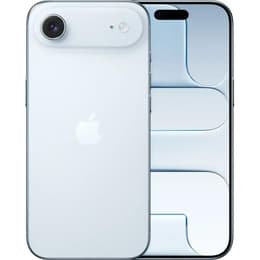
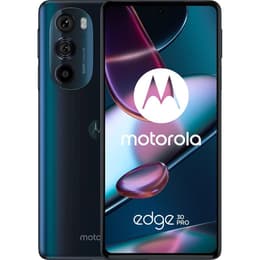
iPhone Air vs Motorola Edge 30 Pro
- 1-year warranty
- Free standard shipping
- Free 30-day returns
Differences at a glance
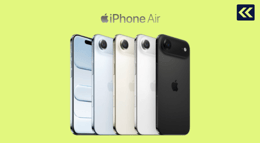
The Apple iPhone Air (2025) and the Motorola Edge 30 Pro (2022) are distinct smartphones representing different hardware priorities, design philosophies, and generation timelines. While the iPhone Air focuses on an ultra-slim titanium profile and modern iOS ecosystem integration, the Motorola Edge 30 Pro delivers a feature-rich Android experience backed by a traditional robust build. The primary differentiators between these devices center on their operating systems, physical form factors, and release eras, catering to divergent user preferences in mobile technology.
Available Models
Colour
Storage (GB)
Scores
Durability
When evaluating hardware longevity and software support, both smartphones offer distinct timelines shaped by their respective release years and platform update policies.
- Software Support Duration: The iPhone Air benefits from Apple's extended software lifecycle, receiving continuous iOS updates for many years, whereas the Motorola Edge 30 Pro operates on a more finite Android OS upgrade schedule aligned with its 2022 release.
- Expected Practical Lifespan: Users seeking long-term system updates and extended security patches will find the newer Apple model well-suited to multi-year usage, while the Motorola device requires consideration of its remaining update window.
- Repairability and Build Integrity: Both handsets feature robust exterior materials designed to withstand regular daily wear, though maintenance accessibility varies depending on regional technician availability for each brand.
Release year
2025
2022
Compatible with latest Update
Yes
Yes
Operating system
iOS
Android
Foldable
No
No
Performance
Underneath their exteriors, both devices manage demanding daily workloads, multitasking, and media consumption through capable internal hardware configurations.
- System Responsiveness: Both models handle everyday applications, web browsing, and fast-paced mobile games smoothly, maintaining steady fluidity during active multitasking sessions.
- Memory and Storage: Generous internal storage tiers and high-capacity RAM configurations allow both phones to keep multiple background processes active without unexpected slowdowns.
- Battery Behavior: The iPhone Air utilizes an energy-efficient processor to maximize its slender battery footprint, while the Motorola Edge 30 Pro features a larger physical battery capacity paired with high-wattage wired charging support.
Screen quality
Visual output and display design differ significantly between the two models in terms of panel dimensions, refresh rates, and peak luminance capabilities.
- Display Technology and Clarity: The iPhone Air incorporates an advanced OLED screen with high pixel density and deep contrast ratios, whereas the Motorola Edge 30 Pro utilizes a smooth P-OLED panel with a high refresh rate for fluid motion.
- Outdoor Legibility: High peak brightness output on the Apple display ensures clear visibility under direct sunlight, matching the reliable outdoor viewing performance of the Motorola screen.
- Viewing Experience: The iPhone Air offers a compact yet spacious viewing area inside a thin frame, while the Motorola Edge 30 Pro provides a slightly larger canvas suited for immersive media playback.
Resolution
2736x1260
1080 x 2400
Screen type
Super Retina XDR
OLED
Audiovisual
Photography and multimedia capture capabilities vary across the two devices, offering distinct lens arrays and software processing pipelines.
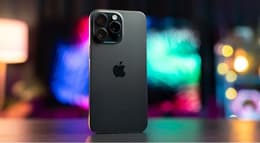
- Camera System Setup: The iPhone Air streamlines photography with a high-resolution single main lens supported by advanced computational imaging, while the Motorola Edge 30 Pro deploys a versatile triple-lens configuration including high-resolution ultra-wide options.
- Low-Light and Video Performance: Both devices capture detailed images in challenging lighting conditions and support high-definition video recording with steady stabilization features.
- Audio and Media Output: Media consumption is handled through integrated speaker systems that deliver clear dialogue and balanced sound output for daily calls and video streaming.
Main camera
48 megapixels
50 megapixels
Front camera
18 megapixels
60 megapixels
Miscellaneous
Practical everyday usability features, connectivity standards, and physical handling characteristics define how each smartphone fits into daily routines.
- Connectivity and Ports: Both models support fast 5G cellular networks, modern Wi-Fi standards, and Bluetooth connectivity, utilizing reversible USB-C ports for data transfer and power.
- Physical Dimensions and Handling: The iPhone Air stands out for its record-breaking thinness and lightweight titanium frame, whereas the Motorola Edge 30 Pro presents a slightly thicker, traditional form factor with curved glass edges.
- Security Sensors: Biometric authentication is handled securely via advanced facial recognition on the Apple device and a responsive side-mounted fingerprint scanner on the Motorola alternative.
Weight
165 oz
196 oz
Screen size (in)
6.5
6,7
Network
5G
5G
SIM card
eSIM
Dual Physical SIM
Carrier compatibility
Unlocked
Unlocked
What the community thinks
User feedback from community discussions highlights distinct preferences for each device. Owners of the iPhone Air frequently praise its exceptionally slim profile, lightweight handling, and smooth integration within the iOS ecosystem. Conversely, users of the Motorola Edge 30 Pro often commend its high-refresh-rate display, versatile multi-lens camera array, and rapid charging capabilities. Common criticisms for the Apple model sometimes center on its minimalist single-lens approach, while Motorola users occasionally note the finite software upgrade timeline.
Users prioritizing a featherlight design, extended software longevity, and the iOS environment will find the iPhone Air well-suited to their daily needs. Meanwhile, users who value a high-refresh-rate screen, versatile camera lenses, and Android customization may lean toward the Motorola Edge 30 Pro. Selecting either device as a quality-assured refurbished option from Back Market also provides an eco-friendly alternative that reduces electronic waste. Ultimately, the right choice depends entirely on individual platform preferences and physical design priorities.