
iPhone 12 vs Oppo Reno 8 Pro

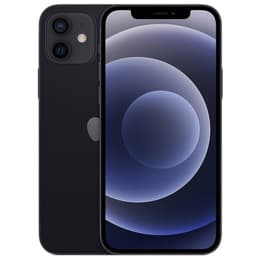
iPhone 12
iPhone 12
Starting at

Refurbished price:A$303.00

Versus A$1,129.00 new

See options
Oppo Reno 8 Pro
Oppo Reno 8 Pro
Starting at

Refurbished price:A$327.00

Versus A$1,741.00 new

See options

The iPhone 12, released in October 2020, and the Oppo Reno 8 Pro, launched in July 2022, represent distinct approaches to smartphone design and functionality. While the iPhone 12 operates on Apple's iOS ecosystem, the Oppo Reno 8 Pro runs on Android with Oppo's ColorOS interface. These devices offer different user experiences, primarily distinguished by their display technologies, camera capabilities, and overall system performance.

Scores

Durability

When considering the practical lifespan of these devices, several factors come into play, including their release timelines, software support, and physical resilience.

  • Release Timeline: The iPhone 12 was introduced in late 2020, making it an older model compared to the Oppo Reno 8 Pro, which arrived in mid-2022. This difference in release date typically translates to a longer expected period of software updates for the newer device.
  • Software Support: Apple is known for providing extended iOS support, often for five to six years or more from a device's release. The iPhone 12, originally running iOS 14.1, continues to receive major iOS updates. The Oppo Reno 8 Pro, launched with ColorOS 12.1 based on Android 12, typically receives fewer major Android version updates than Apple devices, though it is expected to receive security updates for several years.
  • Physical Durability: The iPhone 12 features a Ceramic Shield front cover and an IP68 rating for water and dust resistance, allowing it to withstand submersion up to 6 meters for 30 minutes. The Oppo Reno 8 Pro uses Corning Gorilla Glass 5 for screen protection and undergoes rigorous internal testing, including thermal shock and drop tests, to ensure durability. However, an official IP rating is not widely specified for the Reno 8 Pro, with some user discussions indicating a lack of ingress protection.

Release year

2020

2022

Operating system

iOS

Android

Foldable

No

No

Performance

Both smartphones are designed to deliver smooth performance for daily tasks, but they achieve this through different hardware and software optimizations.

  • System Responsiveness: The iPhone 12 is powered by a capable processor that ensures applications launch quickly and multitasking feels fluid. Users can expect consistent performance across a wide range of apps and games. The Oppo Reno 8 Pro features a powerful processor and a dedicated imaging chip, which contributes to its ability to handle demanding applications and provide a responsive user experience.
  • Multitasking and Storage: The iPhone 12 typically comes with 4GB of RAM, which is optimized by iOS to manage multiple applications efficiently. Storage options include 64GB, 128GB, and 256GB. The Oppo Reno 8 Pro offers more RAM, with options for 8GB or 12GB, allowing for extensive multitasking and keeping more apps open in the background without slowdowns. It is generally available with 256GB of internal storage.
  • Battery Behavior: The iPhone 12's battery provides up to 17 hours of video playback, with support for fast charging that can reach 50% in about 30 minutes using a compatible adapter. It also supports wireless charging. The Oppo Reno 8 Pro is equipped with a larger battery capacity and features 80W fast charging, capable of reaching a full charge in under 40 minutes and 50% in approximately 11 minutes. It also includes a Battery Health Engine designed to maintain battery capacity over a longer period.

Memory (GB)

4 GB

8 GB

Screen quality

The visual experience on both devices is a key differentiator, with each offering distinct display characteristics tailored to user preferences.

  • Display Technology and Clarity: The iPhone 12 features a 6.1-inch Super Retina XDR OLED display, providing deep blacks and vibrant colors with a resolution of 2532x1170 pixels. The Oppo Reno 8 Pro boasts a larger 6.7-inch AMOLED display with a resolution of 2412x1080 pixels, also delivering rich colors and good clarity.
  • Brightness for Viewing: For typical use, the iPhone 12 offers a maximum brightness of 625 nits, peaking at 1200 nits when displaying HDR content. The Oppo Reno 8 Pro provides a peak brightness of 950 nits, which contributes to good visibility in various lighting conditions.
  • Smoothness and Responsiveness: The iPhone 12 has a standard 60Hz refresh rate, which provides a smooth experience for most interactions. The Oppo Reno 8 Pro offers a higher 120Hz refresh rate, resulting in noticeably smoother scrolling and more fluid animations, particularly beneficial for gaming and fast-paced content. It also features a 360Hz touch sampling rate in gaming mode for enhanced responsiveness.

Resolution

1170 x 2532

1080 x 2412

Audiovisual

Both smartphones offer capable camera systems, but they approach photography and videography with different strengths and features.

  • Rear Camera Systems: The iPhone 12 is equipped with a dual 12MP camera system, featuring a main camera with a wide f/1.6 aperture and an ultra-wide camera with a 120-degree field of view. It includes Optical Image Stabilization (OIS) on the main lens, Night mode, Deep Fusion, and Smart HDR 3 for improved image quality in various conditions. The Oppo Reno 8 Pro features a triple rear camera setup, including a 50MP main sensor, an 8MP ultra-wide sensor, and a 2MP macro camera. It utilizes a dedicated MariSilicon X NPU to enhance low-light performance and video quality, though it relies on Electronic Image Stabilization (EIS) rather than OIS for its main camera.
  • Low-Light and Video Performance: The iPhone 12 excels in low-light photography with its Night mode and offers HDR video recording with Dolby Vision up to 4K at 30 frames per second, and standard 4K video up to 60 frames per second. The Oppo Reno 8 Pro is particularly noted for its low-light video performance, enhanced by the MariSilicon X NPU, and supports 4K video recording at 30 frames per second.
  • Front Camera and Audio: The iPhone 12 has a 12MP front camera capable of detailed selfies and video calls. The Oppo Reno 8 Pro features a higher-resolution 32MP front camera, which performs well in various lighting conditions and offers features like AI beautification and wide selfie modes. Both devices offer stereo speaker output for media consumption.

Miscellaneous

Beyond core features, several practical elements contribute to the overall user experience and daily usability of these smartphones.

  • Connectivity and Ports: Both devices support 5G cellular connectivity and Wi-Fi 6 for fast wireless internet. The iPhone 12 uses a Lightning port for charging and data transfer. The Oppo Reno 8 Pro features a USB Type-C port, a more widely adopted standard. Neither device includes a traditional 3.5mm headphone jack.
  • Biometric Security: The iPhone 12 relies on Face ID for secure facial recognition and authentication. The Oppo Reno 8 Pro incorporates an in-display fingerprint sensor for biometric security, alongside facial recognition capabilities.
  • Design and Handling: The iPhone 12 has a compact design, measuring 146.7 x 71.5 x 7.4 mm and weighing 164 grams, making it comfortable for one-handed use. It features flat edges and a glass back. The Oppo Reno 8 Pro is a larger device at 161.2 x 74.2 x 7.34 mm and weighs 183 grams. It features a sleek design with a unibody camera module that integrates smoothly into the back glass.

Weight

164 oz

183 oz

Screen size (in)

6.1

6,7

Network

5G

5G

SIM card

Physical SIM + eSIM

Dual Physical SIM

Carrier compatibility

Unlocked

Unlocked

User feedback for the iPhone 12 often highlights its consistent performance, reliable camera system, and the long-term software support provided by Apple. Some users, however, note the 60Hz display refresh rate as a point of comparison with newer Android devices. The Oppo Reno 8 Pro is frequently praised for its fast charging capabilities, vibrant 120Hz AMOLED display, and strong performance, particularly in low-light video. Common criticisms include the absence of Optical Image Stabilization (OIS) on its main camera and the lack of an official IP rating.

Users prioritizing a compact device with a robust ecosystem, extended software longevity, and proven durability features like an IP68 rating may find the iPhone 12 well-suited to their needs. Conversely, individuals who value a larger, smoother display, faster charging speeds, and a more versatile camera system with enhanced low-light video capabilities might lean towards the Oppo Reno 8 Pro. Both devices offer compelling features for different user profiles. For those looking to make an eco-friendly choice, considering a quality-assured refurbished option for either model can provide a sustainable alternative.
See all articles

Our recent comparisons