Compare models

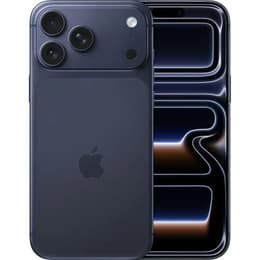
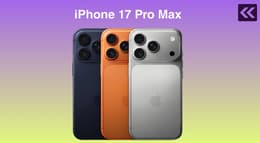
Google Pixel 8 Pro vs iPhone 17 Pro Max

  • 1-year warranty
  • Free standard shipping
  • Free 30-day returns
Google Pixel 8 Pro
Starting at

Refurbished price:A$480.00

Versus A$2,015.00 new

See options
iPhone 17 Pro Max
Starting at

Refurbished price:A$1,746.00

Versus A$1,749.00 new

See options

Differences at a glance

The Google Pixel 8 Pro (2023) and the iPhone 17 Pro Max (2025) represent advanced tiers of flagship smartphone technology from two distinct ecosystems. While they differ significantly in their launch timelines and operating systems, both devices cater to users seeking powerful mobile tools with expansive displays and versatile capabilities. The primary differentiators lie in their software ecosystems, display dimensions, and hardware architecture, offering distinct experiences depending on user preference for Android or iOS.

Available Models

Colour

Storage (GB)

Scores

Durability

When evaluating the long-term usability and durability of these two devices, users must consider software support lifespans, build materials, and expected structural resilience over years of daily handling.

  • Software support timelines: The Google Pixel 8 Pro benefits from an extended software commitment providing operating system updates for seven years from its release. The iPhone 17 Pro Max follows Apple's traditional multi-year software lifecycle, typically receiving updates for a similarly prolonged duration.
  • Build construction: The Google Pixel 8 Pro utilizes textured glass paired with a polished aluminum frame, while the iPhone 17 Pro Max features an advanced unibody design incorporating sturdy exterior glass protection. Both models include robust water and dust resistance ratings for everyday protection against accidental spills.
  • Repairability and lifespan: Both manufacturers offer structured repair channels and replacement components, ensuring that routine maintenance like battery swaps can extend the practical working lifespan of either handset smoothly.

Release year

2023

2025

Compatible with latest Update

Yes

Yes

Operating system

Android

iOS

Foldable

No

No

Performance

System responsiveness, multitasking capability, and energy efficiency shape how smoothly each phone handles demanding daily workloads and long gaming sessions.

  • Day-to-day responsiveness: Both devices load heavy applications instantly, transition seamlessly between open tasks, and handle complex background processes without noticeable stuttering or lag.
  • Multitasking and memory: Generous memory allocations on both handsets ensure that large apps remain active in the background, allowing users to switch between productivity software, media streaming, and web browsing effortlessly.
  • Battery behavior: The Google Pixel 8 Pro manages typical daily routines reliably, though intensive use may require a top-up before the end of the evening. The iPhone 17 Pro Max incorporates a high-capacity power cell designed to sustain extended periods of heavy media consumption and navigation without depletion.

Screen quality

Visual immersion, outdoor legibility, and scrolling smoothness vary across these two distinct display panels and form factors.

  • Display technology and clarity: Both smartphones feature advanced organic light-emitting diode panels that deliver deep black levels, high contrast ratios, and sharp pixel densities for crisp text rendering.
  • Outdoor brightness: High peak luminance levels on both screens ensure that menus, maps, and photographs remain easily legible even under direct sunlight.
  • Motion smoothness: Adaptive refresh rate capabilities allow both displays to scale dynamically up to fast refresh frequencies, ensuring fluid scrolling through web pages and responsive touch tracking during gaming.

Resolution

1344 x 2992

2868x1320

Screen type

LTPO OLED

Super Retina XDR

Audiovisual

Capturing everyday moments, distant subjects, and high-definition video involves distinct multi-lens configurations and onboard processing philosophies on each device.

  • Main and ultra-wide photography: Both handsets capture crisp, well-exposed images with balanced dynamic range in standard lighting conditions, while performing reliably in low-light environments through advanced computational merging.
  • Zoom capabilities: The Google Pixel 8 Pro includes a dedicated telephoto lens with high-optical reach for distant subjects, whereas the iPhone 17 Pro Max utilizes a multi-stage high-resolution zoom architecture to preserve fine detail at extended focal lengths.
  • Video and audio recording: Video capture features high-fidelity stabilization, clear directional microphone pickup for voice recording, and rich stereo speaker output suitable for casual media playback.

Main camera

50 megapixels

48 megapixels

Front camera

10.5 megapixels

18 megapixels

Miscellaneous

Practical everyday features such as connectivity standards, physical dimensions, and biometric security options define the physical interaction experience.

  • Connectivity and ports: Both devices support rapid cellular data networks and modern local wireless standards, utilizing standard universal USB-C ports for wired data transfer and charging.
  • Biometric security: The Google Pixel 8 Pro provides both facial recognition and an optical fingerprint reader embedded beneath the display, while the iPhone 17 Pro Max relies exclusively on advanced facial mapping technology.
  • Dimensions and handling: The Google Pixel 8 Pro features rounded corner contours for a balanced feel in hand, whereas the iPhone 17 Pro Max offers a noticeably larger viewing canvas that suits users prioritizing maximum screen workspace.

Weight

213 oz

233 oz

Screen size (in)

6.7

6.9

Network

5G

5G

SIM card

Physical SIM + eSIM

eSIM

Carrier compatibility

Unlocked

Unlocked

Connector

USB-C

USB-C

What the community thinks

Real-world feedback from community discussions highlights distinct preferences for each device. Users frequently praise the Google Pixel 8 Pro for its clean software interface, intuitive photo-editing tools, and long-term update commitment. Conversely, users often commend the iPhone 17 Pro Max for its exceptional battery longevity, robust build quality, and smooth ecosystem integration. Common criticisms for both models generally center on their substantial physical footprints, which can make one-handed operation challenging for users with smaller hands.

Users prioritizing a clean software layout, integrated Google services, and traditional fingerprint security may prefer the Google Pixel 8 Pro. Meanwhile, users prioritizing maximum display estate, extended battery endurance, and seamless integration with other Apple devices will lean toward the iPhone 17 Pro Max. Eco-conscious shoppers can also explore quality-assured refurbished options for either model as a sustainable choice that reduces electronic waste without compromising on core performance.


See all articles

Our recent comparisons