
iPhone 12 vs iPhone SE (2020)

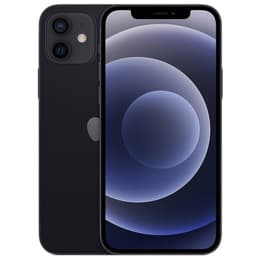
iPhone 12
iPhone 12
Starting at

Refurbished price:A$303.00

Versus A$1,129.00 new

See options
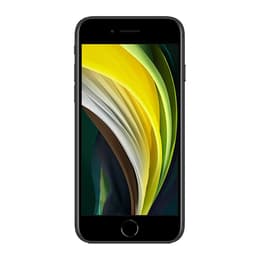
iPhone SE (2020)
iPhone SE (2020)
Starting at

Refurbished price:A$108.00

Versus A$529.00 new

See options

Ratings

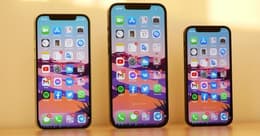
The iPhone 12, released in October 2020, and the iPhone SE (2nd generation), launched in April 2020, are both Apple smartphones running the iOS operating system. While the iPhone SE 2020 offers a compact design with a traditional home button, the iPhone 12 presents a more modern aesthetic with an edge-to-edge display and enhanced camera capabilities. These differences cater to distinct user preferences regarding form factor and advanced features.

Scores

Durability

The release timelines of these devices impact their expected software support and overall lifespan. The iPhone 12, being the newer device, is anticipated to receive major iOS updates for a longer duration compared to the iPhone SE 2020.

  • Software Longevity: The iPhone 12, released in October 2020, is expected to receive major iOS updates until approximately 2028-2030. The iPhone SE 2020, released in April 2020, is likely to receive updates until around 2027-2029.
  • Physical Durability: The iPhone 12 features a Ceramic Shield front cover, which offers improved drop performance compared to the glass used on the iPhone SE 2020. Both devices have water and dust resistance ratings, with the iPhone 12 rated IP68 (maximum depth of 6 meters for up to 30 minutes) and the iPhone SE 2020 rated IP67 (maximum depth of 1 meter for up to 30 minutes).
  • Repairability: Both models generally offer similar repairability, though the availability of parts and service for older models may vary over time.

Release year

2020

2020

Compatible with latest Update

Yes

Yes

Operating system

iOS

iOS

Foldable

No

No

Performance

Both devices deliver capable performance for everyday tasks, but the iPhone 12 benefits from a newer generation processor, offering a noticeable difference in demanding applications and future-proofing.

  • Processing Power: The iPhone 12 features a newer generation processor, which provides faster CPU and GPU speeds compared to the iPhone SE 2020's processor. This translates to smoother performance in graphically intensive games and more complex applications.
  • Multitasking and Responsiveness: The iPhone 12 generally offers a more fluid experience when switching between multiple applications and handling intensive tasks due to its more advanced internal components. The iPhone SE 2020 still handles daily tasks efficiently, but may show limitations with very demanding workloads.
  • Storage Options: Both devices are available with various internal storage configurations, typically ranging from 64GB to 256GB, providing ample space for apps, photos, and videos.
  • Battery Behavior: The iPhone 12 has a larger battery capacity, offering up to 17 hours of video playback, while the iPhone SE 2020 provides up to 13 hours. This difference means the iPhone 12 can typically last longer on a single charge for most users.

Memory (GB)

4 GB

3 GB

Screen quality

The display technologies used in these two iPhones represent a significant difference, impacting visual quality and overall viewing experience.

  • Display Technology: The iPhone 12 features a 6.1-inch Super Retina XDR OLED display, which delivers deep blacks, high contrast, and vibrant colors. In contrast, the iPhone SE 2020 uses a 4.7-inch Retina HD LCD display, offering good color accuracy but with less contrast and brightness compared to OLED.
  • Resolution and Clarity: The iPhone 12 has a higher resolution of 2532 x 1170 pixels at 460 ppi, resulting in a sharper image. The iPhone SE 2020 has a resolution of 1334 x 750 pixels at 326 ppi.
  • Brightness Levels: The iPhone 12 offers a typical maximum brightness of 625 nits and a peak HDR brightness of 1200 nits, making it more visible in bright outdoor conditions and enhancing HDR content. The iPhone SE 2020 has a typical maximum brightness of 625 nits.
  • Screen Size and Experience: The iPhone 12's larger, edge-to-edge display provides a more immersive viewing experience for media consumption and browsing, while the iPhone SE 2020's smaller screen and thicker bezels offer a more compact and traditional feel.

Resolution

1170 x 2532

750 x 1334

Screen type

Super Retina XDR OLED

Retina IPS LCD

Audiovisual

The camera systems on the iPhone 12 and iPhone SE 2020 offer different capabilities, particularly in terms of versatility and low-light performance.

  • Rear Camera System: The iPhone 12 features a dual 12MP camera system with a wide (f/1.6) and an ultra-wide (f/2.4) lens, including Night mode, Deep Fusion, and Smart HDR 3 for improved image processing. The iPhone SE 2020 has a single 12MP wide camera (f/1.8) with Portrait mode and Smart HDR.
  • Low-Light Photography: The iPhone 12's wider aperture and Night mode significantly enhance its performance in low-light conditions, capturing brighter and more detailed images than the iPhone SE 2020.
  • Video Recording: Both devices support 4K video recording at up to 60 frames per second. The iPhone 12 additionally supports HDR video recording with Dolby Vision up to 4K at 30 frames per second, offering enhanced dynamic range in videos.
  • Front Camera: The iPhone 12 has a 12MP TrueDepth front camera with Night mode and Deep Fusion, while the iPhone SE 2020 has a 7MP front camera.

Main camera

12 megapixels

12 megapixels

Front camera

12 megapixels

7 megapixels

Miscellaneous

Beyond core features, several practical elements differentiate the user experience between the iPhone 12 and iPhone SE 2020, from connectivity to physical design.

  • Connectivity: The iPhone 12 supports 5G cellular connectivity, offering faster download and upload speeds in supported areas, while the iPhone SE 2020 is limited to 4G LTE. Both support Wi-Fi 6 and Bluetooth 5.0.
  • Biometric Security: The iPhone 12 utilizes Face ID for secure authentication and unlocking. The iPhone SE 2020 features Touch ID integrated into its home button, providing a familiar fingerprint-based security method.
  • Design and Handling: The iPhone 12 features a modern flat-edge design with a larger 6.1-inch screen and no physical home button, resulting in a more expansive display in a relatively compact body (146.7 x 71.5 x 7.4 mm, 164 grams). The iPhone SE 2020 retains the classic iPhone design with a 4.7-inch screen and a physical home button, making it smaller and lighter (138.4 x 67.3 x 7.3 mm, 148 grams).
  • Ports: Both devices use the Lightning port for charging and data transfer.

Weight

164 oz

148 oz

Screen size (in)

6.1

4.7

Network

5G

4G

SIM card

Physical SIM + eSIM

Physical SIM + eSIM

Carrier compatibility

Unlocked

Unlocked

Connector

Lightning

Lightning

Users frequently praise the iPhone 12 for its modern design, vibrant OLED display, and significantly improved camera system, especially its low-light capabilities and the addition of an ultra-wide lens. Its 5G connectivity is also a notable advantage for those in areas with compatible networks. Some users, however, note that its battery life, while improved over the SE, might still require daily charging for heavy use.

The iPhone SE 2020 is often lauded for its compact form factor, the familiarity and convenience of Touch ID, and its capable performance for everyday tasks, making it a practical choice for users who prefer a smaller device or a physical home button. Criticisms often point to its older design with thicker bezels, the LCD display's limitations compared to OLED, and its single camera system lacking advanced features like Night mode. Its battery life is also a common point of discussion, often requiring more frequent charging for active users.

Users prioritizing a modern, expansive display, advanced camera features, and future-proof connectivity like 5G may find the iPhone 12 better suited to their needs. Conversely, those who value a compact design, the traditional home button with Touch ID, and solid performance for essential smartphone functions may lean towards the iPhone SE 2020. Both devices offer a reliable iOS experience, and choosing a quality-assured refurbished option can provide an eco-friendly alternative for either model.
See all articles

Our recent comparisons