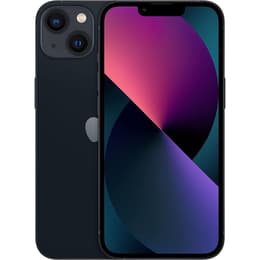

iPhone 12 vs iPhone 13

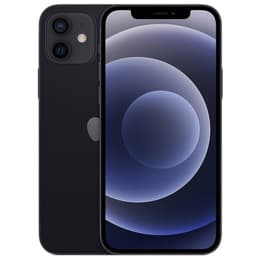
iPhone 12
iPhone 12
Starting at

Refurbished price:A$318.00

Versus A$1,049.00 new

See options
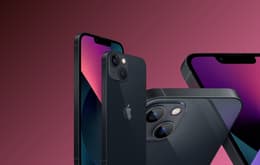
iPhone 13
iPhone 13
Starting at

Refurbished price:A$432.04

Versus A$1,099.00 new

See options

Ratings

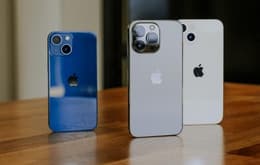
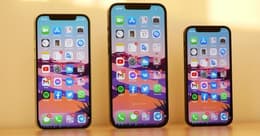
The iPhone 12, released in October 2020, and the iPhone 13, launched in September 2021, represent two consecutive generations of Apple's standard smartphone line. Both devices operate on Apple's iOS platform and share a similar flat-edged design. Key distinctions between them lie in their internal processing power, advancements in camera technology, and improvements in battery longevity.

Scores

Durability

When considering the practical lifespan of these devices, their release timelines and Apple's typical software support are important factors.

  • Release Timeline: The iPhone 12 was introduced in October 2020, while the iPhone 13 followed in September 2021. This one-year difference means the iPhone 13 will generally receive major iOS updates for a longer period.
  • Software Longevity: Apple typically provides 5-6 years of major iOS updates for its devices. Given its later release, the iPhone 13 is expected to maintain software compatibility and receive security updates for approximately one year longer than the iPhone 12. The iPhone 13 is compatible with iOS 18, released in September 2024.
  • Repairability: Both models feature a Ceramic Shield front cover, contributing to their durability. iFixit gave the iPhone 12 a repairability score of 6 out of 10, noting that many parts are replaceable, though some repairs require Apple's proprietary tools. The iPhone 13 received a similar repairability assessment, with some sources indicating a score of 4 out of 10, reflecting challenges in independent repairs due to Apple's policies.

Release year

2020

2021

Compatible with latest Update

Yes

Yes

Operating system

iOS

iOS

Foldable

No

No

Performance

The performance of the iPhone 12 and iPhone 13 is driven by their respective internal components, impacting everything from app responsiveness to battery endurance.

  • Processing Capabilities: The iPhone 12 is equipped with a capable processor that handles demanding applications and multitasking smoothly. The iPhone 13 features a newer generation processor, offering enhanced speed and efficiency for everyday tasks, gaming, and more intensive operations.
  • Battery Behavior: The iPhone 13 demonstrates a notable improvement in battery life compared to its predecessor. While the iPhone 12 typically offers around 8 hours and 25 minutes of web browsing on a 5G network, the iPhone 13 extends this to approximately 10 hours and 33 minutes under similar conditions. This difference translates to more extended usage throughout the day for the iPhone 13, particularly for heavy users.
  • Storage Options: The iPhone 12 was initially available with 64GB, 128GB, or 256GB of internal storage. The iPhone 13 starts with a base storage of 128GB, with options for 256GB and 512GB, providing more space for apps, photos, and videos at the entry level.

Memory (GB)

4 GB

4 GB

Screen quality

Both the iPhone 12 and iPhone 13 feature high-quality displays, but there are subtle differences in their brightness and overall viewing experience.

  • Display Technology and Clarity: Both models utilize a 6.1-inch Super Retina XDR OLED display, providing deep blacks, vibrant colors, and a resolution of 2532x1170 pixels at 460 pixels per inch (ppi). This ensures sharp text and detailed images for an immersive viewing experience.
  • Brightness Levels: The iPhone 13 offers improved typical brightness, reaching 800 nits compared to the iPhone 12's 625 nits. Both devices can achieve a peak brightness of 1200 nits when displaying HDR content, making them suitable for viewing in various lighting conditions, including bright sunlight.
  • Refresh Rate: Both the iPhone 12 and iPhone 13 feature a standard 60Hz refresh rate, which provides a smooth experience for most everyday interactions.

Resolution

1170 x 2532

1170 x 2532

Screen type

Super Retina XDR OLED

Super Retina XDR OLED

Audiovisual

The camera systems on the iPhone 12 and iPhone 13 offer robust photography and videography capabilities, with the newer model introducing several enhancements.

  • Camera System Capabilities: Both phones feature a dual 12-megapixel camera system, including a wide-angle lens with an f/1.6 aperture and an ultra-wide-angle lens with an f/2.4 aperture. The iPhone 13 introduces sensor-shift optical image stabilization (OIS) for its wide camera, which was previously exclusive to the iPhone 12 Pro Max, leading to more stable photos and videos, especially in challenging conditions.
  • Photography Features: The iPhone 12 includes Night mode, Deep Fusion, and Smart HDR 3 for improved image processing. The iPhone 13 builds on this with Smart HDR 4 and new Photographic Styles, allowing users to apply personalized tone and warmth preferences to their images while preserving skin tones.
  • Video Recording Quality: Both models support HDR video recording with Dolby Vision. The iPhone 12 can record up to 4K at 30 frames per second (fps). The iPhone 13 enhances this, offering HDR video recording with Dolby Vision up to 4K at 60 fps. The iPhone 13 also introduces Cinematic mode, which provides a shallow depth of field effect and automatic focus transitions in videos.

Main camera

12 megapixels

12 megapixels

Front camera

12 megapixels

12 megapixels

Miscellaneous

Beyond core performance and display, several practical elements differentiate the iPhone 12 and iPhone 13, influencing daily usability.

  • Dimensions and Weight: The iPhone 12 measures 146.7 x 71.5 x 7.4 mm and weighs 162 grams. The iPhone 13 has slightly increased dimensions at 146.7 x 71.5 x 7.65 mm and a weight of 174 grams, making it marginally thicker and heavier.
  • Connectivity and Ports: Both devices support 5G connectivity, Wi-Fi 6 (802.11ax), and Bluetooth 5.0. They both feature a Lightning port for charging and data transfer.
  • Build Materials and Durability: Both the iPhone 12 and iPhone 13 feature an aluminum frame and a Ceramic Shield front cover, which enhances drop performance. They also share an IP68 rating for water and dust resistance, allowing submersion up to 6 meters for 30 minutes.

Weight

164 oz

173 oz

Screen size (in)

6.1

6.1

Network

5G

5G

SIM card

Physical SIM + eSIM

Physical SIM + eSIM

Carrier compatibility

Unlocked

Unlocked

Connector

Lightning

Lightning

User feedback for both the iPhone 12 and iPhone 13 generally highlights their robust performance and reliable Apple ecosystem experience. For the iPhone 12, common praise points often include its introduction of 5G connectivity and the shift to an OLED display across the standard models, which was a significant upgrade from previous generations. However, some users noted that its battery life, especially when utilizing 5G, could be a point of concern.

The iPhone 13, on the other hand, frequently receives commendation for its substantially improved battery life, which many users consider a major advantage over its predecessor. Its enhanced camera features, such as Cinematic mode and sensor-shift OIS, are also well-regarded for elevating the photography and videography experience. Criticisms are less frequent but sometimes point to the iterative nature of the upgrades compared to the iPhone 12, suggesting that the changes, while meaningful, might not be revolutionary for every user.

Users prioritizing extended battery life and advanced camera capabilities, particularly for video recording, may find the iPhone 13 better suited to their needs. Those seeking a capable device for everyday tasks, with solid performance and a high-quality display, may find the iPhone 12 to be a suitable option. Both models offer a reliable smartphone experience within the Apple ecosystem. For those considering a more sustainable choice, both the iPhone 12 and iPhone 13 are available as quality-assured refurbished options, providing an eco-friendly alternative.