
Compare models
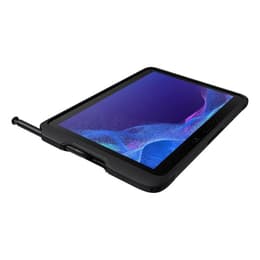
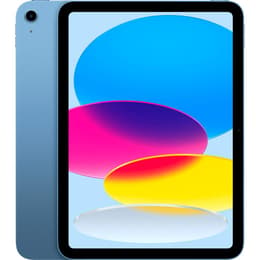
Galaxy Tab Active4 Pro (10.1", 2022) vs iPad 11 (2025, A16 series)
- 1-year warranty
- Free standard shipping
- Free 30-day returns
Differences at a glance
The Samsung Galaxy Tab Active4 Pro (2022) and the Apple iPad 11 (2025) are versatile tablets designed for distinct environments and everyday use cases. While both devices provide reliable portable computing, the Samsung model prioritizes field durability and specialized enterprise functionality, whereas the Apple device focuses on a streamlined consumer experience running on iPadOS.
Available Models
Colour
Storage
Scores
Durability
When examining longevity and physical build, the Galaxy Tab Active4 Pro and the iPad 11 take distinctly different approaches to structural resilience and software support lifespans.
- Release timeline and hardware age: The Galaxy Tab Active4 Pro debuted in 2022 with a heavy-duty reinforced housing built for demanding environments, while the iPad 11 launched in 2025 with a thinner aluminum frame focused on standard daily handling.
- Software support and updates: The iPad benefits from Apple's extended update cycles for iPadOS, whereas Samsung provides structured security patches and multi-year operating system upgrades typical of enterprise-focused Android hardware.
- Repairability and physical maintenance: The Samsung model features a unique user-removable battery design that extends practical hardware life over years of heavy use, while the iPad relies on a sealed internal battery structure common to modern consumer tablets.
Release year
2022
2025
Compatible with latest Update
No
Yes
Operating system
Android
iPadOS
Performance
System capabilities and daily responsiveness differ significantly based on the internal architecture and operating system optimization of each tablet.
- System responsiveness and multitasking: Both devices handle daily web browsing, streaming media, and productivity apps smoothly, though the iPad 11 utilizes a newer processor generation that maintains high efficiency during demanding background tasks.
- Storage capacity and memory: The Samsung tablet includes expandable storage via a dedicated card slot, allowing users to increase space easily, while the iPad 11 relies entirely on fixed internal storage configurations.
- Battery behavior and endurance: The Galaxy Tab Active4 Pro offers a specialized power mode allowing direct wall connection without draining the battery cell, whereas the iPad 11 relies on standard all-day battery efficiency for typical mixed usage.
Screen quality
Display characteristics shape the visual experience for media consumption, reading, and precise navigation tasks.
- Display technology and clarity: The iPad 11 features a higher-resolution Liquid Retina panel with crisp text rendering and balanced color reproduction, while the Galaxy Tab Active4 Pro uses a standard TFT LCD panel optimized for outdoor visibility and glove touch sensitivity.
- Brightness and outdoor usability: Both screens reach adequate indoor brightness levels, but the iPad surface includes specialized coatings to minimize reflections, whereas the Samsung display emphasizes touch responsiveness even when operating in wet weather conditions.
- Viewing workspace: The iPad 11 provides a slightly larger 11-inch canvas with a traditional aspect ratio well-suited for document viewing, compared to the 10.1-inch screen format on the Samsung device.
Resolution
1920 x 1200
2360 x 1640
Screen type
TFT LCD
Liquid Retina display
Pixel density
230ppp
264ppp
Audiovisual
Multimedia capture and audio output capabilities vary between these two models to accommodate different field and office requirements.
- Camera systems: The iPad 11 includes updated front and rear camera lenses suited for casual scanning, video calls, and quick photo capture, whereas the Galaxy Tab Active4 Pro equips a single main camera and a standard front sensor oriented toward workplace documentation.
- Audio output and speakers: The iPad 11 incorporates a balanced stereo speaker arrangement that delivers clear sound for media playback, while the Samsung tablet features Dolby Atmos tuning optimized for voice clarity in noisy environments.
- Microphone performance: Both devices integrate dual microphones that effectively isolate speech during video conferences and voice notes.
Miscellaneous
Physical dimensions and connectivity options dictate how each tablet integrates into daily routines and specialized working setups.
- Connectivity features: Both models offer wireless internet variants and mobile data connectivity, with the iPad adopting modern short-range wireless standards and eSIM technology, while the Samsung device maintains physical SIM versatility and a dedicated accessory charging pin layout.
- Port design and physical interface: The iPad 11 uses a standard reversible connector for charging and data transfer, whereas the Galaxy Tab Active4 Pro features an upgraded multi-pin connector alongside its primary port for dock accessories.
- Weight and handling: The iPad 11 features a lightweight profile that is comfortable for handheld reading, while the Samsung model is heavier and thicker due to its reinforced protective chassis and drop-resistant build.
Weight
675 oz
477 oz
Screen size (in)
10.1
11
Network
Wi-Fi
Wi-Fi
Carrier compatibility
Without SIM Port
Without SIM Port
What the community thinks
User feedback highlights distinct preferences for each device depending on daily operational requirements. Owners of the Galaxy Tab Active4 Pro frequently praise its rugged construction, physical function keys, and the inclusion of a stylus right out of the box, though some note that the older processor configuration feels less responsive during heavy multi-window workflows. Conversely, users of the iPad 11 appreciate the fluid interface, robust application ecosystem, and high display clarity, while noting the limitation of fixed internal storage and the absence of a headphone jack.
Users prioritizing maximum physical resilience, drop resistance, and outdoor utility will find the Samsung Galaxy Tab Active4 Pro well-suited to their needs. Meanwhile, users prioritizing a high-resolution display, streamlined software updates, and a lightweight multimedia experience will lean toward the iPad 11. Exploring a quality-assured refurbished option on Back Market provides an eco-friendly, sustainable way to acquire either of these devices while reducing electronic waste.
Ultimately, the choice depends entirely on whether physical durability or modern software optimization aligns more closely with your daily routine.