Compare models

Galaxy Z Fold6 vs iPhone 17

  • 1-year warranty
  • Free standard shipping
  • Free 30-day returns
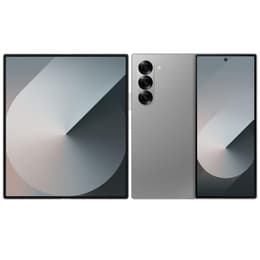
Galaxy Z Fold6
Starting at

Refurbished price:A$880.00

Versus A$2,740.06 new

See options
iPhone 17
Starting at

Refurbished price:A$1,229.00

Versus A$1,549.00 new

See options

Differences at a glance

The Samsung Galaxy Z Fold6 (2024) and the iPhone 17 (2025) represent two distinct approaches to modern smartphone design, contrasting a dual-screen foldable device with a traditional slate form factor. While the Galaxy Z Fold6 prioritizes multitasking flexibility through a tablet-sized folding display, the iPhone 17 focuses on refined everyday usability within a standard slate body. Running on Android and iOS respectively, these devices cater to entirely different user preferences regarding hardware versatility and daily interaction.

Available Models

Colour

Storage

Scores

Durability

When evaluating hardware longevity and software support, both devices offer robust lifespans backed by multi-year update commitments from their respective manufacturers.

  • Software Support: The iPhone 17 benefits from a later release year, ensuring an extended window of operating system updates and security patches compared to its counterpart.
  • Repairability and Build: The Galaxy Z Fold6 features complex folding hinge mechanics that require careful handling over years of use, whereas the slate design of the iPhone 17 presents fewer mechanical points of wear.
  • Expected Lifespan: Both models provide sufficient internal hardware longevity to remain fully functional for daily tasks across several years of ownership.

Release year

2024

2025

Compatible with latest Update

Yes

Yes

Operating system

Android

iOS

Foldable

Yes

No

Performance

Under everyday conditions, both devices deliver swift system responsiveness, smooth multitasking capabilities, and reliable thermal management for demanding applications.

  • Storage Options: Both smartphones offer multiple internal capacity tiers starting from generous baseline configurations to accommodate large media libraries and apps.
  • Multitasking and Responsiveness: The ample memory allocation on both models ensures seamless app switching, while demanding games and productivity tools load rapidly without stutter.
  • Battery Behavior: Daily battery endurance varies based on usage patterns, with the folding device consuming extra power when utilizing the larger internal screen for extended periods.

Screen quality

Display technology is the primary differentiator between these two models, offering entirely contrasting visual workspaces for media consumption and work.

  • Display Technology: The Galaxy Z Fold6 utilizes flexible organic light-emitting diode panels that transform from a standard outer screen into a large inner tablet, while the iPhone 17 relies on a vibrant, fixed-size organic light-emitting diode display.
  • Refresh Rate and Smoothness: Both devices support high adaptive refresh rates up to 120Hz, ensuring fluid scrolling through web pages and smooth animation transitions.
  • Outdoor Visibility: High peak brightness levels on both screens allow for clear readability and text legibility under direct sunlight.

Audiovisual

Imaging capabilities on both smartphones deliver sharp details and accurate color reproduction across diverse lighting environments.

  • Camera Systems: The iPhone 17 features a versatile dual rear camera layout alongside an upgraded front-facing sensor, while the Galaxy Z Fold6 incorporates a triple-lens rear array supplemented by outer and inner selfie cameras.
  • Video and Low-Light: Both models handle dim environments effectively through advanced image processing and optical stabilization, recording stable high-resolution video clips.
  • Media and Audio: Integrated stereo speakers provide clear sound output for casual media viewing and hands-free calls on both devices.

Front camera

4 megapixels

18 megapixels

Miscellaneous

Practical physical traits and connectivity standards shape how each device fits into everyday travel and connectivity routines.

  • Connectivity: Both models support modern high-speed cellular networks, advanced wireless protocols, and fast local data transfers.
  • Physical Dimensions: The iPhone 17 maintains a slim, lightweight profile optimized for single-handed use, whereas the Galaxy Z Fold6 is heavier and thicker when folded to accommodate its dual-screen mechanism.
  • Authentication: Each device utilizes secure biometric verification methods tailored to its physical layout for quick unlocking.

Weight

239 oz

177 oz

Screen size (in)

7.6

6.3

Network

5G

5G

SIM card

Physical SIM + eSIM

Physical SIM + eSIM

Carrier compatibility

Unlocked

Unlocked

What the community thinks

User discussions and community feedback indicate that satisfaction with these devices depends heavily on preferred physical form factors. Common praise for the Galaxy Z Fold6 centers on its expansive folding screen, which users find genuinely helpful for split-screen productivity and reading documents on the go. Conversely, users frequently praise the iPhone 17 for its reliable battery efficiency, comfortable single-handed ergonomics, and robust everyday performance in a traditional slate layout. Frequent criticisms for the foldable model involve its heavier weight and visible screen crease, while some users note that traditional slates lack expansive multitasking layouts.

Users who prioritize expansive multi-window workspaces and tablet-scale viewing will find the Galaxy Z Fold6 well-suited to their needs, while users prioritizing lightweight ergonomics, simple handling, and traditional pocketability may lean toward the iPhone 17. For consumers exploring sustainable purchasing decisions, opting for a quality-assured refurbished option provides an eco-friendly alternative that extends device life cycles without compromising on performance or reliability.
See all articles