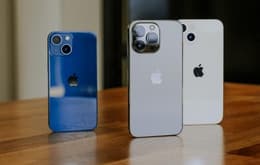
iPhone 13 mini vs Motorola Edge 30 Fusion

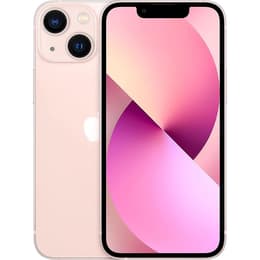
iPhone 13 mini
iPhone 13 mini
Starting at

Refurbished price:A$368.00

Versus A$1,049.00 new

See options
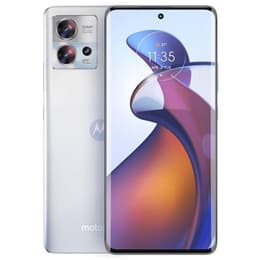
Motorola Edge 30 Fusion
Starting at

Refurbished price:A$257.46

Versus A$1,352.00 new

See options

The iPhone 13 Mini, released in September 2021, and the Motorola Edge 30 Fusion, launched in September 2022, are distinct smartphones offering different user experiences. The iPhone 13 Mini focuses on a compact form factor within the iOS ecosystem, while the Motorola Edge 30 Fusion provides a larger display and a near-stock Android experience. Both devices aim to deliver capable performance, but they cater to varying preferences in terms of size, operating system, and feature priorities.

Scores

Durability

The longevity of a smartphone is influenced by its release timeline, software support, and physical resilience. These two devices present different profiles in these aspects.

  • Release Timeline and Software Support: The iPhone 13 Mini, released in September 2021, typically receives major iOS updates for approximately 5-6 years from its launch, with security updates potentially extending beyond that period. As of March 2026, it supports iOS 26.4, indicating continued software relevance. The Motorola Edge 30 Fusion, launched in September 2022, was promised two major Android updates and three years of security updates. User reports suggest its software support from Motorola concluded around September 2025.
  • Physical Durability: The iPhone 13 Mini features a Ceramic Shield front cover and an IP68 rating, indicating resistance to dust and water immersion up to 6 meters for 30 minutes. The Motorola Edge 30 Fusion incorporates curved glass panels and an aluminum frame, contributing to a premium feel, but it offers a more basic IP rating, suggesting less robust water resistance.
  • Expected Practical Lifespan: Users prioritising extended software support and robust water and dust protection may find the iPhone 13 Mini offers a longer practical lifespan. The Motorola Edge 30 Fusion, while built with quality materials, has a shorter official software update commitment, which could impact its long-term usability for those who value the latest OS features.

Release year

2021

2022

Compatible with latest Update

Yes

Yes

Operating system

iOS

Android

Foldable

No

No

Performance

Both devices offer capable performance for daily tasks, though they achieve this through different hardware configurations and software optimisations.

  • Processor Capabilities: The iPhone 13 Mini is equipped with a capable processor that handles demanding applications and multitasking smoothly, ensuring a responsive user experience across the iOS platform. The Motorola Edge 30 Fusion features a powerful processor from 2021, which continues to deliver strong performance for gaming and general use, maintaining fluidity in everyday operations.
  • Multitasking and Responsiveness: The iPhone 13 Mini provides consistent responsiveness, allowing users to switch between apps and manage multiple tasks without significant slowdowns. The Motorola Edge 30 Fusion also offers a snappy experience for daily tasks and multitasking, benefiting from its efficient processor and a clean Android software interface.
  • Storage Options and Battery Behavior: The iPhone 13 Mini is available with storage capacities up to 512GB, providing ample space for apps and media. Its battery is designed to offer up to 17 hours of video playback, though heavy usage may require more frequent charging. The Motorola Edge 30 Fusion offers storage options up to 512GB and is noted for its battery lasting through a moderate-to-heavy day of use, supported by 68W fast charging that can replenish a significant portion of the battery in a short time.

Memory (GB)

4 GB

8 GB

Screen quality

The display is a primary interaction point, and these devices offer distinct visual experiences based on their size and technology.

  • Display Technology and Clarity: The iPhone 13 Mini features a 5.4-inch Super Retina XDR OLED display, delivering deep blacks, vibrant colours, and a sharp resolution of 2340x1080 pixels at 476 pixels per inch. The Motorola Edge 30 Fusion sports a larger 6.55-inch P-OLED screen with a 1080x2400 pixel resolution, also offering good colour and contrast.
  • Brightness and Refresh Rate: The iPhone 13 Mini's display reaches a typical brightness of 800 nits and a peak of 1200 nits for HDR content, ensuring good visibility in various lighting conditions, with a standard 60Hz refresh rate. The Motorola Edge 30 Fusion offers a higher 144Hz refresh rate for smoother scrolling and animations, with a peak brightness of up to 1100 nits, enhancing outdoor visibility.
  • Viewing Experience: The iPhone 13 Mini's compact size makes it suitable for one-handed use and those who prefer a smaller device, while still providing a high-quality visual experience. The Motorola Edge 30 Fusion's larger, curved display and higher refresh rate offer an immersive viewing experience, particularly for media consumption and gaming, though its size may be less ideal for single-handed operation.

Resolution

1080 x 2340

1080 x 2400

Screen type

Super Retina XDR OLED

P-OLED

Audiovisual

Both smartphones are equipped with capable camera systems designed to capture moments with clarity and detail, though their approaches and features differ.

  • Rear Camera System: The iPhone 13 Mini features a dual 12MP camera system, comprising a main camera with a wide f/1.6 aperture and sensor-shift optical image stabilisation, alongside an ultra-wide camera with a 120-degree field of view. The Motorola Edge 30 Fusion offers a triple rear camera setup, including a 50MP main sensor with optical image stabilisation, a 13MP ultrawide lens, and a 2MP depth sensor.
  • Photography and Video Performance: The iPhone 13 Mini excels in everyday photography and low-light conditions, producing detailed images with accurate colours, and supports Cinematic mode for video with a depth effect. It records HDR video up to 4K at 60 frames per second. The Motorola Edge 30 Fusion's main camera delivers good photos with decent detail and true-to-life colours, and it is capable of 8K video recording, with the ultrawide camera also supporting 4K video.
  • Front Camera and Audio: For selfies and video calls, the iPhone 13 Mini has a 12MP TrueDepth front camera that also supports 4K video recording. The Motorola Edge 30 Fusion features a higher-resolution 32MP front camera, also capable of 4K video, and provides a rich audio experience through its dual speakers with Dolby Atmos support.

Main camera

12 megapixels

50 megapixels

Front camera

12 megapixels

32 megapixels

Miscellaneous

Beyond core features, several practical elements contribute to the overall user experience and device utility.

  • Connectivity and Ports: Both devices support 5G connectivity and modern Wi-Fi standards (Wi-Fi 6 for iPhone 13 Mini, Wi-Fi 6E for Motorola Edge 30 Fusion) and Bluetooth (5.0 for iPhone 13 Mini, 5.2 for Motorola Edge 30 Fusion). The iPhone 13 Mini uses Apple's proprietary Lightning port, while the Motorola Edge 30 Fusion features a more universal USB Type-C port. Neither device includes a traditional 3.5mm headphone jack.
  • Biometric Security and Handling: The iPhone 13 Mini relies on Face ID for secure facial recognition. The Motorola Edge 30 Fusion incorporates an under-display fingerprint reader for biometric authentication. In terms of handling, the iPhone 13 Mini is notably compact and lightweight at around 140-141 grams, making it easy for one-handed use. The Motorola Edge 30 Fusion is larger and slightly heavier at 168-179 grams, but its slim profile and curved design contribute to a comfortable grip.
  • Build Materials and Additional Features: The iPhone 13 Mini combines a glass front and back with an aluminum frame. The Motorola Edge 30 Fusion also uses glass for its front and back panels, set within an aluminum frame, giving it a premium feel. The Motorola device also supports 'Ready For' functionality, allowing it to connect to external displays for a desktop-like experience.

Weight

140 oz

168 oz

Screen size (in)

5,4

6,55

Network

5G

5G

SIM card

Physical SIM + eSIM

Dual Physical SIM

Carrier compatibility

Unlocked

Unlocked

The iPhone 13 Mini and Motorola Edge 30 Fusion cater to different user priorities, each offering a distinct set of advantages. Users frequently praise the iPhone 13 Mini for its exceptionally compact size, making it ideal for one-handed operation and those who prefer a smaller device that still delivers flagship-level performance and a high-quality camera system. Its robust software support timeline and strong ecosystem integration are also commonly highlighted as significant benefits. However, some users note that its smaller battery capacity can be a compromise for heavy users, potentially requiring more frequent charging.

Conversely, the Motorola Edge 30 Fusion is often lauded for its premium design, large and fluid 144Hz OLED display, and powerful performance that handles demanding tasks with ease. Its fast charging capabilities are also a frequent point of praise. Criticisms often revolve around its more limited software update policy compared to some competitors and the absence of wireless charging.

Users prioritising a highly portable device with long-term software support and a strong ecosystem may prefer the iPhone 13 Mini. Those who value a larger, high-refresh-rate display, rapid charging, and a clean Android experience, even with a shorter software update commitment, might lean towards the Motorola Edge 30 Fusion. Both devices, especially when considered as quality-assured refurbished options, represent an eco-friendly alternative for consumers seeking capable smartphones.

See all articles

Our recent comparisons