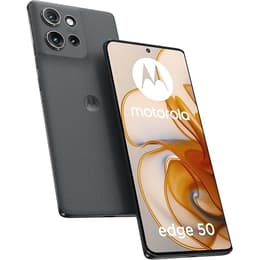
Galaxy A35 vs Motorola Edge 50

Galaxy A35
Galaxy A35
See options
Motorola Edge 50
Motorola Edge 50
See options

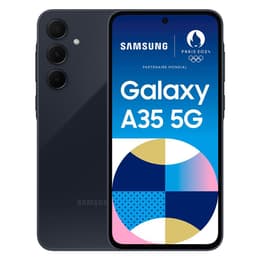
The Samsung Galaxy A35 and the Motorola Edge 50 are Android smartphones released in 2024, targeting users seeking a balanced experience in the mid-range segment. While both devices offer modern features and a focus on user experience, they differentiate themselves through display technology, camera versatility, and software support policies. Both run on the Android operating system, providing access to a wide ecosystem of applications and services.

Scores

Durability

The longevity of a smartphone is influenced by its release timeline, software support, and physical resilience. These two devices offer different approaches to durability and extended use.

  • Release and Software Support: The Samsung Galaxy A35 was launched in March 2024, and Samsung commits to providing four generations of Android OS upgrades and five years of security updates. The Motorola Edge 50, released in August 2024, typically receives three years of OS updates and four years of security updates, though some regional variations or specific models like the Edge 50 Neo have seen promises of longer support. This means the Galaxy A35 generally offers a longer period of guaranteed software updates.
  • Physical Durability: The Galaxy A35 features Gorilla Glass Victus+ on its front for enhanced screen protection and carries an IP67 rating for dust and water resistance. The Motorola Edge 50 comes with Gorilla Glass 5 on the front and boasts a higher IP68 rating, indicating superior protection against dust and water immersion.
  • Repairability: The Samsung Galaxy A35 has a repairability score of 8.4 or 8.5 out of 10, suggesting a design that facilitates easier access to and replacement of components. In contrast, the Motorola Edge 50 has a repairability score of 5.0 out of 10, indicating that repairs might be more challenging due to factors like strong adhesives and the need for extensive disassembly for certain components.

Release year

2024

2024

Operating system

Android

Android

Foldable

No

No

Performance

Performance in daily use is a key factor for many users, encompassing how smoothly applications run, multitasking capabilities, and overall system responsiveness. Both devices are equipped with processors designed for efficient operation.

  • Processing Power: The Samsung Galaxy A35 is powered by an in-house processor that handles everyday tasks with responsiveness. Users report it is snappy for general use, though some heavier applications might experience occasional lag. It is capable of running graphically demanding games, but extended gaming sessions can lead to the device warming up. The Motorola Edge 50 features a different current-generation processor, which is described as performing very well, offering a smooth and quick experience for daily tasks and photo/video editing software. Gaming performance is also noted as good, though not always at the highest settings, and the phone can get warm during intensive use.
  • Multitasking and Storage: The Galaxy A35 is available with 6GB or 8GB of RAM and offers 128GB or 256GB of internal storage, which can be expanded using a microSD card. The Edge 50 comes with 8GB or 12GB of RAM and 256GB or 512GB of internal storage, but it does not support expandable storage. Users who frequently switch between many applications or require more storage for media and apps without relying on cloud services might find the higher RAM options and larger base storage of the Edge 50 beneficial, while the A35 offers the flexibility of expandable storage.
  • Battery Endurance: Both smartphones are equipped with a 5000mAh battery capacity. The Galaxy A35 typically provides about a day and a half of use on a full charge with average usage, with some users reporting up to 7 hours of screen-on time. It supports 25W wired fast charging but lacks wireless charging. The Motorola Edge 50 also features a 5000mAh battery and supports faster 68W wired charging, alongside 15W wireless charging. User experiences with the Edge 50's battery life vary, with some finding it impressive for a day and a half of use, while others describe it as subpar, achieving an active use score of nearly 10 hours.

Memory (GB)

6 GB

12 GB

Screen quality

The display is a primary interface for smartphone interaction, and both the Galaxy A35 and Motorola Edge 50 offer vibrant viewing experiences with distinct characteristics.

  • Display Technology and Clarity: The Samsung Galaxy A35 features a 6.6-inch Super AMOLED display with a Full HD+ resolution (2340x1080 pixels). This technology is known for producing deep blacks and vibrant colors. The Motorola Edge 50 sports a slightly larger 6.7-inch P-OLED display with a higher 1.5K resolution (2712x1220 pixels). The P-OLED panel also delivers rich colors and deep blacks, with the higher resolution offering a slightly sharper visual experience.
  • Refresh Rate and Brightness: The Galaxy A35 offers a 120Hz refresh rate, contributing to smooth scrolling and fluid animations. Its peak brightness can reach up to 1000 nits, providing good visibility in various lighting conditions, including outdoors, though some users note colors can appear washed out in direct sunlight. The Edge 50 features a higher 144Hz refresh rate for even smoother visuals and a significantly brighter display, with peak brightness ranging from 1600 to 2000 nits, enhancing outdoor readability.
  • Viewing Experience: Both displays offer a captivating user experience for media consumption and daily tasks. The Galaxy A35's display is described as sharp and vibrant, suitable for watching videos and browsing social media. The Motorola Edge 50's display is also praised for its clarity and vibrant colors, with its curved edges contributing to an immersive viewing experience.

Resolution

1080x2340

1220x2712

Audiovisual

Camera capabilities are a significant consideration for many smartphone users, and both devices offer versatile camera systems for capturing photos and videos.

  • Rear Camera Systems: The Samsung Galaxy A35 is equipped with a triple rear camera setup, including a 50-megapixel main sensor with optical image stabilization (OIS), an 8-megapixel ultrawide lens, and a 5-megapixel macro lens. The Motorola Edge 50 also features a triple rear camera array, comprising a 50-megapixel main sensor with a wide aperture and OIS, a 13-megapixel ultrawide lens with autofocus that also functions for macro shots, and a 10-megapixel telephoto lens with 3x optical zoom and OIS. The inclusion of a dedicated telephoto lens on the Edge 50 provides greater flexibility for zoomed-in shots.
  • Photography Performance: In daylight, the Galaxy A35's main camera captures good pictures with natural tones and decent detail. However, its low-light performance can result in blurry or noisy images, and the macro lens is often considered less practical by users. The Motorola Edge 50's main camera also produces good photos with vibrant colors and impressive detail in well-lit conditions. Its telephoto lens performs well, and while the ultrawide is less sharp, it is still functional. Low-light performance for the main camera is decent, but the ultrawide can show softness and noise.
  • Video and Front Camera: Both devices are capable of recording video in 4K resolution at 30 frames per second from both their front and rear cameras. The Galaxy A35 has a 13-megapixel front-facing camera, with OIS on the rear camera working most effectively at 1080p. The Motorola Edge 50 features a higher-resolution 32-megapixel front camera, which is noted for capturing selfies with good detail.

Miscellaneous

Beyond core performance and display, several practical features contribute to the overall user experience and device utility.

  • Connectivity and Ports: Both the Galaxy A35 and Motorola Edge 50 support 5G connectivity for fast mobile data. The Galaxy A35 includes Wi-Fi and Bluetooth 5.3, with a USB-C 2.0 port for charging and data transfer. The Motorola Edge 50 offers more advanced connectivity with Wi-Fi 6E and Bluetooth 5.4, and a USB-C 3.1 port that also supports DisplayPort 1.4, allowing for video output to external displays.
  • Biometric Security and Design: Both smartphones feature an in-display optical fingerprint sensor for secure unlocking. In terms of physical design, the Galaxy A35 has a glass front and back with a plastic frame, weighing 209g. The Edge 50 presents a more premium build with a Gorilla Glass 5 front, an aluminum frame, and a back made of silicone polymer (vegan leather) or acetate finish, weighing 180g. The Edge 50's lighter weight and different back materials offer a distinct tactile experience.
  • Additional Features: The Galaxy A35 supports expandable storage via microSD card, a feature absent in the Motorola Edge 50. The Edge 50, however, includes wireless charging capabilities, which the A35 does not.

Weight

209 oz

180 oz

Screen size (in)

6.6

6.7

Network

5G

5G

SIM card

Physical SIM + eSIM

Physical SIM

Carrier compatibility

Unlocked

Unlocked

The Samsung Galaxy A35 and Motorola Edge 50 each present a compelling package for different user priorities. User feedback for the Galaxy A35 often praises its vibrant AMOLED display, reliable battery life, and the commitment to extended software updates. Criticisms sometimes point to its low-light camera performance and the perceived limited utility of the macro lens. The Motorola Edge 50 is frequently lauded for its premium design, brighter and higher-resolution display with a faster refresh rate, and the versatility of its camera system, particularly the inclusion of a telephoto lens. Some users have noted inconsistencies in battery life and camera stabilization as areas for improvement.

Users prioritizing long-term software support and a highly repairable device may find the Samsung Galaxy A35 well-suited to their needs. Its robust Gorilla Glass Victus+ and IP67 rating also contribute to its durability. Conversely, individuals who value a more premium build, a superior display experience with higher resolution and refresh rate, faster charging, and a more versatile camera setup with a dedicated telephoto lens might lean towards the Motorola Edge 50. Its IP68 rating also offers enhanced water and dust protection. Both devices offer a solid Android experience, and considering a quality-assured refurbished option for either model can be an eco-friendly alternative for those seeking to make a sustainable choice.
See all articles

Our recent comparisons