iPhone 13 vs Motorola Edge 50

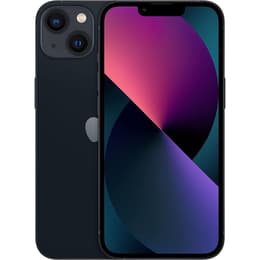
iPhone 13
iPhone 13
Starting at

Refurbished price:A$415.00

Versus A$1,099.00 new

See options
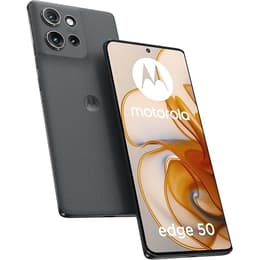
Motorola Edge 50
Motorola Edge 50
See options

The iPhone 13, released in September 2021, and the Motorola Edge 50, launched in August 2024, represent different approaches to smartphone design and functionality from their respective manufacturers. While the iPhone 13 operates on Apple's iOS ecosystem, the Motorola Edge 50 runs on Android, offering distinct user experiences. Key differentiators between these two devices include their display technology, camera systems, and software support timelines.

Scores

Durability

When considering the longevity of a smartphone, several factors come into play, including release age, software support, and repairability.

  • Release Timeline and Age: The iPhone 13 was released in September 2021, making it an older device compared to the Motorola Edge 50, which launched in August 2024. This age difference inherently means the iPhone 13 has fewer years of anticipated software support remaining.
  • OS Support Duration: Apple typically provides major iOS updates for its iPhones for approximately 5 to 7 years from their release, with security updates often extending beyond that period. The iPhone 13 is expected to receive iOS upgrades until around 2028, followed by security updates for an additional 18-24 months, potentially until 2029. In contrast, the Motorola Edge 50 is promised 3 years of Android OS updates and 4 years of security patches from its launch.
  • Repairability: The iPhone 13 received a repairability score of 5 out of 10 from iFixit, indicating that while some components are modular, certain repairs, such as screen replacement, can be complex due to software linking that may affect features like Face ID. The Motorola Edge 50 and its Pro variant also have a repairability score of 5.0 out of 10, with strong adhesive used for the back cover and battery making disassembly challenging.

Release year

2021

2024

Compatible with latest Update

Yes

Yes

Operating system

iOS

Android

Foldable

No

No

Performance

The performance of a smartphone is crucial for daily tasks, app usage, and multitasking efficiency.

  • Processor Capabilities: The iPhone 13 is equipped with a powerful processor that ensures smooth operation for demanding applications and multitasking. Users generally report consistent and responsive performance, even with intensive use. The Motorola Edge 50 features a current-generation processor that provides a smooth and lag-free software experience, handling everyday tasks and even light gaming effectively.
  • RAM and Multitasking: The iPhone 13 comes with 4GB of RAM, which is optimized by its operating system to manage multiple applications efficiently. The Motorola Edge 50 typically offers 8GB of RAM, with some variants having 12GB, providing ample capacity for fluid multitasking and app switching.
  • Storage Options: Both devices offer various internal storage configurations to suit different user needs. The iPhone 13 is available with 128GB, 256GB, or 512GB of storage. The Motorola Edge 50 generally comes with 256GB of storage, with some models offering up to 512GB.
  • Battery Behavior: The iPhone 13, with its 3240 mAh battery, is noted by users for its excellent battery life, often lasting a full day or even up to 46 hours with moderate use. The Motorola Edge 50, featuring a larger 5000mAh battery, also delivers good battery life, with users reporting it can last about a day and a half on a single charge.

Memory (GB)

4 GB

12 GB

Screen quality

The display is a primary interface for smartphone interaction, and its quality significantly impacts the user experience.

  • Display Technology and Resolution: The iPhone 13 features a 6.1-inch Super Retina XDR OLED display, offering deep blacks and vibrant colors with a resolution of 1170x2532 pixels. The Motorola Edge 50 boasts a larger 6.67-inch P-OLED display with a 1.5K resolution (1220x2712 pixels), also providing sharp visuals and rich colors.
  • Refresh Rate: A notable difference lies in the refresh rates. The iPhone 13 has a standard 60Hz refresh rate, which provides a smooth viewing experience for most content. The Motorola Edge 50, however, offers a higher 144Hz refresh rate, resulting in noticeably smoother scrolling and more fluid animations, particularly beneficial for fast-paced content and gaming.
  • Brightness Levels: For outdoor visibility, the Motorola Edge 50's display can reach a peak brightness of up to 1900 nits (or 1300 nits for the base model), making it highly visible even in bright sunlight. The iPhone 13's OLED display also offers good brightness for various lighting conditions.
  • Screen Protection: The iPhone 13 incorporates Ceramic Shield on its front for enhanced durability. The Motorola Edge 50 uses Gorilla Glass 3 or 5 for screen protection.

Resolution

1170 x 2532

1220x2712

Audiovisual

Camera capabilities are often a deciding factor for many smartphone users, influencing how they capture and share moments.

  • Rear Camera System: The iPhone 13 features a dual 12MP camera system, comprising a wide-angle lens with sensor-shift optical image stabilization and an ultrawide-angle lens. This setup is praised for producing detailed, crisp, and well-balanced photos, with improved low-light performance. The Motorola Edge 50 offers a versatile triple camera system, including a 50MP main sensor, a 13MP ultrawide lens capable of macro shots, and a 10MP telephoto lens with 3x optical zoom. Users report excellent detail and color reproduction from the main camera.
  • Low-Light Photography: Both devices offer good low-light performance. The iPhone 13's larger camera sensors and improved processing contribute to better images in dim conditions, reducing the need for a dedicated night mode as frequently. The Motorola Edge 50's main camera also performs well in low light, though its telephoto lens may struggle in very dim environments.
  • Video Recording: The iPhone 13 introduces Cinematic Mode, which allows for depth-of-field effects and automatic focus transitions in videos, similar to professional filmmaking techniques. The Motorola Edge 50 is capable of recording 4K video, providing good quality for general video capture.
  • Front Camera: For selfies and video calls, the iPhone 13 has a 12MP front camera. The Motorola Edge 50 features a higher-resolution 32MP front camera.

Front camera

12 megapixels

32 megapixels

Miscellaneous

Beyond core features, several practical elements contribute to the overall user experience and device utility.

  • Connectivity: Both the iPhone 13 and Motorola Edge 50 support 5G networks, enabling faster mobile data speeds where available. They also include modern Wi-Fi standards and Bluetooth for wireless connections. The Motorola Edge 50 supports Bluetooth 5.2, while the iPhone 13 uses Bluetooth 5.0.
  • Ports and Biometrics: The iPhone 13 utilizes Apple's proprietary Lightning connector for charging and data transfer. The Motorola Edge 50 features a more universal USB Type-C port. For security, the iPhone 13 relies on Face ID for facial recognition. The Motorola Edge 50 incorporates an in-display fingerprint sensor for biometric authentication.
  • Build Materials and Durability: The iPhone 13 features a glass front with Ceramic Shield protection and an aluminum frame, offering robust build quality. The Motorola Edge 50 has a glass front (Gorilla Glass 3 or 5), a plastic frame, and a silicone polymer back with an eco-leather finish, providing a distinct tactile experience. Both devices carry an IP68 rating for dust and water resistance. The Motorola Edge 50 is also MIL-STD-810H military-grade certified, indicating resistance to various environmental stresses.
  • Weight and Dimensions: The iPhone 13 weighs 174 grams and measures 146.7 x 71.5 x 7.65 mm. The Motorola Edge 50 also weighs 174 grams and has dimensions of 159.6 x 71.9 x 8.1 mm, making it slightly taller and thicker while maintaining a similar weight.

Weight

173 oz

180 oz

Screen size (in)

6,1

6.7

Network

5G

5G

SIM card

Physical SIM + eSIM

Physical SIM

Carrier compatibility

Unlocked

Unlocked

Connector

Lightning

USB-C

User feedback for the iPhone 13 frequently praises its reliable performance, excellent camera capabilities, and impressive battery life for its size. Many users appreciate the consistent software experience and the device's long-term support from Apple. Criticisms sometimes point to the standard 60Hz display refresh rate, which some find less fluid compared to higher refresh rate screens on other devices. The lack of a dedicated telephoto lens on the base model is also occasionally mentioned.

For the Motorola Edge 50, common praise highlights its vibrant 144Hz display, fast charging speeds, and the inclusion of a versatile triple camera system with a telephoto lens. Users often commend its near-stock Android experience and good battery endurance. Some concerns have been raised regarding the consistency of software updates and potential focusing issues with the telephoto camera in low-light conditions after certain updates.

Users prioritizing a long software support window, a highly optimized ecosystem, and consistent camera performance in a compact form factor may find the iPhone 13 well-suited to their needs. Conversely, individuals who value a larger, high refresh rate display, faster charging, a dedicated telephoto camera, and the flexibility of the Android operating system might lean towards the Motorola Edge 50. Both devices offer quality-assured refurbished options, providing an eco-friendly alternative for consumers seeking reliable technology.

See all articles

Our recent comparisons