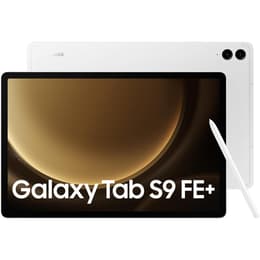
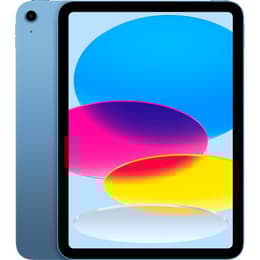

Galaxy Tab S9 FE+ (12.4", 2023) vs iPad 11 (2025, A16 series)

Galaxy Tab S9 FE+ (12.4", 2023)
Starting at

Refurbished price:A$740.00

Versus A$974.00 new

See options
iPad 11 (2025, A16 series)
See options

The Samsung Galaxy Tab S9 FE+ (Fan Edition Plus), released in October 2023, and the Apple iPad (2025 A16 Series), expected in late 2025, represent distinct approaches to the tablet experience. While both devices offer robust platforms for productivity and entertainment, they differ significantly in their operating systems, display characteristics, and overall ecosystem integration. The Galaxy Tab S9 FE+ runs on Android with Samsung's One UI, while the iPad operates on Apple's iPadOS.

Scores

Durability

The longevity of a tablet is influenced by its build quality and the duration of software support it receives. Both devices are constructed with durable materials, but their software update policies vary.

  • Software Support: The Galaxy Tab S9 FE+ is expected to receive approximately four years of major Android operating system updates and five years of security updates from its release. In contrast, Apple typically provides longer software support for its iPads, with the iPad (2025 A16 Series) likely to receive five to seven years of iPadOS updates and potentially up to ten years of security updates, offering an extended period of feature and security enhancements. [5, 14, 17, 22, 23, 25, 27, 32]
  • Build and Durability: The Galaxy Tab S9 FE+ features an aluminum frame and an IP68 rating for dust and water resistance, providing a higher level of protection against environmental elements. [4, 7, 28, 33] The iPad (2025 A16 Series) is also built with an aluminum enclosure, consistent with Apple's design, though base iPad models typically do not carry an official IP rating.
  • Practical Lifespan: Users can expect both tablets to remain functional for several years, but the iPad's longer software support generally translates to a more extended period of compatibility with the latest applications and features.

Release year

2023

2025

Compatible with latest Update

Yes

Yes

Operating system

Android

iPadOS

Performance

Performance is a key differentiator, impacting how smoothly applications run and how efficiently tasks are handled on each tablet.

  • Processing Power: The Galaxy Tab S9 FE+ is equipped with a processor designed for efficient multitasking and handling a variety of applications, providing a responsive experience for everyday use, streaming, and moderate gaming. [10, 16] The iPad (2025 A16 Series) is expected to feature a high-performance processor, enabling very smooth operation, rapid app loading, and capable handling of demanding applications, advanced gaming, and intensive creative tasks. [38]
  • Multitasking and Responsiveness: The Galaxy Tab S9 FE+ offers configurations with 8GB or 12GB of RAM, which aids in keeping multiple applications open and switching between them fluidly. [7, 16] The iPad, while often having less RAM on paper, benefits from iPadOS optimizations that allow for efficient multitasking and a highly responsive user experience, even with numerous apps running simultaneously.
  • Storage Options: The Galaxy Tab S9 FE+ provides internal storage options of 128GB or 256GB, with the added flexibility of expanding storage up to 1TB via a microSD card. [3, 7, 33] The iPad (2025 A16 Series) is likely to offer internal storage options such as 64GB, 128GB, or 256GB, but it does not support expandable storage. [31, 38]

Memory (GB)

8 GB

6 GB

Screen quality

The display is a primary interface for tablet interaction, and both devices offer distinct visual experiences.

  • Display Technology and Size: The Galaxy Tab S9 FE+ features a larger 12.4-inch IPS LCD display with a resolution of 2560 x 1600 pixels, offering a spacious canvas for content consumption and productivity. [1, 5, 6, 16] The iPad (2025 A16 Series) is anticipated to come with an 11-inch Liquid Retina IPS LCD display, providing a resolution of 2360 x 1640 pixels, which is a slightly more compact viewing area. [37, 38]
  • Refresh Rate and Brightness: The Galaxy Tab S9 FE+ boasts a 90Hz refresh rate, contributing to smoother scrolling and a more fluid visual experience compared to standard 60Hz displays. It also offers a peak brightness of 720 nits in High Brightness Mode for outdoor visibility. [1, 5, 12, 29] The iPad (2025 A16 Series) is expected to maintain a 60Hz refresh rate, which is standard for many tablets, and a brightness of 500 nits, suitable for indoor and moderate outdoor use. [37, 38]
  • Clarity and Color: Both tablets deliver clear and vibrant visuals. The Galaxy Tab S9 FE+'s LCD panel provides good contrast and color reproduction, while the iPad's Liquid Retina display is known for its color accuracy and sharp text rendering. [1, 5, 12, 29, 39, 42]

Resolution

1600 x 2560

2360 x 1640

Screen type

IPS LCD

Liquid Retina display

Pixel density

250ppp

264ppp

Audiovisual

While not their primary function, the cameras on both tablets are suitable for video calls, document scanning, and casual photography.

  • Rear Camera System: The Galaxy Tab S9 FE+ includes a dual rear camera setup with an 8MP wide lens and an 8MP ultrawide lens, offering some versatility for capturing different scenes. [1, 7] The iPad (2025 A16 Series) is expected to feature a single 12MP wide rear camera, which typically provides good detail and color accuracy for general photography. [37, 38]
  • Front Camera and Video: For video conferencing and selfies, the Galaxy Tab S9 FE+ is equipped with a 12MP ultrawide front camera. [1, 7] The iPad (2025 A16 Series) is also likely to have a 12MP ultrawide front camera with Center Stage, a feature that keeps the user automatically framed during video calls. [37, 38] Both tablets are capable of recording video, with the Galaxy Tab S9 FE+ supporting up to 4K at 30fps, and the iPad expected to support up to 4K at 60fps. [1, 6, 37]
  • Audio Experience: Both devices offer integrated speakers for media consumption. The Galaxy Tab S9 FE+ provides a capable audio output, while iPads are generally recognized for their balanced and clear speaker performance, suitable for video playback and casual listening.

Miscellaneous

Beyond core specifications, several practical features contribute to the overall user experience of these tablets.

  • Connectivity and Ports: Both the Galaxy Tab S9 FE+ and the iPad (2025 A16 Series) support modern connectivity standards, including Wi-Fi 6 and Bluetooth 5.3, with optional 5G cellular connectivity available. [7, 10, 26, 34] Both devices also feature a USB-C port for charging and data transfer, though the Galaxy Tab S9 FE+ uses USB 2.0, while the iPad's USB-C port is expected to support USB 2.0 with DisplayPort capabilities. [20, 28, 37]
  • Stylus Support: A notable difference is the inclusion of a stylus. The Galaxy Tab S9 FE+ comes with an IP68-rated S Pen in the box, offering a range of features for note-taking, drawing, and navigation. [1, 21, 30, 35, 36] The iPad (2025 A16 Series) supports the Apple Pencil (likely USB-C or 1st generation), but it is sold separately. [37]
  • Biometric Security and Design: The Galaxy Tab S9 FE+ incorporates a side-mounted fingerprint sensor for secure unlocking. [4, 28] The iPad (2025 A16 Series) is expected to feature Touch ID integrated into the power button. [37] The Galaxy Tab S9 FE+ is slightly heavier at around 627-628g, compared to the expected lighter weight of the iPad (around 477g for a similar size), which can impact portability and handling during extended use. [1, 2, 6, 8, 28, 38]

Weight

920 oz

477 oz

Screen size (in)

12.4

11

Network

Wi-Fi

Wi-Fi

Carrier compatibility

Without SIM Port

Without SIM Port

Users often praise the Galaxy Tab S9 FE+ for its large, vibrant display and the included S Pen, making it a strong contender for those who value a comprehensive creative and productivity tool out of the box. Some users have noted occasional performance stutters when running multiple demanding applications, and the LCD panel, while good, does not offer the deep blacks of OLED displays found in more premium tablets. [5, 12, 29]

The iPad (2025 A16 Series), on the other hand, is frequently lauded for its fluid performance, extensive app ecosystem optimized for tablets, and long-term software support. Potential criticisms for base iPad models often revolve around the absence of an included stylus and the lack of expandable storage. [22, 34, 38]

Users prioritizing a larger screen, an included stylus for creative work, and expandable storage will find the Galaxy Tab S9 FE+ well-suited to their needs. Its Android operating system also offers greater customization. Conversely, users who value a highly optimized operating system with a vast selection of tablet-specific applications, a powerful processor for demanding tasks, and a longer software update cycle may lean toward the iPad (2025 A16 Series). Both tablets offer compelling experiences, and for those considering a quality-assured refurbished option, both models can be found, providing an eco-friendly alternative to new purchases.


See all articles

Our recent comparisons