
Galaxy A35 vs iPhone 16

Galaxy A35
Galaxy A35
See options
iPhone 16
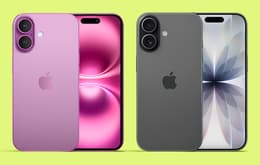
iPhone 16
Starting at

Refurbished price:A$952.00

Versus A$1,399.00 new

See options

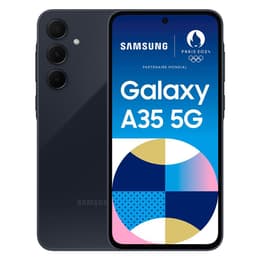
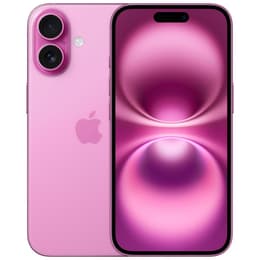
The Samsung Galaxy A35, released in March 2024, and the Apple iPhone 16, launched in September 2024, represent distinct approaches to smartphone design and functionality. While the Galaxy A35 operates on the Android ecosystem, offering a larger display and a versatile camera array, the iPhone 16 runs on Apple's iOS, featuring a powerful processor and advanced camera capabilities. These differences cater to varying user preferences, from operating system familiarity to specific hardware priorities. [26]

Scores

Durability

When considering the long-term usability of a smartphone, software support and physical resilience are key factors. Both devices offer robust support timelines and durable designs, though with some distinctions.

  • Software Longevity: The Samsung Galaxy A35 launched with Android 14 and is slated to receive four years of major OS updates and five years of security updates, extending its software relevance until approximately 2028 and 2029, respectively. [3, 16, 17] The iPhone 16, running iOS 18 at launch, typically benefits from a longer software support cycle, often receiving major iOS updates for six to seven years, suggesting support well into the early 2030s. [1, 7, 11]
  • Physical Durability: The Galaxy A35 features a glass front protected by Gorilla Glass Victus+ and a glass back, encased in a plastic frame, offering IP67 dust and water resistance. [3, 12, 19] This rating means it can withstand immersion in up to 1 meter of fresh water for 30 minutes. The iPhone 16 incorporates a Ceramic Shield front cover, which is designed for enhanced drop performance, and an aluminum frame, alongside an IP68 rating, allowing for immersion in up to 6 meters of water for 30 minutes. [1, 9, 14]
  • Repairability Considerations: While specific repairability scores can vary, both manufacturers offer repair services and parts. The choice between these devices may also involve considering quality-assured refurbished options, which provide an eco-friendly alternative for extending product life.

Release year

2024

2024

Foldable

No

No

Performance

The performance of a smartphone is central to its daily user experience, influencing everything from app responsiveness to gaming capabilities. Both the Galaxy A35 and iPhone 16 deliver capable performance, though they achieve it through different hardware architectures.

  • Storage Options: The Galaxy A35 offers 128GB or 256GB of internal storage, with the added flexibility of expandable storage via a microSD card, supporting up to 1TB. [3, 17, 18] The iPhone 16 comes with 128GB, 256GB, or 512GB internal storage options, but does not support external memory expansion. [4, 5, 7, 14]
  • Processing Power: The iPhone 16, equipped with its A18 chip, provides a highly responsive experience, handling demanding applications and multitasking smoothly. Users report that it opens apps quickly and shifts between tasks without hesitation, making it well-suited for intensive gaming and complex workflows. [4, 25] The Galaxy A35, powered by the Exynos 1380 processor, offers reliable performance for everyday tasks, general app usage, and moderate gaming. While capable, some users might notice occasional minor delays compared to higher-tier devices during very intensive use. [2, 17, 29]
  • Battery Behavior: The Galaxy A35 features a 5000mAh battery, which typically provides extended usage, often lasting through a full day of heavy use for many users. [2, 3, 10] The iPhone 16, with a 3561 mAh battery, also offers good battery life, with many users finding it sufficient for a full day of typical usage, though heavy users might require a top-up before the day ends. [4, 21, 23]

Memory (GB)

6 GB

8 GB

Screen quality

The display is a primary interface for smartphone interaction, and both devices offer distinct visual experiences tailored to their respective ecosystems.

  • Display Technology and Clarity: The Samsung Galaxy A35 features a 6.6-inch Super AMOLED display with a Full HD+ resolution of 2340x1080 pixels, resulting in vibrant colors and deep blacks. [3, 13, 18] The iPhone 16 comes with a 6.1-inch Super Retina XDR OLED display, offering a resolution of 2556x1179 pixels, which translates to sharp text and detailed images. [1, 9, 14]
  • Brightness and Outdoor Visibility: Both phones provide good brightness levels for outdoor use. The Galaxy A35 can reach up to 1000 nits in High Brightness Mode (HBM), ensuring visibility in various lighting conditions. [13, 18] The iPhone 16 offers typical brightness of 1000 nits and can peak at 2000 nits for HDR content, enhancing visibility even under direct sunlight. [14, 15]
  • Refresh Rate and Smoothness: The Galaxy A35 boasts a 120Hz refresh rate, contributing to smoother scrolling and a more fluid visual experience, particularly noticeable during gaming or navigating user interfaces. [3, 16, 18] The iPhone 16 maintains a 60Hz refresh rate, which provides a consistent visual experience, though it does not offer the same level of motion smoothness as higher refresh rate displays. [1, 15, 24]

Resolution

1080x2340

1179 x 2556

Audiovisual

Camera capabilities are a significant factor for many users, and both the Galaxy A35 and iPhone 16 offer distinct photographic and videographic strengths.

  • Rear Camera Systems: The Samsung Galaxy A35 features a triple-camera setup on the rear, including a 50-megapixel main sensor with optical image stabilization (OIS), an 8-megapixel ultrawide lens, and a 5-megapixel macro lens. [2, 17, 18] The iPhone 16 has a dual-camera system, comprising a 48-megapixel main sensor with OIS and dual pixel PDAF, and a 12-megapixel ultrawide lens with a 120-degree field of view. [1, 14, 15]
  • Photography Performance: The Galaxy A35's main camera captures detailed photos with vibrant colors, performing well in daylight and offering improved low-light performance for its category. [2, 6] The iPhone 16's camera system is known for its consistent image quality, producing natural-looking photos with good dynamic range across various lighting conditions. Its 48MP main camera can capture super-high-resolution photos. [1, 15, 25]
  • Video Recording and Features: Both devices support 4K video recording. The Galaxy A35 records at 30 frames per second (fps) in 4K. [2, 18] The iPhone 16 offers 4K video recording at up to 60fps and introduces a new vertical camera alignment designed to support spatial video capture, along with features like Photonic Engine and Smart HDR for enhanced image processing. [1, 14, 15]

Miscellaneous

Beyond core specifications, several practical elements contribute to the overall user experience and daily convenience of a smartphone.

  • Connectivity and Ports: Both devices support 5G connectivity for fast mobile data. [14, 26] The Galaxy A35 includes Wi-Fi 6 and Bluetooth 5.3, along with a USB-C 2.0 port for charging and data transfer. [13, 26] The iPhone 16 features Wi-Fi 6/7 and Bluetooth 5.3, and also utilizes a USB-C 2.0 port, which includes DisplayPort functionality. [14]
  • Biometric Security and Controls: The Galaxy A35 utilizes an in-display fingerprint sensor for secure unlocking. [3, 13, 26] The iPhone 16 relies on Face ID for facial recognition. [14] Additionally, the iPhone 16 includes an Action Button and a dedicated Camera Control button, offering customizable shortcuts and enhanced camera interaction. [4, 7, 11]
  • Design and Handling: The Galaxy A35 measures 161.7 x 78 x 8.2 mm and weighs 209g, offering a larger form factor with a glass front and back and a plastic frame. [3, 16] The iPhone 16 is more compact at 147.6 x 71.6 x 7.8 mm and lighter at 170g, featuring a Ceramic Shield front, glass back, and an aluminum frame. [1, 9, 14]

Weight

209 oz

170 oz

Screen size (in)

6.6

6.1

Network

5G

5G

SIM card

Physical SIM + eSIM

Physical SIM + eSIM

Carrier compatibility

Unlocked

Unlocked

User feedback for the Samsung Galaxy A35 often highlights its vibrant Super AMOLED display and 120Hz refresh rate as significant advantages, providing a smooth and engaging visual experience. Many users also praise its battery life, noting that the 5000mAh capacity reliably lasts through a full day. The camera system is frequently commended for capturing detailed and colorful photos, especially in good lighting conditions. Some common criticisms include the plastic frame, which some users feel detracts from a premium feel, and occasional reports of minor performance stutters during very demanding tasks. [10, 12, 16]

For the iPhone 16, users consistently appreciate its powerful and efficient performance, ensuring a fluid experience across all applications and tasks. The camera system receives high marks for its consistent image quality, reliable low-light performance, and advanced video capabilities, including spatial video capture. The integration of Apple Intelligence is also a frequently mentioned positive, enhancing the user experience with advanced AI features. A recurring point of discussion, however, is the 60Hz refresh rate display, which some users feel is a limitation compared to other devices in its category. [4, 21, 24, 25]

Users prioritizing a larger, high-refresh-rate display and expandable storage may find the Samsung Galaxy A35 well-suited to their needs. Its robust battery life and versatile camera system make it a strong contender for those seeking an Android device with solid all-around performance. Conversely, users who value a compact design, a highly optimized software ecosystem, advanced processing power, and a long software support timeline may lean toward the iPhone 16. Its sophisticated camera features and integration with Apple Intelligence offer a premium experience for those invested in the Apple ecosystem. Both devices are available as quality-assured refurbished options, providing a sustainable choice for consumers.

See all articles

Our recent comparisons