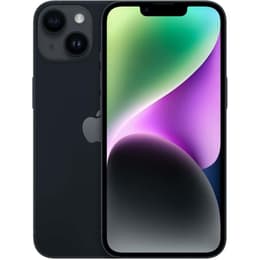
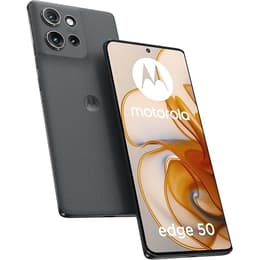
iPhone 14 vs Motorola Edge 50

iPhone 14
iPhone 14
Starting at

Refurbished price:A$467.00

Versus A$1,049.00 new

See options
Motorola Edge 50
Motorola Edge 50
See options

The iPhone 14, released in September 2022, operates on Apple's iOS ecosystem, offering a streamlined user experience and a focus on integrated services. In contrast, the Motorola Edge 50 Pro, launched in April 2024, runs on Android with Motorola's My UX, providing a more customizable interface. While both are modern smartphones, the iPhone 14 emphasizes consistent performance and a robust software ecosystem, whereas the Motorola Edge 50 Pro brings a higher refresh rate display and a versatile camera system to the forefront.

Scores

Durability

When considering the long-term usability of these devices, their release timelines and software support policies are key factors.

  • Release Timeline: The iPhone 14 was released in September 2022, making it an earlier model compared to the Motorola Edge 50 Pro, which launched in April 2024. This difference in release dates means the Motorola Edge 50 Pro benefits from newer components and a more recent design.
  • Software Longevity: Apple typically provides iOS updates for five to seven years after a device's initial release. The iPhone 14, having launched with iOS 16, is expected to receive updates until around 2028. The Motorola Edge 50 Pro, running Android 14, is promised three major OS updates and four years of security updates. This suggests the iPhone 14 may offer a longer period of major software support.
  • Durability Features: Both devices feature an IP68 rating for water and dust resistance. The iPhone 14 incorporates a Ceramic Shield front cover for enhanced screen durability, while the Motorola Edge 50 Pro uses Gorilla Glass protection for its display.

Release year

2022

2024

Compatible with latest Update

Yes

Yes

Operating system

iOS

Android

Foldable

No

No

Performance

The performance of a smartphone is crucial for daily tasks, from navigating apps to engaging with multimedia and gaming.

  • Processing Power: The iPhone 14 is equipped with a powerful processor that handles demanding applications and multitasking smoothly. Users generally report smooth performance and responsiveness in everyday use. The Motorola Edge 50 Pro features a current-generation processor designed for efficient performance across daily tasks and moderate gaming.
  • Multitasking and Responsiveness: Both devices offer ample RAM to support fluid multitasking. The iPhone 14's integrated hardware and software optimization contribute to its consistent responsiveness. The Motorola Edge 50 Pro's software experience is described by users as smooth and lag-free, even with multiple applications running simultaneously.
  • Battery Behavior: The iPhone 14 typically provides all-day battery life for moderate usage. The Motorola Edge 50 Pro, with its larger battery capacity, also generally lasts a full day with moderate use. The Motorola Edge 50 Pro supports significantly faster wired and wireless charging speeds, allowing for quicker power replenishment.

Memory (GB)

6 GB

12 GB

Screen quality

The display is a primary interface for users, influencing everything from content consumption to daily interactions.

  • Display Technology and Resolution: The iPhone 14 features a 6.1-inch Super Retina XDR OLED display with a resolution of 2532 x 1170 pixels, offering sharp visuals and deep blacks. The Motorola Edge 50 Pro boasts a larger 6.7-inch pOLED display with a 2712 x 1220 pixel (1.5K) resolution, providing a more expansive viewing area and crisp detail.
  • Brightness and Clarity: Both phones offer excellent brightness levels for visibility in various lighting conditions. The iPhone 14 reaches up to 800 nits typical brightness and 1200 nits peak HDR brightness. The Motorola Edge 50 Pro can achieve up to 2000 nits peak brightness, which can be beneficial for outdoor use.
  • Refresh Rate and Smoothness: The iPhone 14 has a standard 60Hz refresh rate. The Motorola Edge 50 Pro offers a higher 144Hz refresh rate, resulting in smoother scrolling and more fluid animations, which can enhance the user experience, particularly in gaming or fast-paced content. The Motorola Edge 50 Pro also features a curved display.

Resolution

1170 x 2532

1220x2712

Audiovisual

Camera capabilities are a significant consideration for many users, impacting how they capture and share moments.

  • Rear Camera Systems: The iPhone 14 includes a dual 12MP camera system with a main sensor featuring sensor-shift optical image stabilization and an ultrawide lens. It utilizes Apple's Photonic Engine for improved image processing, especially in lower light. The Motorola Edge 50 Pro offers a triple camera setup, including a 50MP main sensor with optical image stabilization, a 13MP ultrawide lens that doubles as a macro camera, and a 10MP telephoto lens with 3x optical zoom and OIS.
  • Photography Performance: The iPhone 14 delivers consistent photo quality with good detail and color reproduction, performing well in various lighting conditions. The Motorola Edge 50 Pro is praised for its detailed and vibrant images, particularly from its main and telephoto cameras, with Pantone-validated colors for accurate skin tones. Some users note occasional color inconsistencies between the Edge 50 Pro's lenses.
  • Video and Front Camera: Both devices offer strong video recording capabilities. The iPhone 14 supports 4K video recording with features like Cinematic Mode and Action Mode for enhanced stabilization. Its 12MP front camera includes autofocus. The Motorola Edge 50 Pro also records 4K video and features a high-resolution 50MP front camera with autofocus, which users find impressive for selfies.

Front camera

12 megapixels

32 megapixels

Miscellaneous

Beyond core features, several practical elements contribute to the overall user experience and device utility.

  • Connectivity and Ports: Both smartphones support 5G connectivity. The iPhone 14 uses Wi-Fi 6 and Bluetooth 5.3, while the Motorola Edge 50 Pro supports the newer Wi-Fi 6E and Bluetooth 5.4 standards. The iPhone 14 features a Lightning port, whereas the Motorola Edge 50 Pro uses a USB-C port.
  • Biometrics and Sensors: The iPhone 14 relies on Face ID for secure authentication. The Motorola Edge 50 Pro incorporates an under-display optical fingerprint sensor. Both devices include standard sensors like accelerometers, gyroscopes, and compasses. The iPhone 14 also includes Emergency SOS via Satellite and Crash Detection features.
  • Design and Handling: The iPhone 14 has a compact design, weighing 172g and measuring 146.7 x 71.5 x 7.8 mm. It features an aerospace-grade aluminum frame. The Motorola Edge 50 Pro is slightly larger and heavier at 186g and 161.23 x 72.4 x 8.19 mm, often featuring a vegan leather or glass back with an aluminum frame.

Weight

172 oz

180 oz

Screen size (in)

6,1

6.7

Network

5G

5G

SIM card

Physical SIM + eSIM

Physical SIM

Carrier compatibility

Unlocked

Unlocked

Connector

Lightning

USB-C

User feedback for the iPhone 14 often highlights its consistent performance, reliable camera, and the seamless integration within the Apple ecosystem. Users appreciate its smooth operation and the longevity of software updates. Some common criticisms include the 60Hz display refresh rate and the continued use of the Lightning port. The Motorola Edge 50 Pro receives praise for its vibrant 144Hz pOLED display, versatile camera system with 3x optical zoom, and exceptionally fast charging capabilities. Some users have noted occasional inconsistencies in camera color science between lenses and mixed battery life results under heavy usage.

Users prioritizing a long software support window, a compact form factor, and a highly integrated ecosystem may find the iPhone 14 well-suited to their needs. Its consistent performance and established platform offer a dependable experience. Conversely, users who value a larger, high-refresh-rate display, a more versatile camera with optical zoom, and rapid charging will likely lean towards the Motorola Edge 50 Pro. Its Android operating system also provides greater customization options. Both devices offer quality-assured refurbished options, presenting an eco-friendly alternative for consumers seeking to make informed and sustainable choices.

See all articles

Our recent comparisons