iPhone 13 vs Motorola Razr 40 Ultra

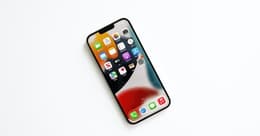
iPhone 13
iPhone 13
Starting at

Refurbished price:A$413.00

Versus A$1,099.00 new

See options
Motorola Razr 40 Ultra
See options

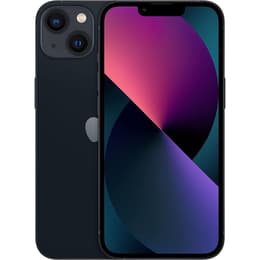
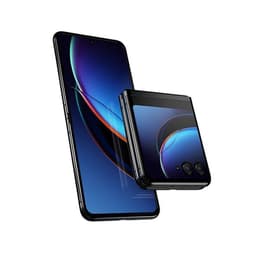
The iPhone 13, released in September 2021, is a traditional slate-style smartphone running Apple's iOS. The Motorola Razr 40 Ultra, launched in June 2023, is a clamshell foldable device operating on Android. These two devices offer distinct user experiences, primarily differing in their form factor and operating systems, alongside variations in display technology and camera capabilities.

Scores

Durability

When considering the long-term usability of a smartphone, factors like software support and physical resilience are key. The iPhone 13 and Motorola Razr 40 Ultra present different approaches to durability and longevity.

  • Software Support: The iPhone 13 is expected to receive major iOS updates for approximately 5 to 7 years from its release, with security updates extending even longer, potentially until 2027-2028 for major updates. The Motorola Razr 40 Ultra typically receives 3 years of Android software updates and an additional year of security updates, bringing its support timeline up to Android 16.
  • Physical Durability: The iPhone 13 features an IP68 rating, indicating robust water and dust resistance, and incorporates a Ceramic Shield front cover for enhanced screen protection. The Motorola Razr 40 Ultra has an IP52 rating, offering splash and dust resistance, and its cover screen is protected by Gorilla Glass Victus. Its foldable design introduces a hinge mechanism and a flexible internal display, which some users have noted can develop a visible crease over time.
  • Expected Lifespan: Users prioritizing extended software longevity and high water/dust resistance may find the iPhone 13 a suitable choice. Those who value the innovative foldable design and are comfortable with a shorter software update cycle might lean towards the Motorola Razr 40 Ultra.

Release year

2021

2023

Compatible with latest Update

Yes

Yes

Operating system

iOS

Android

Foldable

No

Yes

Performance

Both devices are designed to handle daily tasks efficiently, but their underlying hardware and software optimizations lead to different performance characteristics.

  • System Responsiveness: The iPhone 13 provides smooth navigation and quick app launches, handling demanding applications and multitasking with ease. The Motorola Razr 40 Ultra also offers fluid performance for everyday use and gaming, ensuring a responsive experience across its dual displays.
  • Multitasking and Storage: The iPhone 13 is available with storage options up to 512GB and is equipped to manage multiple applications concurrently. The Motorola Razr 40 Ultra comes with 8GB or 12GB of RAM and storage options up to 512GB, allowing for efficient multitasking and ample space for files and applications.
  • Battery Behavior: The iPhone 13 is noted for its strong battery life, often lasting a full day for many users. The Motorola Razr 40 Ultra's battery capacity is generally considered good for a foldable phone, though its performance compared to traditional slab phones can vary depending on usage, especially with its high refresh rate displays.

Memory (GB)

4 GB

8 GB

Screen quality

The display experience is a significant differentiator between these two smartphones, with the Motorola Razr 40 Ultra offering a unique dual-screen setup.

  • Main Display Technology: The iPhone 13 features a 6.1-inch Super Retina XDR OLED display, providing deep blacks, vibrant colors, and a resolution of 2532x1170 pixels. The Motorola Razr 40 Ultra boasts a larger 6.9-inch pOLED main display with a resolution of 1080x2640 pixels, offering rich colors and high contrast.
  • Brightness and Refresh Rate: The iPhone 13's display reaches a typical brightness of 800 nits and a peak of 1200 nits for HDR content, with a standard 60Hz refresh rate. The Razr 40 Ultra's main screen offers a peak brightness of 1400 nits and an adaptive refresh rate up to 165Hz (typically 120Hz), resulting in smoother scrolling and more fluid visuals.
  • Unique Display Feature: A key feature of the Motorola Razr 40 Ultra is its 3.6-inch pOLED cover display, which has a 144Hz refresh rate and allows for various interactions, notifications, and even running full applications without opening the phone. The iPhone 13 does not have a secondary display.

Resolution

1170 x 2532

1080 x 2640

Screen type

Super Retina XDR OLED

Foldable LTPO AMOLED

Audiovisual

Both devices offer capable camera systems for capturing moments, though they cater to different photographic priorities and form factors.

  • Rear Camera System: The iPhone 13 features a dual 12MP camera system, including a main camera with a wide f/1.6 aperture and sensor-shift optical image stabilization, and an ultra-wide camera with a 120-degree field of view. The Motorola Razr 40 Ultra also has a dual rear camera setup, with a 12MP main sensor (f/1.5, OIS) and a 13MP ultrawide sensor that doubles as a macro lens.
  • Photography Performance: The iPhone 13 is known for its consistent image quality, strong low-light performance with Night mode, and features like Smart HDR 4 and Cinematic mode for video. The Razr 40 Ultra's main camera performs well in good lighting, and its ultrawide can be used for macro shots. Users can leverage the large cover display to use the main cameras for high-quality selfies and vlogging.
  • Video and Audio: The iPhone 13 supports HDR video recording with Dolby Vision up to 4K at 60 frames per second. The Motorola Razr 40 Ultra also records 4K video at 60 frames per second with its main camera, and offers stereo speakers with Dolby Atmos for an immersive audio experience.

Main camera

12 megapixels

12 megapixels

Front camera

12 megapixels

32 megapixels

Miscellaneous

Beyond core features, several practical elements contribute to the overall user experience and daily convenience of these smartphones.

  • Connectivity and Ports: Both devices support 5G connectivity for fast mobile data. The iPhone 13 uses a Lightning port for charging and data transfer, and supports Wi-Fi 6 and Bluetooth 5.0. The Motorola Razr 40 Ultra features a USB-C 2.0 port, Wi-Fi 6E, and Bluetooth 5.3.
  • Biometrics and Design: The iPhone 13 relies on Face ID for secure authentication. The Motorola Razr 40 Ultra incorporates a side-mounted fingerprint sensor for unlocking. In terms of handling, the iPhone 13 is a traditional slab phone, weighing around 173-174 grams. The Razr 40 Ultra, when folded, is compact, measuring 88.42 x 73.95 x 15.1mm and weighing approximately 188 grams, offering a different pocketability experience.
  • Additional Features: The iPhone 13 includes MagSafe for magnetic accessories and wireless charging. The Motorola Razr 40 Ultra's foldable design allows for unique usage modes, such as Flex View, where the device can stand at various angles.

Weight

173 oz

1 oz

Screen size (in)

6,1

6.9

Network

5G

5G

SIM card

Physical SIM + eSIM

Dual Physical SIM

Carrier compatibility

Unlocked

Unlocked

User feedback for the iPhone 13 often highlights its reliable performance, excellent battery life, and consistent camera quality as strong points. Some common criticisms include the standard 60Hz refresh rate display (compared to Pro models) and the continued use of the Lightning port.

For the Motorola Razr 40 Ultra, users frequently praise its large and highly functional external display, which enhances usability without needing to open the phone. Its smooth performance and unique foldable form factor are also well-regarded. However, some users have expressed concerns regarding its camera performance when compared to other flagship smartphones, battery life not matching traditional non-foldable devices, and potential long-term durability of the flexible screen and hinge.

Users prioritizing a proven, long-supported ecosystem with strong overall performance and robust durability may find the iPhone 13 well-suited to their needs. Conversely, those seeking an innovative form factor, a highly interactive external display, and a modern Android experience might lean towards the Motorola Razr 40 Ultra. Both devices offer distinct advantages, and choosing between them often comes down to personal preference for operating system, design, and specific feature priorities. For those considering either device, exploring quality-assured refurbished options can provide a sustainable choice.
See all articles

Our recent comparisons