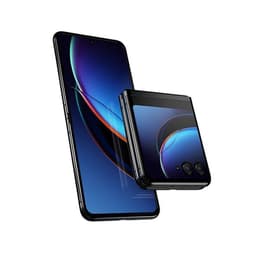

iPhone 12 mini vs Motorola Razr 40 Ultra

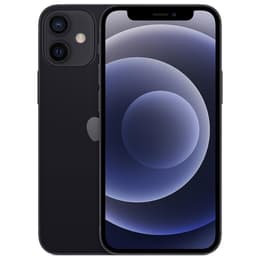
iPhone 12 mini
iPhone 12 mini
Starting at

Refurbished price:A$277.00

Versus A$929.00 new

See options
Motorola Razr 40 Ultra
See options

The iPhone 12 Mini, released in November 2020, is a compact smartphone running on Apple's iOS ecosystem. In contrast, the Motorola Razr 40 Ultra, launched in June 2023, offers a distinct foldable design powered by Android. These devices cater to different user preferences, with the iPhone 12 Mini focusing on a traditional, pocket-friendly experience and the Razr 40 Ultra providing a unique clamshell form factor with a highly functional external display.

Scores

Durability

When considering the long-term usability of these devices, their release timelines and software support policies are key differentiators.

  • Software Longevity: The iPhone 12 Mini, being an Apple device, typically receives major iOS updates for approximately five to six years from its release, with security updates often extending beyond that. This suggests potential support until around 2027 or 2028. The Motorola Razr 40 Ultra is promised three major Android OS upgrades and four years of bi-monthly security updates from its 2023 launch, offering a solid, though generally shorter, support window compared to Apple's policy.
  • Physical Durability: The iPhone 12 Mini features a Ceramic Shield front cover and an IP68 rating for water and dust resistance, contributing to its overall robustness. Its repairability score from iFixit is 6 out of 10, indicating that common repairs like battery and display replacements are manageable due to modular components. The Motorola Razr 40 Ultra has a water-repellent coating with an IP52 rating, offering protection against splashes but not full submersion. The durability of its folding screen and hinge mechanism is a common point of discussion, though some users report good long-term performance. Repairability for foldable phones, including the Razr series, is generally more challenging due to their complex design.
  • Expected Practical Lifespan: Both devices are built to last, but the iPhone 12 Mini's longer software support and traditional form factor might offer a slightly more predictable long-term experience for users who prioritize extended software updates. The Razr 40 Ultra's innovative design introduces variables related to the folding mechanism's longevity, though advancements in foldable technology continue to improve.

Release year

2020

2023

Compatible with latest Update

Yes

Yes

Operating system

iOS

Android

Foldable

No

Yes

Performance

The performance of these smartphones is influenced by their internal components and how they handle daily tasks and demanding applications.

  • Processing Power: The iPhone 12 Mini is equipped with a capable processor that handles everyday applications, multitasking, and moderate gaming smoothly. Users can expect responsive navigation and quick app loading times. The Motorola Razr 40 Ultra features a more recent generation processor, providing a robust experience for demanding apps, intensive gaming, and seamless multitasking.
  • Storage and Responsiveness: Both devices offer various storage options, with the iPhone 12 Mini available in 64GB, 128GB, and 256GB configurations, and the Razr 40 Ultra offering 256GB and 512GB. The iPhone 12 Mini's 4GB of RAM is optimized for iOS, ensuring efficient background app management. The Razr 40 Ultra typically comes with 8GB or 12GB of RAM, which contributes to its ability to keep many applications open simultaneously without significant slowdowns.
  • Battery Behavior: The iPhone 12 Mini has a smaller battery capacity, which for heavy users often means more frequent charging throughout the day. Moderate users, however, may find it sufficient for a full day. The Motorola Razr 40 Ultra, despite having a larger battery, has received mixed feedback on its battery life, with some users reporting it lasts a full day while others find it below average for heavy usage, possibly due to the power demands of its dual displays.

Memory (GB)

4 GB

8 GB

Screen quality

The display experience on these two devices presents a significant contrast, primarily due to their form factors.

  • Display Technology and Clarity: The iPhone 12 Mini features a 5.4-inch Super Retina XDR OLED display, offering deep blacks, vibrant colors, and excellent contrast. Its 2340 x 1080 resolution results in a high pixel density, providing sharp and clear visuals. The Motorola Razr 40 Ultra boasts a 6.9-inch pOLED main display when unfolded, also delivering rich colors and high contrast. Its unique feature is the large 3.6-inch pOLED external display, which is highly functional for notifications, widgets, and even full app usage without opening the phone.
  • Brightness and Refresh Rate: Both phones offer good brightness levels for outdoor visibility. The iPhone 12 Mini has a standard 60Hz refresh rate, providing a smooth experience for most tasks. The Razr 40 Ultra's main display features a higher 165Hz refresh rate, and its external display has a 144Hz refresh rate, contributing to noticeably smoother scrolling and more fluid animations, particularly beneficial for gaming and fast-paced content.
  • Viewing Experience: The iPhone 12 Mini's compact 5.4-inch screen is ideal for one-handed use and portability, though some users may find it small for extensive media consumption or document viewing. The Razr 40 Ultra, when unfolded, offers a larger 6.9-inch display, providing an expansive viewing area for videos, browsing, and productivity. The ability to fold the device makes it exceptionally compact for carrying.

Resolution

1080 x 2340

1080 x 2640

Screen type

Super Retina XDR OLED

Foldable LTPO AMOLED

Audiovisual

The camera systems on both smartphones are designed to capture everyday moments, though with different strengths and capabilities.

  • Rear Camera Systems: The iPhone 12 Mini is equipped with a dual 12-megapixel camera system, featuring a wide-angle lens with a f/1.6 aperture and an ultra-wide-angle lens with a f/2.4 aperture. This setup delivers good image quality in various lighting conditions, including improved low-light performance compared to previous generations. The Motorola Razr 40 Ultra also features a dual rear camera setup, consisting of a 12-megapixel wide-angle lens with optical image stabilization and a 13-megapixel ultra-wide-angle lens.
  • Photography Performance: The iPhone 12 Mini is known for its consistent and reliable photo quality, producing natural-looking images with good detail and color accuracy. It lacks a dedicated telephoto lens, relying on digital zoom. The Razr 40 Ultra's camera performance is generally considered capable for everyday photography, though some user reviews suggest it may not match the image quality of other flagship devices in its segment, particularly in challenging lighting or for zoom capabilities. A notable advantage of the Razr 40 Ultra is the ability to use its main rear cameras for high-quality selfies or video calls when the phone is folded, leveraging the external display as a viewfinder.
  • Video and Audio: Both phones are capable of recording high-quality video. The iPhone 12 Mini offers good video stabilization and audio capture. The Razr 40 Ultra supports 4K video recording and its microphone quality is generally suitable for calls and recordings. For media consumption, both devices provide a good audio experience through their speakers, with the iPhone 12 Mini supporting stereo sound.

Main camera

12 megapixels

12 megapixels

Front camera

12 megapixels

32 megapixels

Miscellaneous

Beyond core features, several practical elements contribute to the overall user experience of these devices.

  • Connectivity and Ports: Both smartphones support 5G connectivity for faster mobile data speeds. The iPhone 12 Mini uses Apple's proprietary Lightning port for charging and data transfer. It supports Wi-Fi 6 and Bluetooth 5.0. The Motorola Razr 40 Ultra features a USB-C port, a more universal standard, and supports Wi-Fi 6E and Bluetooth 5.3, offering potentially faster and more stable wireless connections.
  • Biometric Security and Sensors: The iPhone 12 Mini relies on Face ID for secure facial recognition. The Razr 40 Ultra incorporates a side-mounted fingerprint sensor, often integrated into the power button, for biometric authentication. Both devices include standard sensors like accelerometers, gyroscopes, and compasses.
  • Design and Handling: The iPhone 12 Mini is celebrated for its exceptionally compact size and lightweight design, making it easy for one-handed operation and comfortable pocketability. Its flat-edged design provides a secure grip. The Motorola Razr 40 Ultra, while larger when unfolded, offers the advantage of folding into a much smaller, highly portable form factor. This clamshell design appeals to users seeking a blend of a large screen experience with ultimate portability.
  • Build Materials: The iPhone 12 Mini features an aluminum frame and a glass back, with the Ceramic Shield front for enhanced drop performance. The Razr 40 Ultra uses a combination of materials, including a 7000-series aluminum frame and Gorilla Glass Victus for its cover screen, with a stainless steel hinge.

Weight

133 oz

1 oz

Screen size (in)

5.4

6.9

Network

5G

5G

SIM card

Physical SIM + eSIM

Dual Physical SIM

Carrier compatibility

Unlocked

Unlocked

The iPhone 12 Mini and Motorola Razr 40 Ultra cater to distinct user preferences, each excelling in different areas. Users often praise the iPhone 12 Mini for its compact size, making it ideal for one-handed use and easy pocketability. Its consistent camera performance and the long-term software support from Apple are also frequently highlighted as strong points. However, a common criticism among users, particularly heavy users, is its battery life, which may require mid-day charging.

The Motorola Razr 40 Ultra receives acclaim for its innovative foldable design and the highly functional external display, which allows for quick interactions without opening the device. Its powerful processor and high refresh rate displays contribute to a smooth and responsive user experience. Conversely, some users express concerns about its camera performance, often describing it as average for its price segment, and battery life reports are mixed, with some finding it insufficient for extended heavy use.

Users prioritizing a compact, traditional smartphone with long-term software support and a reliable camera for everyday photos may find the iPhone 12 Mini well-suited to their needs. Those who value an innovative design, a large internal display that folds for portability, and a highly interactive external screen, along with strong performance for demanding tasks, might lean towards the Motorola Razr 40 Ultra. Both devices offer unique advantages, and considering a quality-assured refurbished option can be an eco-friendly alternative for either model, providing access to these distinct experiences.

See all articles

Our recent comparisons