
Compare models

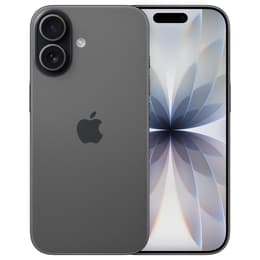
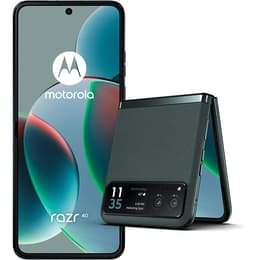
iPhone 17 vs Motorola Razr 40

  • 1-year warranty
  • Free standard shipping
  • Free 30-day returns
iPhone 17
Starting at

Refurbished price:A$1,229.00

Versus A$1,549.00 new

See options
Motorola Razr 40
Starting at

Refurbished price:A$600.00

Versus A$1,983.00 new

See options

Differences at a glance

The iPhone 17 (2025) and the Motorola Razr 40 (2023) represent two entirely different approaches to modern smartphone design: a traditional slate device built for everyday reliability and a clamshell foldable phone prioritizing pocket-sized compactness. While they serve vastly different form-factor preferences, both smartphones target users seeking capable daily drivers running on robust operating systems. The iPhone 17 operates on Apple's latest software ecosystem, whereas the Motorola Razr 40 runs on the Android platform. Understanding how their designs, capabilities, and features differ helps users determine which device aligns best with their day-to-day routines.

Available Models

Colour

Storage

Scores

Durability

When evaluating the long-term utility of each device, differences in release timing, software support timelines, and physical build resilience become key considerations for everyday users.

  • Software support timeline: The iPhone 17 benefits from a recent release year, ensuring extended operating system updates and security patches for many years, whereas the Motorola Razr 40 entered the market earlier and operates on an older initial software schedule.
  • Physical durability: The iPhone 17 utilizes a rigid slate construction featuring advanced glass protection and robust water resistance, while the Motorola Razr 40 features a flexible folding display structure that requires careful handling around the hinge mechanism.
  • Expected practical lifespan: Users can anticipate many years of reliable operation from the iPhone 17 due to contemporary internal components, whereas foldable devices like the Motorola Razr 40 generally experience more wear on moving parts over prolonged periods.

Release year

2025

2023

Performance

Day-to-day speed, multitasking efficiency, and power management vary significantly between these two models based on their internal architecture and battery designs.

  • System responsiveness: The iPhone 17 handles demanding applications, intensive multitasking, and complex mobile games smoothly thanks to its current-generation processor, while the Motorola Razr 40 manages everyday tasks and standard apps reliably using its mid-range processor configuration.
  • Battery behavior: The iPhone 17 delivers consistent energy efficiency that comfortably spans a full day of mixed usage, whereas the Motorola Razr 40's compact battery capacity may necessitate more frequent recharges during heavy workloads.
  • Memory and storage management: Both devices offer generous storage options for apps and media, paired with sufficient random-access memory to keep background processes stable during regular daily workflows.

Screen quality

Visual immersion and panel characteristics differ notably, driven by the unique physical form factors and display technologies utilized by each manufacturer.

  • Display technology: The iPhone 17 features a rigid, bright OLED panel with a fluid refresh rate that adapts smoothly to scrolling and motion, while the Motorola Razr 40 incorporates a flexible folding AMOLED screen accompanied by an external cover display for quick notifications.
  • Outdoor visibility: Both smartphones reach high peak brightness levels to maintain content legibility under direct sunlight, though reflective properties vary between traditional glass and flexible plastic screen layers.
  • Viewing experience: The iPhone 17 offers an uninterrupted rectangular viewing area well-suited for widescreen media consumption, whereas the Motorola Razr 40 provides a taller aspect ratio with a subtle crease across the folding section of the main display.

Audiovisual

Multimedia capture capabilities and audio output systems reflect the diverse hardware priorities chosen for a traditional slate device versus a folding flip phone.

  • Camera versatility: The iPhone 17 is equipped with high-resolution dual rear lenses that capture sharp details in diverse lighting conditions, while the Motorola Razr 40 relies on its own dual-sensor setup tailored for casual photography and selfies.
  • Low-light and video performance: Image processing software on the iPhone 17 maintains clarity and color accuracy in challenging illumination, whereas the Motorola Razr 40 performs adequately for social media sharing and standard indoor memories.
  • Media and audio output: Both models feature integrated stereo speakers that deliver clear sound for hands-free calls and casual video viewing, though neither includes a traditional wired headphone jack.

Miscellaneous

Practical daily usability elements, including connectivity standards, physical dimensions, and security sensors, shape how each device fits into various user lifestyles.

  • Connectivity and ports: Both smartphones support modern fifth-generation mobile networks and fast wireless standards, utilizing a reversible USB Type-C port for wired charging and data transfers.
  • Security and authentication: The iPhone 17 uses advanced facial recognition for secure unlocking, while the Motorola Razr 40 features a side-mounted fingerprint sensor integrated into the power button alongside facial unlock options.
  • Handling and dimensions: The iPhone 17 offers a familiar, solid slate profile that fits easily into standard pockets, whereas the Motorola Razr 40 folds compactly in half to reduce its footprint when carried on the go.

Screen size (in)

6.3

6.9

Network

5G

5G

SIM card

Physical SIM + eSIM

Dual Physical SIM

Carrier compatibility

Unlocked

Unlocked

Connector

USB-C

USB-C

What the community thinks

Choosing between the iPhone 17 and the Motorola Razr 40 depends heavily on individual preferences regarding form factor, software ecosystem, and physical design. Users prioritizing a traditional slate device with cutting-edge processing power, robust build durability, and long-term software support will find the iPhone 17 well-suited to their daily needs. Conversely, individuals drawn to innovative folding designs that offer compact pocketability and a secondary cover screen for quick interactions often gravitate toward the Motorola Razr 40.

Community discussions frequently highlight appreciation for the iPhone 17's system responsiveness and dependable battery longevity, while Motorola Razr 40 owners frequently praise its space-saving folding mechanism and distinctive style. For environmentally conscious consumers seeking sustainable choices, exploring a quality-assured refurbished option provides an eco-friendly alternative that extends the lifecycle of these electronics without compromising performance. Ultimately, aligning device capabilities with personal daily habits ensures a satisfying long-term smartphone experience.


See all articles