
Compare models
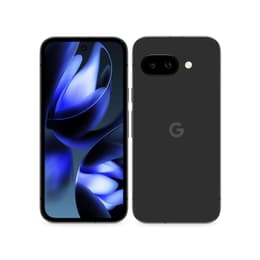
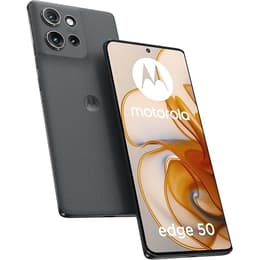
Google Pixel 9a vs Motorola Edge 50
- 1-year warranty
- Free standard shipping
- Free 30-day returns
Differences at a glance
The Google Pixel 9a (2025) and the Motorola Edge 50 (2024) are mid-range Android smartphones designed to deliver reliable everyday performance, modern screen technology, and capable camera systems. While both devices offer robust feature sets tailored to contemporary mobile users, they approach design, display execution, and software support through distinct philosophies. Choosing between them depends on whether a user prioritizes long-term software commitments or curved-screen aesthetics and rapid charging capabilities.
Available Models
Colour
Storage (GB)
Scores
Durability
When examining hardware longevity and software sustainability, both smartphones offer distinct advantages depending on update longevity and physical design preferences.
- Software Support and Longevity: The Google Pixel 9a leads in software backing, providing an extended multi-year update window that ensures long-term system security and OS upgrades. The Motorola Edge 50 offers standard software coverage typical of its generation, receiving fewer major platform iterations over its lifecycle.
- Build and Repairability: Both devices feature robust water and dust resistance ratings suitable for daily exposure to elements. The Google Pixel 9a utilizes a matte aluminum frame and a streamlined rear panel, whereas the Motorola Edge 50 opts for a contoured silhouette with an eco-leather or specialized polymer finish. Users seeking a quality-assured refurbished option often find these durable builds retain structural integrity well over years of regular handling.
Release year
2025
2024
Operating system
Android
Android
Foldable
No
No
Performance
Handling daily multitasking, app switching, and mobile gaming depends on how each device integrates its internal processing hardware and memory management.
- Everyday Speed and Multitasking: Both smartphones handle routine communication, web browsing, and media streaming smoothly, aided by sufficient random access memory to keep multiple apps open simultaneously. The Google Pixel 9a leverages current-generation processing architecture for swift application launches, while the Motorola Edge 50 relies on a balanced mid-range processor configuration that handles standard workloads reliably.
- Battery Behavior and Power Management: The Google Pixel 9a incorporates a large capacity battery designed to comfortably clear a full day of mixed use under typical conditions. The Motorola Edge 50 provides dependable daily power delivery as well, complemented by rapid-charging capabilities that reduce time tethered to a wall outlet.
Screen quality
Display characteristics differ notably in physical profile, edge curvature, and maximum brightness thresholds between the two models.
- Display Panel and Technology: The Google Pixel 9a features a flat OLED screen with balanced bezels, high peak brightness levels for outdoor readability, and vibrant color reproduction. The Motorola Edge 50 utilizes a curved P-OLED display that wraps gently around the sides, offering an immersive viewing area for media consumption.
- Refresh Rate and Motion Clarity: Both devices support high refresh rates that make scrolling through web pages, documents, and social feeds appear fluid. The Motorola Edge 50 supports a higher maximum refresh rate tier, while the Google Pixel 9a balances dynamic refresh scaling to preserve battery efficiency during static tasks.
Resolution
1080x2424
1220x2712
Audiovisual
Photography and media capabilities vary, reflecting different computational imaging approaches and physical hardware layouts.
- Main and Secondary Photography: The Google Pixel 9a emphasizes automated image processing and computational clarity, producing balanced dynamic range in high-contrast environments and consistent low-light snapshots using its primary and ultra-wide sensors. The Motorola Edge 50 employs a versatile multi-lens rear array that captures sharp daylight imagery and detailed close-ups.
- Video and Audio Output: Both models record stable video with clear audio capture suitable for casual vlogging and video calls. For media consumption, each device is equipped with stereo speakers that deliver adequate volume and clarity for podcasts and streaming videos.
Miscellaneous
Practical usability factors such as physical dimensions, connectivity standards, and daily handling characteristics round out the user experience.
- Handling and Form Factor: The Google Pixel 9a features a flat, uniform profile that sits securely in the hand and resists accidental palm touches. The Motorola Edge 50 presents a slimmer, contoured profile with a textured back finish, offering a distinct tactile grip.
- Connectivity and Extras: Both smartphones support modern fifth-generation cellular networks, fast Wi-Fi protocols, and secure biometric authentication via under-display fingerprint sensors and facial recognition. Physical ports are limited to USB-C standards, omitting traditional headphone jacks on both models.
Weight
186 oz
180 oz
Screen size (in)
6.3
6.7
Network
5G
5G
SIM card
Physical SIM + eSIM
Physical SIM
Carrier compatibility
Unlocked
Unlocked
What the community thinks
User discussions across community forums highlight distinct preferences for each device based on everyday priorities. Owners of the Google Pixel 9a frequently praise its clean software interface, reliable battery longevity, and consistently dependable camera output. Conversely, users drawn to the Motorola Edge 50 often emphasize appreciation for its slim profile, distinctive tactile rear finishes, curved display aesthetic, and fast charging speeds.
Users prioritizing long-term software update commitments and a flat screen interface will find the Google Pixel 9a well-suited to their requirements. Meanwhile, users who value a contoured design, rapid energy replenishment, and a curved multimedia display may lean toward the Motorola Edge 50. Choosing between these sustainable, quality-assured refurbished options depends entirely on which daily practicalities matter most to the individual.