Compare models
Galaxy S26 Ultra vs Galaxy Z Fold5
- 1-year warranty
- Free standard shipping
- Free 30-day returns
Differences at a glance
The Samsung Galaxy S26 Ultra (2026) and the Samsung Galaxy Z Fold5 (2023) represent two distinct approaches to high-end mobile engineering: a traditional slate flagship with advanced capabilities and a book-style foldable device designed for expansive multitasking. While both run on Android and share Samsung's ecosystem features, they differ fundamentally in form factor, release timeline, and hardware design. These differences cater to completely separate user workflows, making a comparison essential for anyone deciding between a conventional powerhouse and a dual-screen transforming device.
Available Models
Colour
Storage
Scores
Durability
When examining hardware longevity and support timelines, the two devices occupy different generations, which impacts their expected operational lifespan.
- Release timeline and support: The Galaxy S26 Ultra benefits from a much newer launch date in 2026, aligning with an extended multi-year software support window. The Galaxy Z Fold5, released in 2023, has an earlier expiration for major operating system updates, meaning it will reach the end of its official software lifecycle sooner.
- Build durability: The Galaxy S26 Ultra utilizes reinforced glass and a rigid titanium-style slate chassis built for daily resilience against drops and scratches. The Galaxy Z Fold5 features a folding inner screen and a complex hinge mechanism, requiring more careful handling over long-term use despite its water-resistance rating.
- Repairability expectations: Traditional slate handsets like the Galaxy S26 Ultra generally present fewer structural challenges during routine hardware maintenance than folding devices, whose flexible panels and specialized hinges complicate repairs.
Release year
2026
2023
Operating system
Android
Android
Foldable
No
Yes
Performance
Both smartphones handle demanding daily applications and intense multitasking effortlessly, though they approach resource management through different hardware configurations.
- Multitasking capacity: The Galaxy Z Fold5 uses its large internal canvas to run multiple split-screen apps simultaneously, supported by ample memory. The Galaxy S26 Ultra relies on a newer-generation processor to switch between intensive background tasks and heavy applications with high thermal efficiency.
- Battery behavior: The Galaxy S26 Ultra houses a larger battery capacity that easily sustains heavy all-day usage under standard conditions. The Galaxy Z Fold5 splits its power demands across two screens, often resulting in more frequent charging requirements for users who spend extended hours using the unfolded main display.
- System responsiveness: App loading speeds and graphic-heavy gaming run fluidly on both models, with the newer processor in the Galaxy S26 Ultra providing additional performance headroom for future software demands.
Screen quality
The display experience represents the most radical divergence between these two models, contrasting a massive folding canvas with a traditional immersive slate panel.
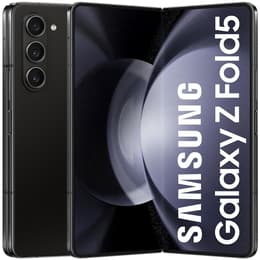
- Display technology: The Galaxy S26 Ultra features a large, continuous AMOLED panel with vibrant colors and deep contrast. The Galaxy Z Fold5 offers a cover screen for quick tasks and unfolds into a tablet-sized inner folding display for expanded viewing.
- Outdoor visibility: High peak brightness levels on the Galaxy S26 Ultra ensure clear visibility under direct sunlight. The Galaxy Z Fold5 also delivers bright imagery, though the crease on the folding inner display can catch overhead reflections depending on viewing angles.
- Refresh rate and smoothness: Both devices support adaptive high refresh rates up to 120Hz, ensuring smooth scrolling through web pages, documents, and user interfaces.
Resolution
1440x3120
1812x2176
Audiovisual
Photography and media consumption capabilities vary significantly due to the physical space constraints and sensor configurations of each device type.
- Camera systems: The Galaxy S26 Ultra includes a high-resolution primary sensor alongside dedicated telephoto lenses capable of capturing detailed distant subjects. The Galaxy Z Fold5 uses a versatile triple-camera layout that performs well for everyday photography but lacks the extended optical reach of the Ultra model.
- Low-light performance: Advanced image processing on the Galaxy S26 Ultra extracts fine detail and manages noise effectively in dim environments. The Galaxy Z Fold5 handles standard low-light snapshots reliably, though it relies on earlier-generation sensor technology.
- Media and audio output: Stereo speakers on both units deliver clear sound for video calls and casual media playback, while the folding screen of the Galaxy Z Fold5 provides a more tablet-like canvas for watching videos.
Miscellaneous
Practical daily usability elements such as connectivity, ergonomics, and physical dimensions shape how each phone fits into daily routines.
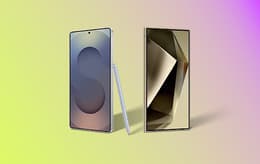
- Handling and ergonomics: The Galaxy S26 Ultra is wider and heavier than standard phones, built to accommodate its expansive screen and built-in stylus slot. The Galaxy Z Fold5 is narrower when closed for easy single-handed typing, but becomes thick in the pocket and unfolds into a wider, two-handed device.
- Connectivity and ports: Both models support current 5G networks, fast Wi-Fi standards, and Bluetooth connectivity, utilizing USB-C ports for charging and data transfer.
- Authentication and sensors: Fast biometric security is available on both devices via side-mounted or in-display fingerprint sensors, alongside responsive facial recognition.
Weight
214 oz
253 oz
Screen size (in)
6.9
7.6
Network
5G
5G
SIM card
Physical SIM + eSIM
Physical SIM + eSIM
Carrier compatibility
Unlocked
Unlocked
What the community thinks
User feedback from online communities highlights distinct preferences for each device. Owners of the Galaxy S26 Ultra frequently praise its reliable battery longevity, advanced camera versatility, and traditional robust form factor. Conversely, users of the Galaxy Z Fold5 heavily value the productivity benefits of the expansive inner screen, noting its utility for reading documents and running split-screen apps, while occasionally noting the trade-off of shorter battery endurance and a noticeable crease on the folding display.
Users prioritizing maximum camera capabilities, straightforward pocketability, and long-term daily endurance will find the Galaxy S26 Ultra well-suited to their needs. Meanwhile, users prioritizing multitasking space, a tablet-like viewing experience in a portable format, and innovative screen technology may lean toward the Galaxy Z Fold5. For buyers exploring sustainable technology, choosing a quality-assured refurbished option provides an eco-friendly alternative that reduces electronic waste without compromising on core performance.